Big Four Audit Firms in China in Settlement Talks With SEC Enforcers; Dispute Arose Over Access to Audit Documents About Chinese Clients

Big Four Audit Firms in China in Settlement Talks With SEC Enforcers

Dispute Arose Over Access to Audit Documents About Chinese Clients

MICHAEL RAPOPORT

June 2, 2014 7:35 p.m. ET

U.S. securities regulators and the Chinese affiliates of the Big Four accounting firms have been discussing a potential settlement of their dispute over access to the firms’ audit documents about their Chinese clients, according to a filing late Monday.

The firms—the Chinese arms of PricewaterhouseCoopers, Deloitte Touche Tohmatsu, Ernst & Young and KPMG—have been in “continued settlement efforts” with the Securities and Exchange Commission’s enforcement division, according to the filing, issued by the five-member SEC.

“We’ve definitely been trying” to reach a settlement, said Amy Call Well, an Ernst & Young spokeswoman. A PwC spokeswoman confirmed the information in the filing but said she couldn’t comment further. The other two firms and the SEC couldn’t immediately be reached for comment. Read more of this post


Samsung Group Holding Company Plans IPO; Everland Listing Could Help Ownership Transition From Group Chairman to His Children

Samsung Group Holding Company Plans IPO

Everland Listing Could Help Ownership Transition From Group Chairman to His Children

MIN-JEONG LEE

June 2, 2014 9:48 p.m. ET

SEOUL—Samsung Everland Inc., the de facto holding company of South Korea’s largest conglomerate, Samsung Group, is seeking an initial public offering by the first quarter of 2015 in a move that is expected to help the succession of ownership from the group chairman to his children.

Samsung Everland operates an amusement park and runs a fashion business, and serves as the holding company for various Samsung affiliates. It will pick managers for the IPO this month and plans to list its shares by the first quarter of next year at the latest, the company said. It said it plans to go public to “raise capital and expand overseas.”

The company is expected to list in Seoul, but a spokesman declined to confirm the location. Read more of this post

Where the Father of the Ponzi Scheme Once Slept

Where the Father of the Ponzi Scheme Once Slept

By WILLIAM ALDEN

JUNE 2, 2014 12:34 PM 1 Comments

image001-5

Rick Friedman for The New York TimesThe home in Lexington, Mass., where Charles Ponzi lived for just a few weeks before his arrest.

LEXINGTON, Mass. – This postcard-perfect town near Boston was where the first patriots died in the Revolutionary War.

It was also where Charles Ponzi, the financial con artist who pioneered the category of swindle that now bears his name, made his last stand.

Mr. Ponzi, a hardscrabble Italian immigrant whose fraudulent scheme allowed him to guzzle cash and briefly taste luxury, was only a short-term resident of Lexington, buying a mansion here in 1920 just weeks before his arrest. Read more of this post

Four Stand-Out College Essays About Money

Four Stand-Out College Essays About Money

MAY 9, 2014

Clare Connaughton with her mother Maritza Vargas at a Housing Works thrift store in Sunset Park, Brooklyn. Clare Connaughton, a high school student from Mineola, N.Y., reads from her college application essay about how shopping at thrift stores with her mother has gone from necessity to cherished pastime.

 image001-4

Thrift Store Shame, Then Pride

Talking about money is hard. Writing well about yourself may be harder still. So trying to do both at once, as a teenager, while addressing complete strangers who control your future, would seem to be foolhardy.

But each year, plenty of high school seniors who are applying to college give it a go. Many skip the story of the sports team triumph or the grandparent’s death and write essays about weighty social issues like work, class and wealth, or lack thereof. Perhaps that’s what affects them most. Or maybe those are the subjects that they think will attract an admissions officer’s eye.

In any case, for the second year, we put out a nationwide call for the best college application essays about these topics. With the help ofJennifer Delahunty, the dean of admissions and financial aid at Kenyon College in Gambier, Ohio, and an accomplished essayist and editor herself, we picked four to share here. They are a diverse lot, touching on topics ranging from work at McDonald’s and thrift store shopping to homelessness and reckoning with a parent’s job loss. What they share, however, is a quality that admissions officers crave but don’t see as often as they’d like: The applicant’s brain, laid bare on the page, wrapping itself around a topic that most people don’t write enough about or don’t write about in a deep or moving way. Read more of this post

Apple unwraps ‘Healthkit’ alongside Mac, iPhone features

Apple unwraps ‘Healthkit’ alongside Mac, iPhone features

6:05pm EDT

By Christina Farr and Edwin Chan

SAN FRANCISCO (Reuters) – Apple Inc on Monday took the wraps off mobile applications that pool and analyze health and home data, kicking off an annual developers’ conference lacking in big surprises, despite hopes the iPhone maker would offer a glimpse into its secretive pipeline of products.

Apple Chief Executive Tim Cook and software-engineering boss Craig Federighi told several thousand developers about new features that come with the latest “Yosemite” Mac platform and iOS8, the software that powers the iPhone and iPad.

Apple shares slid 0.7 percent to close at $628.65.

Investors are waiting for Cook to keep a promise to create new product categories. Last week, Internet services chief Eddy Cue said the pipeline was the best he had seen in more than two decades.

“The Healthkit has the most potential for the future,” said Nils Kassube, a director of development at Newscope, a Germany-based consulting firm. “Those of us that are interested in health need a platform for sharing information.” Read more of this post

China disrupts Google services ahead of Tiananmen anniversary

China disrupts Google services ahead of Tiananmen anniversary

6:32am EDT

BEIJING (Reuters) – Google services are being disrupted in China ahead of this week’s 25th anniversary of the 1989 crackdown on pro-democracy demonstrators around Beijing’s Tiananmen Square, a censorship watchdog said on Monday.

GreatFire.org said in a blog post that the government appeared to have begun targeting Google Inc’s main search engine and Gmail, among many other services, since at least last week, making them inaccessible to many users in China.

It added that the last time it monitored such a block was in 2012, when it only lasted 12 hours.

“It is not clear that the block is a temporary measure around the anniversary or a permanent block. But because the block has lasted for four days, it’s more likely that Google will be severely disrupted and barely usable from now on,” the advocacy group said.

Asked about the disruptions, a Google spokesman said: “We’ve checked extensively and there’s nothing wrong on our end.” Read more of this post

It’s Easy to Forget About Risk in a Stable Market

It’s Easy to Forget About Risk in a Stable Market

By CARL RICHARDSJUNE 2, 2014

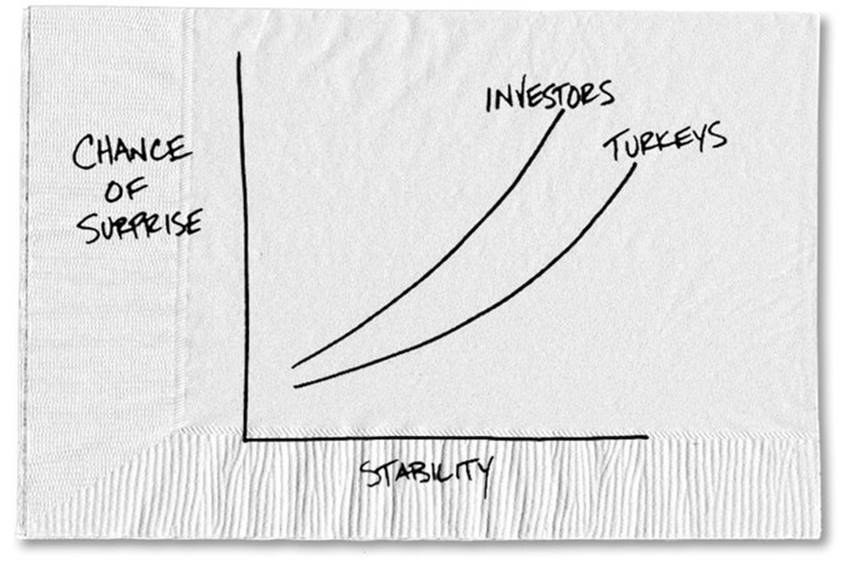
Stability itself is destabilizing.

image001-3

This is one of the defining ideas of the economist Hyman Minsky. And it matters because when we have periods of relative stability or happy results in the stock market (like now), we start to tell ourselves little stories. For example, we might believe that the stock market will behave like a bank certificate of deposit but pay us double-digit returns year after year.

We forget what normal market risk feels like, and we get comfortable with more and more risk. That makes it easier to borrow more money, because it’s all good. We say, “Risk? What risk?” as we move more of our 401(k) allocation into the stock market.

Forgetting about risk and pain is a wonderful human trait. Without this amazing ability, I doubt there would be many families with more than one child, and I’m certain that very few people would sign up for a second marathon. Forgetting pain has been good for us as a species, but it’s bad for us as investors. Read more of this post

In Slightly Less Wealthy Circles, Too, Interest Rises in Private Equity

In Slightly Less Wealthy Circles, Too, Interest Rises in Private Equity

MAY 30, 2014

By PAUL SULLIVAN

AS a young lawyer in New York, Robert Rich sometimes bought stocks based on tips he received while playing squash at the Yale Club. Most of them did not do well, so eventually he chose to put his money into mutual funds and focus on his work.

But then the itch for more control and the potential for bigger gains got the best of him and now, at 76, Mr. Rich has put nearly a fifth of his wealth into private equity — an illiquid, risky asset class with returns that range from double digits to a complete loss of principal.

In this, Mr. Rich has been at the vanguard of a wave of affluent do-it-yourselfers investing in private equity by buying into funds that focus on a sector of the economy or on direct investments in particular companies. They most often do this through self-directed I.R.A.s — a type of retirement account that can invest in nonpublic securities. These accounts have been around since the 1970s and are typically used to invest in real estate.

But in the last five years, the custodians for self-directed I.R.A.s report an increasing interest in private equity. Equity Trust, in Westlake, Ohio, said private equity now accounted for 10 to 15 percent of the $12 billion it holds as a custodian. The Pensco Trust Company, based in San Francisco, said 60 percent of new accounts in the last three years had been opened by people who wanted to invest in private equity. Read more of this post

Rules of the Fund Road: Watch the Fees, and Don’t Look Back; The expenses of a mutual fund often tell you something that its past performance can’t

Rules of the Fund Road: Watch the Fees, and Don’t Look Back

MAY 31, 2014

Strategies

By JEFF SOMMER

image001-2

Investing would be easy if you could predict the future. Unfortunately, I can’t help you with that. But I do know a little about what works and what doesn’t work.

How an investment performed in the past doesn’t work: Past performance doesn’t guarantee future results. That thought should be familiar, since the Securities and Exchange Commission requires that it be published in all advertising dealing with mutual fund performance.

How much a fund charges in expenses does work. Within certain limits, fee levels provide an excellent guide to the future. Of course, fund fees in themselves don’t guarantee that you’ll do well with a particular investment; a bad bet doesn’t magically turn into a good one if the fees are low. But all things equal, you will be a lot better off if hefty fees aren’t eating up your returns. And low fees may tell you much more than that: When fees are low, the chances are much greater that an overall investment portfolio will outperform its peers. Read more of this post

David Jones may not be main prize for Solomon Lew

David Jones may not be main prize for Solomon Lew

June 3, 2014

Elizabeth Knight

image001-1

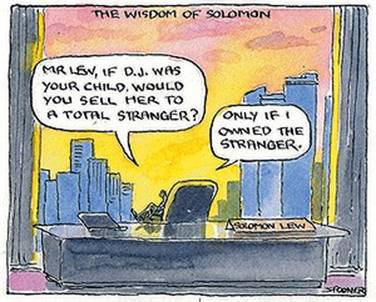
At last the big end of town can stop talking about why gaming billionaire James Packer and his best friend Nine Entertainment boss David Gyngell partook in a fisticuffs set-to on the pavement at Bondi Beach and instead turn its attention to what Solomon Lew is hatching at David Jones.

There are theories aplenty but my money’s on the one that says Lew wants to sell his stake in Country Road, rather than make a bid for David Jones. It’s greenmail with a twist. But more on this in a moment. Read more of this post

The Teen Whisperer: How the author of “The Fault in Our Stars” built an ardent army of fans

THE TEEN WHISPERER

How the author of “The Fault in Our Stars” built an ardent army of fans.

by Margaret TalbotJUNE 9, 2014

Green wanted to write “an unsentimental cancer novel” that offered “some basis for hope.” Illustration by Bartosz Kosowski.

In late 2006, the writer John Green came up with the idea of communicating with his brother, Hank, for a year solely through videos posted to YouTube. The project wasn’t quite as extreme as it sounds. John, who was then twenty-nine, and Hank, who was three years younger, saw each other about once a year, at their parents’ house, and they typically went several years between phone calls. They communicated mainly through instant messaging.

Hank was living in Missoula, where he’d started a Web site about green technology. John was living on the Upper West Side while his wife, Sarah Urist Green, completed a graduate degree in art history at Columbia. He had published two young-adult novels, “Looking for Alaska,” in 2005, and “An Abundance of Katherines,” in 2006, and was working on a third. Like the best realistic Y.A. books, and like “The Catcher in the Rye”—a novel that today would almost certainly be marketed as Y.A.—Green’s books were narrated in a clever, confiding voice. His protagonists were sweetly intellectual teen-age boys smitten with complicated, charismatic girls. Although the books were funny, their story lines propelled by spontaneous road trips and outrageous pranks, they displayed a youthfully insatiable appetite for big questions: What is an honorable life? How do we wrest meaning from the unexpected death of someone close to us? What do we do when we realize that we’re not as special as we thought we were? Read more of this post

The Dark Side of the Internet of Things: Intruders for the Plugged-In Home, Coming In Through the Internet

Intruders for the Plugged-In Home, Coming In Through the Internet

By NICK BILTON

JUNE 1, 2014 11:00 AM 35 Comments

Home, connected home. The front door opens with a tap on aniPhone. The lights come up as if by magic. The oven sends a text: Dinner is ready.

You will probably be hearing a lot about these sorts of conveniences this week from the Apple Worldwide Developers Conference in San Francisco. Apple is expected to unveil software that promises to turn our homes into Wi-Fi-connected wonderlands, where locks, lights, appliances — you name it — can all be controlled via an iPhone or iPad. You can bet that before long, refrigerators will come with “Made for iPhone” stickers.

These initiatives are all part of what is known as the Internet of Things. That is a catchall term used to describe connectivity — specifically, how people connect with products, and how products connect with each other.

Sounds great. But I can’t shake the feeling that one day, maybe, just maybe, my entire apartment is going to get hacked. Read more of this post

Surviving and Thriving in the Cloud

Surviving and Thriving in the Cloud

Red Hat’s core Linux business remains strong, but increasing cloud adoption could provide upside.

By Norman Young | 06-02-14 | 06:00 AM | Email Article

The change in computing model from client-server to cloud-device presents opportunities and pitfalls for  Red Hat (RHT). The undisputed king of the Linux operating system faces possible disruptions to its business model, since end users may be insulated from OS decision-making in the public cloud. However, we think the core Red Hat Enterprise Linux business combined with its growing middleware and virtualization distribution will give the firm an edge in the data center, private cloud, and hybrid environments while it develops its open-source cloud infrastructure projects, OpenStack and OpenShift. Our $50 fair value estimate assumes continued growth in the core RHEL business, adoption and strong growth of middleware and virtualization services, and little near- to medium-term revenue contribution from OpenStack and OpenShift.

Sunny Forecast for Clouds
Improvements in hardware, software, and networking have combined with the secular trend toward outsourcing to usher in the era of cloud computing. The economies of scale offered by remote data centers managed by third parties allow enterprises to offload or outsource some or all of their computing and storage workloads. Cloud adoption is particularly cost-effective for smaller and midsize users that lack the capital, manpower, or expertise to build and maintain their own data centers. Read more of this post

Chinese Firms with Weak VIEs: Dumb Investment

Chinese Firms with Weak VIEs: Dumb Investment

by Ben StrubelJune 02, 2014, 12:10 pm

Chinese Companies with Weak VIEs: Dumb Investment of the Week by Ben Strubel of Strubel Investment Management

After a wave of accounting and fraud scandals in 2011 (billions of investor dollars were lost), Chinese companies, particularly small and mid cap, are beginning to come back to US markets. Investors are beginning to warm up to these companies again and the share prices of many have risen as the memories of the multitude of fraudulent Chinese companies fade away.

How can investors protect themselves from a repeat of 2011? One thing investors need to do is thoroughly educate themselves on the WFOE (Wholly Foreign Owned Enterprise)/VIE (Variable Interest Entity) system many US listed Chinese companies use. Because of prohibitions on foreign ownership in certain sectors many Chinese companies use a complex legal structure to get around this.

At its most basic the WFOE/VIE structure looks like the diagram below. There is a US listed entity that is registered in Delaware or another corporate haven like the British Virgin Islands or the Cayman Islands. This entity then owns the WFOE which is a PRC registered entity. The WFOE then has a contractual arrangement with one or more VIE entities. The owners of the US listed entity do not own any of the assets in the VIE.

image001

Some companies also include a Hong Kong based entity between the US listed entity and the WFOE. Additionally, most companies have multiple VIEs and various Chinese nationals (typically founders and management) with varying equity stakes in the assortment of entities. Read more of this post

Kepler space telescope spies a ‘Mega-Earth’

Kepler space telescope spies a ‘Mega-Earth’

By Joel Achenbach, Published: June 2

Astronomers have discovered a surprising planet, a rocky world with 17 times the mass of Earth. There have been “Super-Earths” discovered before, but this one is in a league of its own. The scientists call it a “Mega-Earth.”

Discovered by NASA’s Kepler space telescope and announced Monday at an astronomy meeting in Boston, this planet, officially named Kepler-10c, scrambles the equations that dictate how massive a rocky planet can be without ballooning into a Jupiter-like gas giant.

The theorists didn’t see this coming. The orthodoxy was that, beyond about 10 Earth masses, a planet would hold on to so much hydrogen gas that it would become like Jupiter or Saturn. Kepler-10c suggests that plus-size planets can stay rocky, with clearly defined surfaces, rather than becoming gaseous and bloated.

That means there’s more real estate out there for life as we know it on Earth.

Kepler-10c is also very old, having formed about 11 billion years ago, less than 3 billion years after the birth of the universe. Rocky worlds weren’t believed to have existed that long ago.

“Nature will do what she wants, regardless of earthling theorists,” said Sara Seager, a Massachusetts Institute of Technology planetary scientist who was not involved in the new discovery but said by e-mail that she finds it “incredibly exciting.” Read more of this post

Visions and Voices on Emerging Challenges in Digital Business Strategy

Visions and Voices on Emerging Challenges in Digital Business Strategy

Anandhi Bharadwaj 

Emory University

Omar A. El Sawy 

University of Southern California – Marshall School of Business

Paul A. Pavlou 

Temple University – Department of Management Information Systems; Temple University – Department of Strategic Management

N. Venkat Venkatraman 

Boston University – Department of Management Information Systems
June 1, 2013
MIS Quarterly Vol. 37 No. 2, pp. 1-XX/June 2013
Fox School of Business Research Paper No. 14-001

Abstract: 
This section is a collection of shorter “Issue and Opinions” pieces that address some of the critical challenges around the evolution of digital business strategy. These voices and visions are from thought leaders who, in addition to their scholarship, have a keen sense of practice. They outline 27 through their opinion pieces a series of issues that will need attention from both research and practice. These issues have been identified through their observation of practice with the 30 eye of a scholar. They provide fertile opportunities for scholars in information systems, strategic management, and organizational theory.


Devil’s Advocate: The Most Incorrect Beliefs of Accounting Experts

Devil’s Advocate: The Most Incorrect Beliefs of Accounting Experts

Sudipta Basu 

Temple University – Department of Accounting
December 1, 2013
Accounting Horizons, Vol. 27, No. 4, 2013
Fox School of Business Research Paper No. 14-005

Abstract: 
This commentary reflects the views of a panel of six experts tasked with writing an essay on the most incorrect beliefs of accounting experts. The title provides ample motivation for this discussion – to document the views of some thought leaders in accounting research on a seldom-debated and mostly ignored issue – incorrect beliefs. While each essay offers a thoughtful message on its own, in combination they reflect an even stronger view, and offer sound advice for accountants of all stripes and persuasions.


Creating Value by Changing the Old Guard: The Impact of Controlling Shareholder Heterogeneity on Firm Performance and Corporate Policies

Journal of Financial and Quantitative Analysis / Volume 48 / Issue 06 / December 2013, pp 1781-1811

Creating Value by Changing the Old Guard: The Impact of Controlling Shareholder Heterogeneity on Firm Performance and Corporate Policies

Hua Denga1, Fariborz Moshiriana2, Peter Kien Phama3 and Jason Zeina4

Abstract

Theory suggests that controlling shareholders can influence firm value through both shared benefits creation and private benefits consumption. Using negotiated control-block transfers from 31 countries, we look beyond ownership concentration and investigate how controlling shareholder heterogeneity influences the relative importance of these two effects. We document that a control transfer precipitates positive firm outcomes particularly when the vendor has maintained control over an extended period and the acquirer displays a strong incentive to engage in restructuring. In such cases, we observe a sustained positive price reaction, more focused corporate investments, lower leverage, higher operating efficiency, and superior long-term performance.


Wisdom of Crowds: The Value of Stock Opinions Transmitted Through Social Media

Wisdom of Crowds: The Value of Stock Opinions Transmitted Through Social Media

Hailiang Chen

Prabuddha De

Yu (Jeffrey) Hu

Byoung-Hyoun Hwang

Social media has become a popular venue for individuals to share the results of their own

analysis on financial securities. This paper investigates the extent to which investor opinions

transmitted through social media predict future stock returns and earnings surprises. We

conduct textual analysis of articles published on one of the most popular social media

platforms for investors in the United States. We also consider the readers’ perspective as

inferred via commentaries written in response to these articles. We find that the views

expressed in both articles and commentaries predict future stock returns and earnings

Investor Networks in the Stock Market

Investor Networks in the Stock Market

Han N. Ozsoylev

Johan Walden

M. Deniz Yavuz

Recep Bildik

We study the trading behavior of investors in an entire stock market. Using an account

level dataset of all trades on the Istanbul Stock Exchange in 2005, we identify investors

with similar trading behavior as linked in an empirical investor network (EIN). Consistent

with the theory of information networks, we find that central investors earn higher returns

and trade earlier than peripheral investors with respect to information events. Overall, our

results support the view that information diffusion among the investor population influences

trading behavior and returns.

Do Security Analysts Speak in Two Tongues?

Do Security Analysts Speak in Two Tongues?

Ulrike Malmendier

University of California, Berkeley

Devin Shanthikumar

University of California, Irvine

Why do security analysts issue overly positive recommendations? We propose a novel

approach to distinguish strategic motives (e.g., generating small-investor purchases and

pleasing management) from nonstrategic motives (genuine overoptimism). We argue that

nonstrategic distorters tend to issue both positive recommendations and optimistic forecasts,

while strategic distorters “speak in two tongues,” issuing overly positive recommendations

but less optimistic forecasts. We show that the incidence of strategic distortion is large and

systematically related to proxies for incentive misalignment. Our “two-tongues metric”

reveals strategic distortion beyond those indicators and provides a new tool for detecting

incentives to distort that are hard to identify otherwise.

Connected Stocks

THE JOURNAL OF FINANCE • VOL. LXIX, NO. 3 • JUNE 2014

Connected Stocks

MIGUEL ANTON and CHRISTOPHER POLK ´ ∗

ABSTRACT

We connect stocks through their common active mutual fund owners. We show that the

degree of shared ownership forecasts cross-sectional variation in return correlation,

controlling for exposure to systematic return factors, style and sector similarity, and

many other pair characteristics. We argue that shared ownership causes this excess

comovement based on evidence from a natural experiment—the 2003 mutual fund

trading scandal. These results motivate a novel cross-stock-reversal trading strategy

exploiting information contained in ownership connections. We show that long-short

hedge fund index returns covary negatively with this strategy, suggesting these funds

may exacerbate this excess comovement.

Broad-based Employee Stock Ownership: Motives and Outcomes

Broad-based Employee Stock Ownership: Motives and Outcomes

E. Han Kim 

University of Michigan, Stephen M. Ross School of Business

Paige Parker Ouimet 

University of North Carolina at Chapel Hill
June 10, 2013
Journal of Finance, Forthcoming

Abstract: 
Firms initiating broad-based employee share ownership plans often claim ESOPs increase productivity by improving employee incentives. Do they? The answer depends. Small ESOPs comprising less than 5% of shares, granted by firms with moderate employee size, increase the economic pie, benefitting both employees and shareholders. The effects are much weaker when there are too many employees to mitigate free-riding. Although some large ESOPs increase productivity and employee compensation, the average impacts are small, because they are often implemented for non-incentive purposes, such as conserving cash by substituting wages with employee shares or forming a worker-management alliance to thwart takeover bids.


Investing Process – Thirty Years of Shareholder Rights and Firm Valuation

Thirty Years of Shareholder Rights and Firm Valuation

Martijn Cremers 

University of Notre Dame

Allen Ferrell 

Harvard Law School; European Corporate Governance Institute (ECGI)
July 2013
Journal of Finance, Forthcoming

Abstract: 
This paper introduces a new hand-collected dataset tracking restrictions on shareholder rights at approximately 1,000 firms over 1978-1989. In conjunction with the 1990-2006 IRRC data, we track firms’ shareholder rights over thirty years. Most governance changes occurred during the 1980s. We find a robustly negative association between restrictions on shareholder rights (using the G-Index as a proxy) and Tobin’s Q. The negative association only appears after the judicial approval of antitakeover defenses in the 1985 landmark Delaware Supreme Court decision of Moran v. Household. This decision was an unanticipated, exogenous shock that increased the importance of shareholder rights.


Worth the Hype? The Relevance of Paid-For Analyst Research for the Buy-and-Hold Investor

Worth the Hype? The Relevance of Paid-For Analyst Research for the Buy-and-Hold Investor

Bruce K. Billings 

Florida State University – Department of Accounting

William L. Buslepp 

Texas Tech University – Area of Accounting

George Ryan Huston 

University of South Florida – School of Accountancy; Florida State University – Department of Accounting
September 4, 2013
Accounting Review, Forthcoming

Abstract: 
The SEC Advisory Committee on Smaller Public Companies recommends paid-for research to fill the void created by declining sell-side coverage. Potential conflicts of interest inherent in paid-for research challenge this recommendation. We evaluate whether paid-for research provides value to investors or merely reflects hype. Analyses of one- and two-year ahead paid-for earnings forecasts fail to identify significant bias. Using a portfolio approach, favorable (unfavorable) paid-for recommendations yield positive (negative) stock returns at release, with upward (downward) drift over the following year. Regressing future stock returns on recommendations and valuation estimates using paid-for analysts’ forecasts yields similar results. Further, results fail to indicate significant differences in paid-for and matched sell-side research. Overall, our evidence suggests that paid-for research provides relevant information for the buy-and-hold investor that is comparable to that of matched sell-side research, providing empirical support for the SEC Advisory Committee recommendation.


Tone Management

THE ACCOUNTING REVIEW American Accounting Association

Vol. 89, No. 3 DOI: 10.2308/accr-50684 2014 pp. 1083–1113

Tone Management

Xuan Huang

Siew Hong Teoh

Yinglei Zhang

ABSTRACT: We investigate whether and when firms manage the tone of words in

earnings press releases, and how investors react to tone management. We estimate

abnormal positive tone,ABTONE, as a measure of tone management from residuals of a

tone model that controls for firm quantitative fundamentals such as performance, risk,

and complexity. We find that ABTONE predicts negative future earnings and cash flows,

is positively associated with upward perception management events, such as, just

meeting/beating thresholds, future earnings restatements, SEO, and M&A, and is

negatively associated with a downward perception management event, stock option

grants. ABTONE has a positive stock return effect at the earnings announcement and a

delayed negative reaction in the one and two quarters afterward. Balance sheet

constrained firms and older firms are more likely to employ tone management over

accruals management. Overall, the evidence is consistent with managers using strategic

tone management to mislead investors about firm fundamentals.

Optimistic Reporting and Pessimistic Investing: Do Pro Forma Earnings Disclosures Attract Short Sellers?

Optimistic Reporting and Pessimistic Investing: Do Pro Forma Earnings Disclosures Attract Short Sellers?

Theodore E. Christensen 

Brigham Young University – Marriott School of Management

Michael S. Drake 

Brigham Young University – Marriott School

Jacob R. Thornock 

University of Washington – Michael G. Foster School of Business
September 24, 2012
Contemporary Accounting Research, Forthcoming

Abstract: 
We contribute to the debate regarding the informativeness of pro forma earnings disclosures by providing evidence that a group of informed traders, short sellers, trade as if firms’ voluntary non-GAAP earnings disclosures create information advantages they can exploit. While prior research indicates that short sellers identify firms that will experience declining operating performance, we investigate whether the disclosure of pro forma earnings acts as an indicator of future price declines that is distinct from poor operating performance. We find that short selling is significantly higher in quarters in which firms disclose non-GAAP earnings metrics relative to quarters in which they do not disclose adjusted earnings measures. Moreover, we find that short selling is significantly positively associated with the exclusion of recurring items and, more particularly, with the exclusion of stock-based compensation. We also find some evidence that short sellers trade more when managers exclude expense items to appear to meet analysts’ expectations on a pro forma basis when they fall short of expectations based on GAAP operating earnings. Finally, we find evidence based on abnormal returns suggesting that short sellers profit from short selling around earnings announcements containing pro forma earnings disclosures. Overall, the results are consistent with the notion that sophisticated market participants view pro forma earnings disclosures negatively and trade in order to take advantage of potential information asymmetries created by these disclosures.


Investing Process – How Does Earnings Management Influence Investors’ Perceptions of Firm Value? Survey Evidence from Financial Analysts

How Does Earnings Management Influence Investors’ Perceptions of Firm Value? Survey Evidence from Financial Analysts

Abe De Jong 

Erasmus University – Rotterdam School of Management

Gerard Mertens 

Erasmus University Rotterdam (EUR) – Department of Financial Management

Marieke Van der Poel 

Erasmus University – Rotterdam School of Management

Ronald Van Dijk 

ING Investment Management
February 26, 2013
Review of Accounting Studies, Forthcoming

Abstract: 
Survey evidence shows CFOs to believe that earnings management can enhance investor valuation of their firms. This evidence raises the question of correspondence between the beliefs of CFOs and investors. Surveying financial analysts to gain insight into how earnings management influences investor perception of firm value, we find analysts’ and CFOs’ beliefs to be generally consistent. We find that analysts perceive meeting earnings benchmarks and smoothing earnings to enhance investor perception of firm value, and all earnings management actions to reach a benchmark, save share repurchases, to be value destroying. CFOs, however, are reluctant to repurchase shares, preferring to use techniques viewed by analysts as value destroying (e.g., reductions in discretionary spending). Analysts’ inability to unravel such techniques perhaps explains CFOs’ preferences.

Valuation-driven profit transfer among corporate segments

Rev Account Stud (2014) 19:805–838

Valuation-driven profit transfer among corporate segments

Haifeng You

Published online: 4 February 2014

Springer Science+Business Media New York 2014

Abstract This paper investigates whether the desire to achieve higher equity

valuations induces conglomerates to manipulate their segment earnings. I extend the

Stein (Q J Econ 104:655–669, 1989) model to a multi-segment setting and show that

conglomerates have incentives to transfer profits from segments operating in

industries with lower valuation multiples to those with higher multiples, even if the

market is not fooled in equilibrium. If companies engage in such manipulation,

segments with relatively high (low) valuations should report abnormally high (low)

profits. The empirical tests confirm this prediction and further show that the relation

is stronger for firms with more dispersed segment valuations. This paper also

demonstrates that the simple sum-of-the-parts valuation with multiples tends to

overestimate the enterprise values for conglomerates and that the measurement

errors increase with segment valuation dispersion.

CEO Power and Mergers and Acquisitions

CEO Power and Mergers and Acquisitions

Ning Gong 

University of Melbourne; Financial Research Network (FIRN)

Lixiong Guo 

Australian School of Business at UNSW; Financial Research Network (FIRN)
May 12, 2014
FIRN Research Paper

Abstract: 
We find CEO power in acquiring firms can explain the occurrence of both large value creation and destruction deals in M&A. Specifically, we find firms with powerful CEOs make fewer deals and the returns on those deals are less dispersed. Firms with powerful CEOs are also less likely to do all cash deals and use a larger proportion of stocks in payments. We relate this to the incentive of powerful CEOs to avoid making big salient mistakes in major firm decisions to protect them from adverse career consequences. However, we also find that firms with powerful CEOs are more reluctant to withdraw deals given negative market reactions to the announcements of the deals, which suggests that powerful CEOs do pursue deals that increase their private benefits of control while avoiding deals with high ex ante uncertainty. Our evidence offers a new perspective on M&A deals with extreme returns and CEO objectives.