Metals pricing under threat from warehousing rule change; reduced dominance of warehousing companies in physical metals markets could lead to significant price drops for some metals

July 4, 2013 5:47 pm

Metals pricing under threat from warehousing rule change

By Jack Farchy

Warehousing sounds dull. But investors should pay attention: it may be about to reshape the global metals markets. The buzz among metals traders this week was not about Chinese growth or US monetary policy, but a proposed change in warehousing rules by the London Metal Exchange. The move, coming just six months after the LME was acquired by Hong Kong Exchanges & Clearing for £1.4bn, aims to reduce long queues to remove metal from some warehouses in the LME’s global network. Should the LME push ahead with its proposal, traders and analysts say, the impact on the global metals markets could be dramatic, reducing the dominance of warehousing companies in physical metals markets and possibly leading to significant price drops for some metals. Read more of this post
Home Shopping Network Enjoys a Mobile-Shopping Rebirth in the Digital Era; More than half of all new customers come to HSN through their mobile phones

July 4, 2013, 7:05 p.m. ET

HSN Enjoys a Mobile-Shopping Rebirth in the Digital Era

SHELLY BANJO

MK-CE481_HSN_NS_20130704180037 MK-CE488_HSN_ju_G_20130704195017

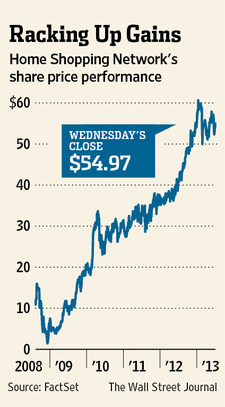
ST. PETERSBURG, Fla.—When Mindy Grossman took over as CEO of HSN Inc. five years ago, she was up against naysayers who said the Home Shopping NetworkHSNI +1.80% would die in the digital age. True, Home Shopping Network had a reputation of C-list celebrities selling rhinestone jewelry and miracle skin creams to couch potatoes. But digital hasn’t been the death of HSN, by any means. Ms. Grossman, 55 years old, has begun to prove that she understands the audience HSN needs to attract and how they use mobile devices. HSN still has a long way to go to catch up to rival QVC, but after posting a multibillion-dollar loss in 2008, HSN Inc., which also includes home and lifestyle brand Cornerstone, started posting increasing profit, which last year topped $130 million. The stock price, less than $11 in 2008, is above $54 today, giving the company a market value of $2.9 billion. Read more of this post

Hoping to bring banking services to millions of people in small towns and villages, India is turning to industrial companies to set up banks, a strategy that has had bad consequences in other countries

July 4, 2013, 7:22 p.m. ET

India’s Risky Step to Boost Banks

NUPUR ACHARYA And SHEFALI ANAND

MI-BW974A_IBANK_NS_20130704163017

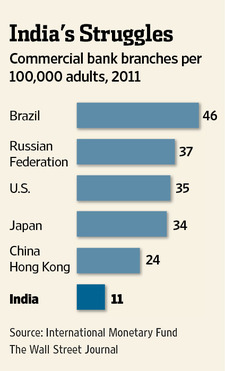
MUMBAI—Hoping to bring banking services to millions of people in small towns and villages, India is turning to industrial companies to set up banks, a strategy that has had bad consequences in other countries. Regulators are taking this risk because only one in two Indians have bank accounts in India, and one in seven have access to bank credit, according to CrisilLtd., 500092.BY +0.14% a research unit of Standard & Poor’s. State-run banks, which dominate India’s banking system, are struggling to expand due to shortage of capital. Meanwhile, foreign banks have been stymied, because all of them together are allowed to open only 12 branches a year. Read more of this post

Asia Chip Makers Stand to Benefit From Move to Cut-Price Gadgets

July 4, 2013

Asia Chip Makers Stand to Benefit From Move to Cut-Price Gadgets

By MIYOUNG KIM | REUTERS

SEOUL — Asian chip makers are set to cash in on a major realignment in the volatile industry that is tilting the balance of power their way at the expense of gadget makers like Apple, after years of cautious investment kept supply in check.

Manufacturers, including Toshiba and SK Hynix, are poised to reap the rewards of soaring demand for cut-price tablets and smartphones in China, the world’s biggest smartphone market, and the emergence of Chinese mobile device makers like Huawei Technologies. Read more of this post
The new hot commodities market: the cloud; Deutsche Börse to launch Cloud Exchange for spare cloud computing capacity

The new hot commodities market: the cloud

By Christopher Mims @mims July 2, 2013

Have some spare computing capacity in your data center, aka the “cloud”? Why not make some scratch by selling it on the open market? Or, if you’re so inclined, you could trade derivatives of cloud computing. In place of mortgage-backed securities, perhaps the world’s banks can pour their savings into another abstract financial instrument that depends on the reliability of Amazon’s web services. What could possibly go wrong? This is the promise of a new exchange for cloud computing capacity, called Cloud Exchange AG, which will launch early next year. It’s a joint venture of Deutsche Börse, which runs the Frankfurt stock exchange, and software development firm Zimory.

Trading computing capacity isn’t as simple as trading, say, wheat. The system implemented by the two firms will allow buyers to specify the location of servers, the precise vendor (e.g. Amazon, IBM, Rackspace), security measures and transfer speed, among other things. The scheme is similar to cloud marketplaces like Reserved Instance Marketplace by Amazon Web Services and SpotCloud by Virtustream, notes Ulrike Dauer at the Wall Street Journal. But on those platforms trade is restricted to one vendor, such as Amazon. The Deutsche Börse system allows trading across vendors. By 2015, Deutsche Börse hopes to offer derivatives and futures on cloud computing commodities trades. This could lead to a whole new level of collaboration (or competition) between Wall Street traders and their IT departments, as both try to predict the price of cloud computing resources weeks and months ahead.

As Competition Wanes, Amazon Cuts Back Discounts; After years of lowering book prices, Amazon is offering smaller discounts on some books. Authors and small publishers said this put some books beyond an audience’s reach

July 4, 2013

As Competition Wanes, Amazon Cuts Back Discounts

By DAVID STREITFELD

Jim Hollock’s first book, a true-crime tale set in Pennsylvania, got strong reviews and decent sales when it appeared in 2011. Now “Born to Lose” is losing momentum — yet Amazon, to the writer’s intense frustration, has increased the price by nearly a third. “At this point, people need an inducement,” said Mr. Hollock, a retired corrections official. “But instead of lowering the price, Amazon is raising it.” Other writers and publishers have the same complaint. They say Amazon, which became the biggest force in bookselling by discounting so heavily it often lost money, has been cutting back its deals for scholarly and small-press books. That creates the uneasy prospect of a two-tier system where some books are priced beyond an audience’s reach. Read more of this post

Brazilians Foil a Bus Fare Hike, but Commuting’s Still Costly

Brazilians Foil a Bus Fare Hike, but Commuting’s Still Costly

By Joshua Goodman on July 03, 2013

BW28_econ_brazilbuschart_202inline

The street protests that rocked São Paulo and Rio de Janeiro achieved their initial modest goal: In mid-June authorities revoked a 9¢ increase in bus fares that had gone into effect in both cities. Yet even without the fare hike, Brazilians devote a bigger share of their paychecks to mass transit than most of their urban counterparts around the world. Read more of this post
What Abe Can Learn From Japan Inc.’s Mavericks

What Abe Can Learn From Japan Inc.’s Mavericks

There’s no shortage of pundits eager to tell Shinzo Abe how to shake up Japan’s economy. Instead of looking to academics for advice, though, the prime minister should get into the trenches with some of the nation’s more unconventional corporate heads.

Abe talks, for example, about wanting to make Japanese companies worldlier. For pointers, he should study what Tadashi Yanai has already accomplished at Fast Retailing Co., home of the Uniqlo brand. Yanai has become Japan’s richest man — and the only Japanese on Time magazine’s latest 100 most-influential list — largely because of his success at expanding abroad. Read more of this post

Chavez’s 70% Gold Bet Unravels as Reserves Plunge

Chavez’s 70% Gold Bet Unravels as Reserves Plunge: Andes Credit

The bet on gold that former Venezuelan President Hugo Chavez made in the final years of his life is collapsing at the wrong time for his country.

Chavez, who argued that Venezuela should move away from the “dictatorship of the dollar,” stockpiled more than 70 percent of Venezuela’s foreign reserves in gold by 2012, the highest percentage among all emerging-market countries and more than 50 times that held by neighbors Colombia and Brazil, according to the World Gold Council. Read more of this post

Forget Handouts—India Is Starving for Growth; New Delhi’s decision to increase handouts of subsidized food doesn’t bode well for India’s economy

July 4, 2013, 7:28 a.m. ET

Forget Handouts—India Is Starving for Growth

New Delhi’s decision to increase handouts of subsidized food doesn’t bode well for India’s economy.

ABHEEK BHATTACHARYA

New Delhi’s decision to increase handouts of subsidized food doesn’t bode well for India’s economy. The bigger problem, though, is that India is starving for growth. The National Food Security Bill, passed by the government Wednesday, guarantees cheap grain to 800 million Indians. But there’s no such thing as a free lunch. The new program will cost at least $4 billion a year, according to the government, on top of the roughly $18 billion a year India already spends on food subsidies. Critics say the move is a politically motivated handout meant to garner popular support ahead of next year’s general election, and does nothing to fix India’s woeful food supply infrastructure. Read more of this post

Burned Bond Buyers Re-Evaluate Africa

July 4, 2013, 4:20 p.m. ET

Burned Bond Buyers Re-Evaluate Africa

SERENA RUFFONI And PATRICK MCGROARTY

MI-BW975_AFBOND_G_20130704163106

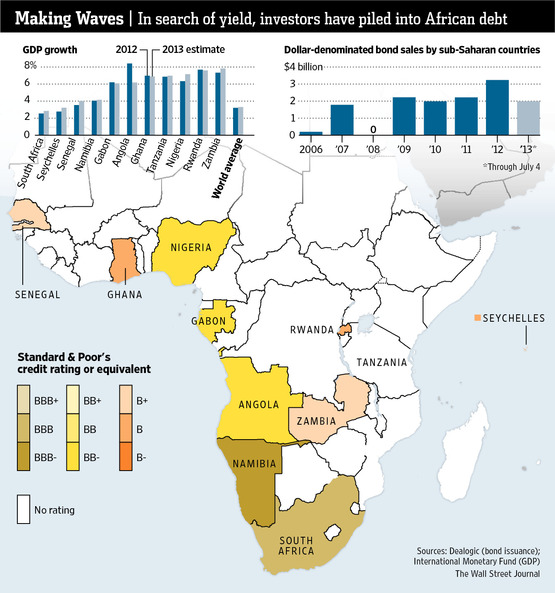
Just weeks ago, Africa was a hot destination for yield-hungry bond investors. It was a bet that burned many money managers. Prices of government bonds around the world have declined, pushing yields higher, as investors come to terms with the possibility the Federal Reserve could scale back its economic stimulus within months. A flurry of bonds issued by nations in sub-Saharan Africa since September have taken some of the biggest hits, an unpleasant wake-up call for investors who dove into these “frontier” markets in search of fat yields. The selloff has spurred investors to take a closer look at these countries’ finances and re-evaluate the risks that come with investing in Africa. As exuberance turns to trepidation, doubts have surfaced about whether countries with plans to tap international markets this year will proceed. Flagging investor interest has already raised borrowing costs for Nigeria, which sold $1 billion worth of bonds to global money managers Tuesday. Read more of this post

Crocs Wants You to Forget About Its Clogs; Crocs is targeting foreign markets. Half of the 90 stores it will open in 2013 will be in Asia

Crocs Wants You to Forget About Its Clogs

By Matt Townsend on July 03, 2013

http://www.businessweek.com/articles/2013-07-03/crocs-wants-you-to-forget-about-its-clogs

Search online for “hate crocs” and you’ll quickly see why Crocs (CROX) is eager to downplay the clunky clogs it unleashed on an unsuspecting world 11 years ago. Bloggers have denounced the rubbery footwear as ugly and an escalator tripping hazard. On YouTube, a woman cuts a yellow pair into pieces and then feeds them to a blender.

The clogs still generate 47 percent of the company’s sales; lots of people like them, especially medical professionals and kids. Yet to hit Chief Executive Officer John McCarvel’s target of doubling sales in five years, the company has to woo consumers with its other footwear. That’s why Crocs-the-company is telling the world all about its foam-bottomed wedges, sneakers, and leopard-print ballet flats—and putting Crocs-the-clogs in the back of stores the way grocers do with milk. “If someone wants them,” McCarvel says, “make them walk through all the new stuff first.” Read more of this post

The Eurobond’s 50th birthday has lessons for governments about how not to regulate finance

The Eurobond’s 50th birthday has lessons for governments about how not to regulate finance

Jul 6th 2013 |From the print edition

20130706_LDD002_0

FIFTY years ago this week Autostrade, an Italian motorway operator, issued a $15m bond. The first Eurobond was less a piece of clever financial engineering than an elaborate tax dodge. The idea dreamed up by London bankers was to capture some of the dollars that were sloshing around Europe (hence the name Eurodollars) because of America’s Regulation Q, which limited the interest rates paid on deposit accounts. Autostrade was chosen as the first issuer because it had the right to pay interest (in the form of coupons) without deducting Italian tax. The bond was issued in Schiphol airport in Amsterdam to avoid British stamp duty. The coupons were payable in Luxembourg to avoid British income tax. Read more of this post

Mumbai’s hungry high rollers; The fight to fill the stomachs of Mumbai’s rich

Mumbai’s hungry high rollers; The fight to fill the stomachs of Mumbai’s rich

Jul 6th 2013 | MUMBAI |From the print edition

20130706_ASD001_0

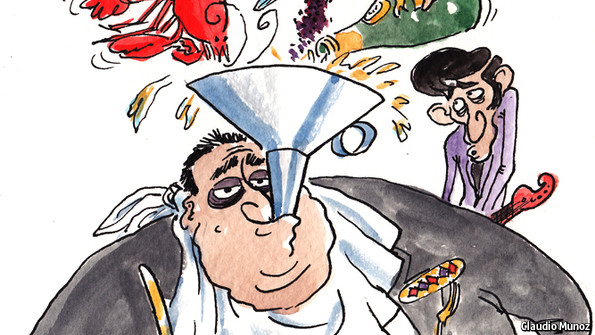
IF YOUR thing is an infinite supply of langoustine and Veuve Clicquot served, to a piercing guitar solo, by a waiter who probably lives in a slum, then head to Mumbai. India’s financial capital has developed a mania for Sunday brunch. The magic formula is a gluttonous amount of food and drink for $40-80 a head, and a background of classic rock. Luxury hotels and restaurants each have their own style and their own clientele. In the Marriott Hotel in Juhu, a filmi suburb where actors live, bandannas and boob-jobs are on display. At the new Shangri-La, bankers boast about how much face-time they get with Mukesh Ambani, an upholstered tycoon, while loading up on tuna nigiri-zushi. The age of the brunch reflects rising numbers of wealthy folk. “People used to entertain at home, but things have become less conservative—money does wonders,” says a catering manager at the Taj Mahal Palace Hotel, standing by a cheese the size of a car wheel. It also reflects a dearth of things for the well-to-do to do. Mumbai has little green space, few shops and dire transport. The rich would not be seen dead on the foreshore promenades where anglers cast for mullet on the weekends when the council does not release sewage into the sea, or on the beaches where whizzing cricket balls, rubbish and tens of thousands of paddlers vie for space. Read more of this post

P&G Invokes Bollywood in India Toothpaste Battle

P&G Invokes Bollywood in India Toothpaste Battle

Procter & Gamble Co. (PG) is betting on one of Bollywood’s most popular actors to help it break the dominance of Colgate Palmolive Co. (CL) and Hindustan Unilever Ltd., which together control 73 percent of India’s toothpaste market.

The world’s biggest maker of consumer products, which started selling its Oral-B Pro-health toothpaste in mainly urban centers in India in June, is using Hindi-movie actor Madhuri Dixit-Nene to endorse the brand. By enlisting mother-of-two Dixit-Nene, 46, P&G is targeting all age groups, said Harish Bijoor, who advises companies on brands. Read more of this post

Douglas Engelbart, Computer Mouse Creator, Visionary, Dies at 88

July 3, 2013

Computer Visionary Who Invented the Mouse

By JOHN MARKOFF

engelbart-web-popup

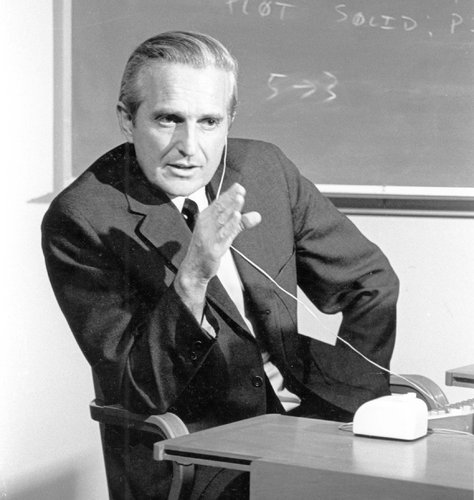
Douglas C. Engelbart with an early computer mouse in 1968, the year it was unveiled

Douglas C. Engelbart was 25, just engaged to be married and thinking about his future when he had an epiphany in 1950 that would change the world.

He had a good job working at a government aerospace laboratory in California, but he wanted to do something more with his life, something of value that might last, even outlive him. Then it came to him. In a single stroke he had what might be safely called a complete vision of the information age.

The epiphany spoke to him of technology’s potential to expand human intelligence, and from it he spun out a career that indeed had lasting impact. It led to a host of inventions that became the basis for the Internet and the modern personal computer. Read more of this post

How ‘God Bless America’ Became America’s Anthem

How ‘God Bless America’ Became America’s Anthem

The “God Bless America” that we know today was forged from collaboration between its composer, Irving Berlin, and Kate Smith, the performer who first made it famous. Behind the scenes, though, the two of them battled for control of the song. The story begins in 1918, when Berlin was drafted as an Army private, a few months after he officially became a U.S. citizen. While stationed at Camp Upton in Yaphank, New York, Berlin was asked to write a soldier show to raise money for a community house to be built at the camp. The revue, called “Yip, Yip, Yaphank,” staged at New York City’s Century Theatre, included a blackface number, satirical spoofs of Army life (including “Oh, How I Hate to Get Up in the Morning”) and Ziegfeld Follies-style dance numbers featuring soldiers in drag that one reviewer characterized as “one long laugh.”

Berlin wrote “God Bless America” as the show’s finale, but decided to end instead with the upbeat “We’re on Our Way to France.” Berlin later said he changed his mind because “God Bless America” was “too obviously patriotic for soldiers to sing.” People in the military already amply demonstrate their patriotism through service, he believed. Patriotic songs were for civilians. Read more of this post

‘Africa’s Oprah’ launches pioneering TV network

‘Africa’s Oprah’ launches pioneering TV network

AP JUL 3, 2013

wb20130704a3a-870x580

Historic: Mosunmola ‘Mo’ Abudu, CEO of EbonyLife TV, attends the launch of the entertainment network on Sunday in Lagos. | AP

LAGOS – A woman who could be considered Africa’s Oprah Winfrey is launching an entertainment network that will be beamed into nearly every country on the continent with programs showcasing its burgeoning middle class. Mosunmola “Mo” Abudu, 48, wants EbonyLife TV to inspire Africans and the rest of the world, and to change how viewers perceive the continent. The network’s programming tackles women’s daily-life subjects — everything from sex tips to skin bleaching. “Not every African woman has a pile of wood on her head and a baby strapped to her back!” Abudu said. “We watch Hollywood as if all of America is Hollywood. In that same vein, we need to start selling the good bits of Africa.” Read more of this post

The Writing of a Great Address: Lincoln began forming his thoughts just after the Battle of Gettysburg.

July 3, 2013, 7:19 p.m. ET

The Writing of a Great Address

Lincoln began forming his thoughts just after the Battle of Gettysburg.

PEGGY NOONAN

RV-AK646_BKRV_G_G_20130530102818

The air is full of the Battle of Gettysburg, whose 150th anniversary this week marked. Those who love history are thinking about Little Round Top and Devil’s Den, Culp’s Hill and the Peach Orchard, and all the valor and mistakes of men at war. The mystery of them, too. How did Joshua Chamberlain, a bookish young professor of rhetoric from Maine, turn into a steely-eyed warrior of the most extraordinary grit and guts at the exact moment those qualities were most needed? He was a living hinge of history. Why did Robert E. Lee, that military master who always knew when not to push it too far, push it too far and order Pickett to charge that open field? Read more of this post

Fourth of July a Day of Bloody Protest in U.S. History

Fourth of July a Day of Bloody Protest in U.S. History

On July 4, 1934, the U.S. was in the fourth year of an economic crisis. On the West Coast, longshoremen had taken advantage of their newly acquired unionization rights and were on strike. In San Francisco, there was an uneasy calm on the waterfront after a vicious battle between police and strikers the day before.

The peace lasted only for a few hours. San Francisco’s police were planning another attempt to open the port. On the morning of July 5, they fired tear gas and charged the picket lines. The struggle lasted for hours. “It was a Gettysburg in the miniature,” the San Francisco Chronicle reported. By evening, two strikers were dead and the National Guard had set up machine-gun nests to guard the port. Read more of this post

The Economics of Mad Geniuses: Is it possible that mental illness could, in some cases, be good for worker productivity?

JULY 3, 2013, 12:56 PM

The Economics of Mad Geniuses

By CATHERINE RAMPELL

In a magazine column this week, I talked about how expanding access to mental health care could be a cost-effective way to help the economy, given the economic costs of untreated or inadequately treated illness (like worker absenteeism and subsidized housing). Now to play devil’s advocate: Is it possible that untreated mental illness is not entirely bad for the economy, that mental illness could in some cases improve worker productivity? After all, history is littered with examples of “mad geniuses” whose creativity and innovativeness have sometimes been attributed to alleged mental illness (e.g., Thomas EdisonErnest HemingwayVincent Van GoghJohn Nash). There are likewise entrepreneurs of our own time who have been publicly characterized as having some sort of mental or at least neurological disorder. Former executives of JetBlue and Kinkos, for example, famously credited their A.D.H.D. with helping them think more creatively. Stories about 48-hour-straight coding sessions in Silicon Valley can sound a bit like manic behavior, too. Read more of this post

Clash! 8 Cultural Conflicts That Make Us Who We Are; Novel thinking about conflict and co-operation

uly 3, 2013 5:15 pm

Novel thinking about conflict and co-operation

Review by Trisha Andres

Clash! 8 Cultural Conflicts That Make Us Who We Are

By Hazel Markus and Alana Conner (Hudson Street Press, $25.95)

Clash

Should Mark Zuckerberg lose the trademark hooded sweatshirt when he goes to meet investors in Wall Street? According to the authors of Clash! – a manual for navigating cultural divisions in the modern world – the answer is a resounding yes. They write: “In Silicon Valley, his attire isn’t a problem; Steve Jobs broke the CEO dress code a generation before when he adopted a black turtleneck and jeans as his power suit. But on button-down Wall Street Zuck’s hoodie causes an uproar. The Northeast establishment sees the young entrepreneur’s refusal to don at least a jacket when he is in New York as a sign of disrespect.” The book splits people ac­cording to two modes of operating: independent and interdependent – with the former better at adapting to and mimicking those across various cultural divides. “Independent selves view themselves as individual, unique, influencing others and their environments, free from constraints and equal,” the writers explain. Read more of this post

Inside the Brains of Winners

July 3, 2013, 12:13 PM

Inside the Brains of Winners

By Jeff Brown

images (18)

Everyone knows a name dropper when they hear one. Buzz names like Gates, Jiwei, Jobs, Nooyi, Zuckerberg and Winfrey can give dramatic pause to a conversation and pique collegial interest. But their mere mention can also throw a name dropper under the credibility bus quicker than they can say “My cousin was college roommates with J.K. Rowling’s agent’s sister.” Read more of this post

Out-of-the-box thinking takes Goodpack places; “Once, I visited a rubber factory when a lorry hit something… The splinters were stuck to the rubber… It took an enormous amount of time to remove the splinters and the contamination to the rubber. “So I thought we should look at something that is easy to pack, environmentally friendly, easy to stack and cheaper than the wood we were buying.”

Out-of-the-box thinking takes Goodpack places

20130703_ST_2D_goodpack

Wednesday, Jul 03, 2013

Rachael Boon, The Straits Times

SINGAPORE – Unlike most other Singapore companies, it all started for Goodpack founder and chairman David Lam with the need to solve a packaging problem which had been plaguing buyers of natural rubber. For years, they had bemoaned the damage caused to raw rubber during the shipping process in one of Singapore’s oldest industries. Wooden crates used to package natural rubber bales would be tossed around in ships, causing wooden splinters, sawdust and other debris to contaminate the raw material. This foreign matter then clogged up machines used to process the rubber. After latex is tapped from trees, it is coagulated and refined as rubber for use in tyres and other rubber products. Mr Lam, now 60, became aware of the packaging problem in the late-1980s when he was involved in trading natural rubber. Spotting a potentially vast market opening, he turned his mind to how best to replace the wooden crates with better packaging. Read more of this post

Bubbly, commonly known as the “Twitter for voice,” Hits 30 Million Users

Social Voice App Bubbly Hits 30 Million Users

July 4, 2013

by Willis Wee

bubbly-home

Singapore-headquartered Bubbly, commonly known as the “Twitter for voice,” has hit 30 million users. In addition to the 30 million users milestone, the company has rebranded itself as Bubbly (it was formerly called Bubble Motion) to give a more unified branding, look, and feel. Aptly, the latest version of Bubbly (v3.0) also launched today with a new design. Read more of this post

China, Australia and a hard landing

China, Australia and a hard landing

Neil Hume | Jul 04 03:53 | Comment | Share

Australias-exposure-to-China-Barclays-e1372900110391

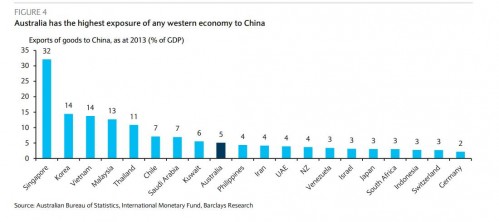
Kevin Rudd 2.0 has been quick to highlight the dangers posed by slowing Chinese growth since he was returned as Australia’s prime minister. For example: When I look at the challenges of rest of this year, and certainly for the upcoming three-year term, the huge outstanding economic challenge for us is the end of the China resources boom. This will have a dramatic effect on our terms of trade, a dramatic effect on living standards in the country, a dramatic effect also potentially on unemployment unless we have an effective counter-strategy. And… There are a lot of bad things happening out there. The global economy is still experiencing the slowest of recoveries. The China resources boom is over. China itself, domestically shows signs of recovery and when China represents such a large slice of our own economy, our jobs and our own opportunities for raising our living standards. But just how dangerous is a Chinese slowdown? Read more of this post

Scientists Fabricate Rudimentary Human Livers

July 3, 2013

Scientists Fabricate Rudimentary Human Livers

By GINA KOLATA

04liver-popup

Researchers from Japan used human stem cells to create “liver buds,” rudimentary livers that, when transplanted into mice, grew and functioned

Researchers in Japan have used human stem cells to create tiny human livers like those that arise early in fetal life. When the scientists transplanted the rudimentary livers into mice, the little organs grew, made human liver proteins, and metabolized drugs as human livers do. Read more of this post

Stem-cell therapies: Prometheus unbound; Researchers have yet to realise the old dream of regenerating organs. But they are getting closer

Stem-cell therapies: Prometheus unbound; Researchers have yet to realise the old dream of regenerating organs. But they are getting closer

Jul 6th 2013 |From the print edition

PROMETHEUS, a Titan bound to a rock by Zeus, endured the daily torture of an eagle feasting on his liver, only to have the organ regrow each night. Compared with this spectacle, a video on the website of Nature this week seems decidedly dull. It shows a collection of pink dots consolidating into a darker central glob.

But something titanic is indeed happening. The pink dots are stem cells, and the video shows the development of a liver bud, something which can go on to look and act like a liver. Takanori Takebe and Hideki Taniguchi of Yokohama City University, in Japan, who made the video, have created working human-liver tissue. Read more of this post

Novo’s Scale Advantages and Drug Lineup Broaden Its Wide Moat

Novo’s Scale Advantages and Drug Lineup Broaden Its Wide Moat

By Lauren Migliore, CFA | 07-03-13 | 06:00 AM | Email Article

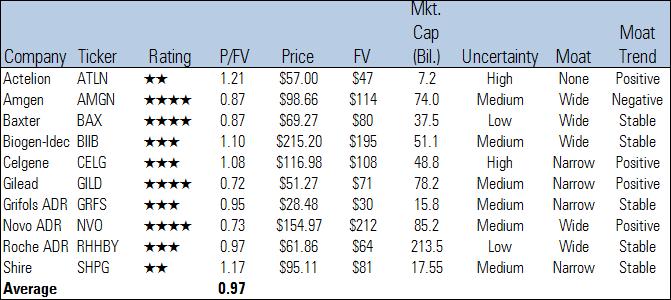
 Novo Nordisk (NVO) has been consistently at the forefront of diabetes care, and we expect favorable industry dynamics and the firm’s formidable research and development and diabetes-focused commercialization infrastructure to continue to drive strong returns on shareholder capital.

We expect growth to come from increased market penetration in diabetes care and stable growth in biopharmaceuticals. Once-daily Victoza continues to outperform once-weekly Bydureon in the GLP-1 market thanks to the competing drug’s inability to prove noninferiority in trials, and we expect Victoza to break the $2 billion mark in annual sales this year. Novo’s next-generation products, Tresiba and Ryzodeg, will help the company defend its leading insulin franchise, though we expect that a complete response letter will delay U.S. launch by two to three years. This regulatory setback, along with recent safety concerns for the incretin class–of which Victoza is a member–has caused shares to underperform, and Novo is now trading at one of the steepest discounts to fair value (over 20%) in the large-cap biotech space (see the following table). However, we think these issues have little long-term impact on the company’s value, and instead present investors with the rare opportunity to own this high-quality name at an attractive price.

Comparables Within the Biotechnology Industry
1678

Source: Morningstar Read more of this post

China hands Asian memory makers massive bargaining chip

China hands Asian memory makers massive bargaining chip

5:03pm EDT

By Miyoung Kim

SEOUL (Reuters) – Asian chipmakers are set to cash in on a major realignment in the volatile industry which is tilting the power balance their way at the expense of gadget makers such as Apple Inc, after years of cautious investment kept supply in check. Manufacturers including Toshiba Corp and SK Hynix are poised to reap the rewards of soaring demand for cut-price tablets and smartphones in China, the world’s biggest smartphone market, and the emergence of Chinese mobile device makers such as Huawei Technologies Co Ltd. Read more of this post