Bringing home the bread for 50 years: Ian Gregg helped take the bakery chain from a single shop to a £416m company with 1,600 branches and more than 20,000 staff
June 1, 2013 Leave a comment
May 31, 2013 6:13 pm
Bringing home the bread for 50 years
By Natalie Graham
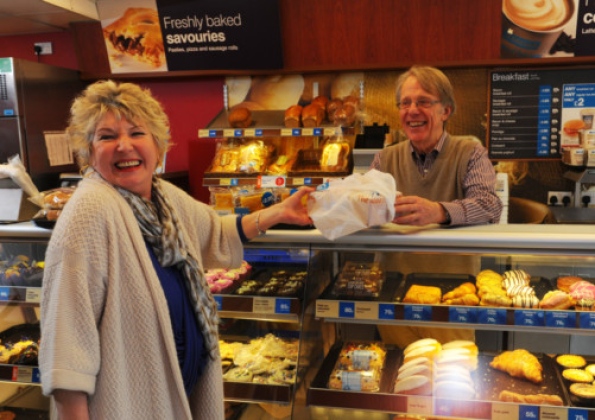
Ian Gregg, 74, led the eponymous family business from a single shop in 1964 on Tyneside into a public company in 1984 with several regional bakeries and 300 shops. Today, Greggs is a £416m company with 1,600 branches and more than 20,000 staff. The son of founder John Robson Gregg, he was just a boy when he first joined his father at work, selling pies from a van to miners’ wives in Newcastle. The company is currently the subject of Sky 1 documentary Greggs: More than Meats the Pie. Recently published is Bread, The Story of Greggs, in which Gregg records the company’s 80-year history.Did you think you would get to where you are?
No, I did not. I set out at 25 with a view to running a small business in Newcastle, but it just took off. Our success on Tyneside from the mid-1960s and during the 1970s was phenomenal. Within 10 years the annual turnover went from £100,000 to more than £5m.
I joined Greggs after university in spite of my parents’ wishes. They wanted me to go into a profession, which I was doing until my father died aged 55. I took on the business with my mother, who primarily looked after the catering side.
I became chairman of the company in 1984, and Michael Darrington (now Sir Michael) took it from 300 shops to around 1,300 before he retired in 2008. I feel very proud that Greggs has grown to this extent, and pleased that the business has offered a lot of opportunities to the people in it. I retired as chairman in 2002, but I remain a shareholder.
When you had made your first million did you want to slow down?
Greggs’ first million-pound profit was in 1982. It was certainly a huge milestone. I can remember that we had a dinner to celebrate. We invited senior managers and people who had helped the business, and even some of our competitors.
I had no intention of slowing down because we were forging ahead. I was in my early forties, and we had 250 shops in the north of England. We were keen to go into the Midlands, Wales and the South.
What is the secret of your success?
Ian Gregg CV
Born: Newcastle, 1939
Education: Durham School, then Classics at St Catharine’s College, Cambridge
Lives: Kendal, Cumbria, with second wife Jane
Career: Joined Greggs before becoming a solicitor’s articled clerk. Took over Greggs in 1965. Stepped down as a non-executive in 2007
Other interests: Set up the Greggs Trust in 1987; now the Greggs Foundation, it provides small grants to community groups and funds Breakfast Clubs for Children. Non-executive director of the Rivers Trust
We provide excellent products that are good value, our staff are enthusiastic and friendly, and our shops are conveniently located. We have got about nine strategically located bakeries to make sure the products are fresh. We try to run the business according to simple old-fashioned values that reflect roots and family traditions, including the revival of recipes like “stottie” cakes in the north east. The extent to which Greggs has penetrated the national psyche in the past 10 years has really surprised me. Since 2000 we have become part of the British culture.
What is your basic business philosophy?
Look after your customers and staff, and if you do that the shareholders will do alright as well. My ethos is to treat everybody fairly and with respect. It is also important to put something back into the community and share success. Greggs’ staff members enjoy 10 per cent of the annual profits under our profit-sharing scheme.
How did you expand into London and the south east?
With great difficulty. It was always a difficult market. The people don’t have a big tradition of eating sausage rolls and pies so we had to educate southerners to these delights. It was 15 years before we made any profit. We just persevered.
It is harder to get staff loyalty in London because people move around more. Elsewhere you can reach shops more easily and if necessary make multiple deliveries each day, but in London you cannot do that because of the traffic. Another problem in the 1990s was the cost and availability of sites. There was strong competition from takeaway units, coffee bars and mobile phone shops, which resulted in an escalation of rents.
Do you want to carry on till you drop?
I carried on until I was 68. When I left it was the right time to move on. It had been a gradual withdrawal since 1984, when Michael Darrington became managing director. In recent years I have put most of my effort into countryside conservation and the Rivers Trust.
Have you made any pension provision?
The last thing on my mind when I went into the business was a pension. I wasn’t even thinking about it in my forties. I assumed my shares in Greggs would provide me with a pension, which they have, but if I were starting now I would take a different approach.
Do you allow yourself the odd indulgence?
I do like fishing, gardening and walking, and spending time with my family. Occasionally I have a go at making bread with the grandchildren and I’d like to do more. I enjoy simple pleasures, but in September Jane and I are going for a week’s cruise on the Hebridean Princess around the Scottish Islands.
Do you believe in leaving everything to children?
I think it is nice to provide your children with some security, but they shouldn’t have too much. I will give most of my wealth away in my lifetime, and whatever is left will go to charity. I made provision for my daughters a long time ago and the business grew, so they are pretty well off now.
What was your biggest business risk?
It was selling the Gosforth shop and outdated bakery – which my parents had owned since 1952 – so that we could build a modern bakery. I did that when I was 28. I was quite worried because that property was my mother’s pension and the inheritance for myself, my brother and my sister. However, they agreed we should sell, so I was happy to go along with it.
The sale raised about £60,000 in 1967. We leased another shop on Gosforth High Street and bought a plot of land to build a new bakery, with the help of a small bank overdraft. That was the first stage in Greggs’ expansion in the north east.
What is the most you have ever paid for a bottle of fine wine or champagne?
It was £80 for a bottle of champagne, when Jane and I visited Kenya. We were staying at a hotel on the shores of Lake Naivasha and were so wrapped up in the holiday we celebrated on the wrong day.
Record baker: Ian Gregg discusses his memoir
Published on 04/05/2013 00:00
We hoover up millions of Greggs sausage rolls and doughnuts each week, but Britain’s biggest bakery chain hasn’t always enjoyed a high (apple) turnover. A fascinating new memoir reveals its humble roots
Not so long ago, like plenty of retirees with green thumbs, Ian Gregg was doing a bit of work in the garden, laying flagstones and digging beds. At about 11 o’clock, having built up a healthy appetite and looking, he admits, “really scruffy”, he walked to the local Greggs with his wife to buy some lunch. As they decided what to have, Ian raised some objections as to the crustiness of the crusty loaves and the texture of the morning rolls. Selection made, his wife paid and as she did so the woman behind the counter, having no idea that the man quibbling about the quality of the stock was the same one whose name was emblazoned above the shop and on the paper bags she filled, leant in and said, “he’s a bit of trouble, you’d do better leaving him at home next time”.
Gregg laughs as he tells the story. It appeals to his self-deprecating sense of humour, which perhaps isn’t quite what you’d expect from a man who sowed the seeds for what has become Britain’s biggest bakery chain, with more than 1,600 outlets, more than 20,000 staff and a turnover last year of more than £700 million. But there it is.
In Gregg’s genuinely entertaining memoir, Bread: The Story of Greggs, there’s less of the Sir Alan-style aphorisms and much more in the way of dry wit, straight talking and unfailing modesty. Take for example, the moment Gregg was able purchase his first Rolls-Royce. In the usual business book, firstly, the car would not have been chosen on the basis that it had the best safety record; secondly, it would have been a moment for boastful celebration rather than deep embarrassment. “I cannot imagine what folly drove me to this decision,” he writes, before explaining that he sold the Roller without ever having sat in the driver’s seat, never mind taking it for a spin.
Ian Gregg is not your average businessman. And yet Greggs, with its blue and orange livery, is now an indelible part of our high streets, the food it sells a constant reminder of our national sweet tooth and ballooning waistlines. Half a billion products are made and sold every year, including two and a half million sausage rolls and two million doughnuts each week. Until Monday when the chain issued a surprise profit warning – apparently the cold weather has cooled our appetite for pasties – Greggs’ success seemed impregnable. Set against the backdrop of trendy eateries with their social media savvy and touchy-feely service, where you can’t get a coffee unless you give your name, Greggs is like a remnant from another era. The staff wear hairnets and tabards, the products are unashamedly cheap and cheerful. But it works. And it always has done.
I lost count of the number of people who on seeing my copy of Bread, proudly enquired about the business’s Scottish heritage. But Greggs is about as Scottish as a stotty cake, which is to say not very. John Robson Gregg, Ian’s father, began delivering yeast and eggs in a basket on the handlebars of his bicycle in Newcastle in the 1930s. It wasn’t long before he’d graduated to a van – with a picture of a swiss roll on one side and a jam sandwich cake on the other. He travelled all over Tyneside in the search for customers. The Second World War interrupted his burgeoning business, but on his return, his wife Elsie having added a second van to their fleet, John resumed his deliveries.
Ian Gregg was six when his father returned from the war. He remembers sitting in the van with him as he loaded pies and pastries onto large wooden bread trays before setting off to the mining districts where Gregg found his best customers, women who’d emerge from the red brick, back-to-back terraces and congregate round the van to fill their pinnies with their purchases. He also remembers the way his father drove, “slowly and carefully… changing gear only when absolutely necessary, using the brakes sparingly and coasting as much as possible to preserve the cargo, reduce petrol consumption and prolong the vehicle’s life.”
Gregg laughs at the memory. “My father was very, very careful about costs in some respects, but in other respects, in terms of not keeping a close check of what was going on, he was quite foolish,” he says. “I think he was just worn down by the grind of keeping products available to people six days a week and all that entails in a small business.”
John and Elsie Gregg loom large in the book, over Greggs the business and, of course, over Gregg himself. They were the parents who worked every hour sent to ensure that their children (Ian, Colin and Gay) would have the education and the security that they had never had. (Ian studied Classics and Law at Cambridge and trained as a solicitor before deciding that the family business was where he saw his future, much to his parents’ consternation.) The Greggs were a team. They were also never really happy.
“There is an overriding sense of sadness,” says Gregg, of looking back over what his parents achieved. “They weren’t very happy doing what they did; they weren’t very happy together. There wasn’t really any spark, in fact there was quite a lot of tension. They got the sense of satisfaction of establishing a business that could provide a good education for their children and some status and security but I don’t think they got the personal pleasure. It wasn’t a happy process for either of them and I feel a certain sadness too that they didn’t see it develop into what it became.”
It’s clear that Gregg was closer to his mother than his father, not least because John Gregg died at the age of 55 from lung cancer. “We did go fishing a bit and we did go and watch football matches but my father was a slightly distant figure,” he says. His mother, though, was different. “My mother took part in everything we did, any possible opportunity she came to see us at boarding school and university. When we finished university, she took a great interest in whatever we were doing.” He pauses for a moment. “The big regret is that we didn’t speak; not communicating is at the heart of so many domestic and personal problems and we just didn’t communicate.”
I suggest that the legacy of that must have had quite an impact on how he relates to his own children, two daughters, Fiona and Felicity, who’re now grown-up.
“Yes,” he says, and stops without another word. I nearly laugh, but don’t want to seem insensitive so I prompt him instead.
“I’m still not the best of communicators,” he says. “I think people who’ve grown up in families where things are talked about are better at it than those of us who’ve kept things in and not always expressed ourselves.”
And yet, Gregg has written a genuinely entertaining book, full of insight not only into who his parents were, but also into the business that they founded. Gregg retired in 2007 but retained a stake in the business. He had no intention of writing Bread. He’d thought about writing a book about fishing or perhaps gardening – his two main interests – but he got sidetracked. Then Ken McMeikan, who was CEO of Greggs until very recently, suggested that he should record how Greggs had developed as a business. With typical modesty, Gregg’s response was, “I’ll try.”
He needn’t have been so cautious. The book is a fine combination of the personal and the professional, and throws in some rather timely tub-thumping about the dangers of “smash and grab consumerism” and how business as it works at the moment is “unsustainable”.
“I was asked to write a history to capture how things happened but I was writing about what I did so it became more personal and then, of course, I got involved in writing about corporate greed and got a bit carried away by that in the process.” He sounds sheepish but he needn’t. It seems to me there has never been a better time – as discussions rage about the economy and we teeter on the brink of a third recession – for a man who has transformed a small family enterprise into a hugely successful business with a multi-million pound turnover, to make his voice heard. And Greggs’ message, just like the shops in which it serves millions of customers each week, is old-fashioned, a commonsensical approach that I imagine just might capture the public mood.
“I’ve always believed, and Greggs has gone along these lines, if you look after your customers and you look after your staff then your shareholders will do very well,” says Gregg. “If you’re looking at the success of a business, profit is actually the last thing on the balance sheet – you don’t start there. If you put shareholder interest, particularly short-term interest, first, you don’t create a business. You’ve got to look after all three of your stakeholders – employees, customers and shareholders.”
More than that, he says, you need good long-term relationships with the suppliers you rely on and the communities in which you do your business. The Greggs Foundation, an example of what Gregg would call “enlightened self-interest”, was set up in 1987. In 2011 and 2012, its donations reached £2.6 million. The company has donated more than £4 million to Children in Need. In 2012, regional grants given by Greggs totalled more than £600,000. The company also runs breakfast clubs at primary schools, providing 10,000 free morning meals in schools across the country. They even have a hardship fund for which individuals can apply, through social services or a housing association, for up to £150 to buy essential appliances or children’s clothes.
Back in the 1930s and 1940s, John Gregg chose to drive his van to working-class areas because there the women all came out into the street to buy his products. In posher areas, there was no point. As well as the time he’d have wasted clumping up each path to knock each door – heaven forfend that the householders would be seen standing in the street, together – the folk in those areas didn’t buy very much. “They might buy one teacake which they’d return the following week for not having enough fruit,” Gregg says, laughing.
In recent years, Greggs’ relentless expansion has loosened its ties to its working-class heritage – branches in business districts and central London don’t have much of a class profile – but they’ve not entirely disappeared. The negative aspect of this is that in a country such as Scotland where there are significant problems with obesity and poor diet, often focused in areas where people are living in poverty, Greggs is sometimes seen as part of the problem: poor folk eating poor food. It is a problem, Gregg admits.
“Greggs is very aware of it and has done a lot in recent years to reduce salt and fat in the products,” he says. “But really it’s a complete lifestyle issue. There are plenty of areas where Greggs shops are very busy and people are also healthy because it’s just part of their balanced lifestyle. Greggs is busy in areas like Easterhouse and there are big diet problems there too, but all we can do is try to make our products as healthy as possible. Then it’s a question of having a reasonable balance.”
I confess I don’t watch Dragons’ Den or The Apprentice (nor does Gregg – “it annoys me too much”) and yet somehow that seems to inform my sense of what being an entrepreneur is about these days. It’s about making money. No, that’s too polite – it’s about not giving a hoot about the quality of the product you’re selling, only caring about the profit you’re making. The point is profit, nothing else.
That’s why Gregg’s take on business is so welcome. Writing his book in 2011 against a backdrop of “obscene bonuses” being paid to bankers after they had been bailed out, while the heads of FTSE companies were seeing their remuneration rising in double digits but the wages of ordinary people were going down, Gregg found a perfect moment to explore his “pro-business against greed” approach.
“Business has got to clean itself up,” he says. “The government has got to play its part and shareholders have got to play their part. But at the end of the day, I think it’s going to be the man and woman on the street who are going to do it by changing banks, choosing different supermarkets – and instead choosing businesses which are ethical. I think that’s going to be the key thing. People often think ‘well, I don’t agree with it but what can I do?’ You can do a lot, especially when it comes to local and national elections. If politicians realise that this is important to people then they’ll do something about it.”
Gregg says it’s a regular conversation that he has with his wife. “She won’t go to the big supermarkets,” he says. “I will if I feel they’re providing the best value but I’d always prefer to shop locally.” Pragmatic as ever. No surprises there.
When Gregg looked back at his parents’ lives in order to write his book what he saw, as well as all that hard work, was their lack of happiness. He worked hard too, but as to whether the process was a more joyous one, he’s emphatically clear.
“Undoubtedly,” he says. “It was a very, very satisfying and rewarding process. I did regret making the decision for the first year or so because it was so strange but once I got into it, it was great. I wouldn’t have gone back to being a solicitor for anything. I’ve no regrets.”
• Bread: The Story of Greggs by Ian Gregg is published by Bantam Press on Thursday, priced £7.99. All royalties go to Greggs’ Breakfast Clubs for Children.
 About bambooinnovator
 Bamboo Innovator