Akio Yamada, who is the CEO of MIRAI Industry, makes the company ‘Paradise of employees’; Yamada’s main philosophy, “Employees are not machines.”
June 8, 2013 Leave a comment
Case study: Akio Yamada, who is the CEO of MIRAI Industry, makes the company ‘Paradise of employees’
June, 2011
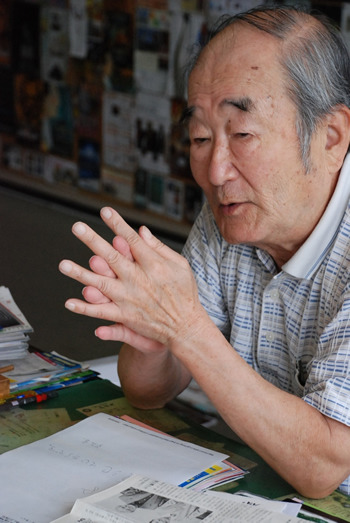
< Akio Yamada, who is the CEO of MIRAI Industry, makes the company ‘Paradise of employees’ >
Eng. Jinhyung Park
What do you consider when you choose a company for getting a job? The company which gives you no overworks? The company which guarantees retirement age? The company which gives much of money? It is so hard to choose one. But, there’s a company which is fulfilling everything for employees. It is Mirai Industry Corporation. It has been chosen the greatest work place in the survey in Japan. Now, I will introduce this company for the reader who wants to manage a small company or studies business administration. Introduction about Mirai Industry
Mirai Industry is an electric installation equipment manufacturer which is located in Japan. Its main products are electric installation devices, plumbing equipments, and gas engine generation facilities. It has about 18,000 kinds of products and the great part of them have patents. It was once a small manufacturer, but now its products occupy the greatest part of market share.
But it is more famous for its employee welfare policy: mandatory retirement at the age of 70, no layoff, 140 holidays a year, overseas travel for all employees every 5 years, no night overtime, 3 years of maternity leave, 19 days off at the year-end holidays, 10 days off on golden week, 10 days of summer vacation, and the highest salary in the local area.
At this point of time, you may wonder how they can do everything for employees. But, Akio Yamada, who is the CEO of Mirai Industry, makes the dream come true. And it is based on his human-oriented philosophy.
Akio Yamada’s main philosophy, “Employees are not machines.”
Yamada wrote in his book, “About employees, I believe in the theory that human nature is fundamentally good.” For example, when he tells an employee to do a certain task, he does not think that the employee will cheat him about it. He absolutely believes that all employees are good-natured.
He also emphasizes employee’s autonomy. He thought regulations will block employee’s creativity and motivation. And he believes that CEO’s role is to make a good working environment, where every worker can make the most of his or her ability. So, He abolished useless regulations (Uniforms, norms, and time cards are not needed to the Mirai’s employees). Also he provided wonderful welfare policy to the employees.
You may wonder how the company handles the cost for welfare policy. He covered the welfare cost by saving. He have always concentrated on how reduce unnecessary cost. For example, he doesn’t turn on every light in his office. There’s no air-conditioner but he wears only a running shirt and a short pants. He also hasn’t his own car, even if he is CEO of the company. He uses the company’s small truck. Like many a mickle make a muckle, He encourages his employees to reduce minor costs by his saving behaviors, and gives them major benefits.
His employee-oriented philosophy leads successful results
It was once a small manufacturer, and people predicted it couldn’t compete with major companies, like Toshiba and Mitshita Industry. But now its products occupy 70 percent of market share and it has yielded a good profit since it was founded. It is the result of Akio Yamada’s different approach to the employees. He absolutely believes them, and motivates them to work themselves. So they can show 100 percent of their ability, think creatively, and make differentiated products against the other companies.
Someone said his management is nonsense academically. Yes, his philosophy may be against the economy theories which we believed till now. And of course, Akio Yamada didn’t know about economy theories. (He only graduated high school). But he realized the method of his own business management philosophy by himself. I think it is hard to say that his management is wrong academically, and I believe that he made innovative business management theory, especially in Human resource management. So, let’s think harder about it. Who knows? We may make a new theory which makes employees happier and also makes company a lot of profit at the same time, by this case study. And I hope it will help the managers who are hard to manage their employees.
Success Story of Mirai Industry
YeongJoo Lee, Staff Reporter yjlee@worldyannews.com
March 15, 2011
CEO Akio Yamada’s Employee-Oriented Management
Mirai Industry is an electric installation equipment manufacturer located in Kifu Ken in Japan. Mirai is a well-known company to Korean, since it has often been introduced via Korean mass media. What makes Mirai famous? It is its employee welfare policy: mandatory retirement at the age of 70, no layoff, 140 holidays a year, overseas travel for all employees every 5 years, no night overtime, 3 years of maternity leave, 19 days off at the year-end holidays, 10 days off on golden week, 10 days of summer vacation, and the highest salary in the local area. Mirai has a heaven-like working environment for employees.
Most TV programs about Mirai focus mainly on the company’s welfare system. However, they need to pay more attention to Akio Yamada(CEO) and his management style. Since the Mirai’s establishment, Yamada has run the company in a completely different way from that of other business owners.
About product development and employee management, Yamada had a different idea. Mirai’s employ-oriented policy can present a new vision to management in domestic and foreign countries. Mirai was once a small manufacturer, but now its products occupy the greatest part of market share, winning over Matsushita Electric. What is the key to Mirai’s success? The story follows:
About CEO Akio Yamada
Akio Yamada, CEO of Mirai Industry, was born in Shanghai in 1931. His father was running a woolen fabric company in Shanghai, but his family had to return to home when Japan was defeated in the Second World War. He was in his second year in middle school that time. After return to Japan, his father established ‘Yamada Electric Wire Manufacturer’ in the City of Ogaki. Yamada began to work for his father’s company after he graduated from middle school.
The late 1940s was the golden age of play in Japan. Yamada, who was fond of play, often finished his work early and went to see plays. He also tried organizing his own theatre troupe and sometimes worked as a stage manager for a local drama group. When an art center was built in Ogaki, he again formed his own troupe to perform on its stage. He named his troupe ‘Mirai.’ He spent most of his money that he earned at his father’s company for ‘Mirai’ activity. He married at the age of 30, but his interest was still play. He had given in to play for more than 15 years by that time.
Yamada’s father, who could not take it any longer, fired him from the company. Yamada could not even get severance pay. It was a logical conclusion, for he had always neglected his job. To live, he decided to establish his own company with his Mirai troupe colleagues. They hired one female worker who would take care of administrative and clerical duties.
Altogether, there were 4 people including Yamada himself. He named the company ‘Mirai Industry’ after the name of his troupe. It was an electric installation equipment manufacturer. The only thing Yamada could rely on that time was his customers he had worked with when he was at his father’s company.
Mirai Industry: We Make Something Different
Mirai Industry’s first product was a transparent joint box. It is a tool that divides one electric wire into several sections. However, the big name company Matsushita was already manufacturing the same product. Besides, their joint box was occupying the great part of the market share. How could they win Matsushita? Yamada and his colleagues decided to make something different: a transparent joint box based on a new idea, which Matsushita did not have.
They made a joint box that has a rough-surfaced hole for the screw. In those days, field technicians had to hold both the joint box and the screw with their left hand, and tighten the screw with their right hand using a screwdriver. This job was very inconvenient. However, Mirai’s joint box had a rough-surfaced hole, which helps the screw to be caught inside. When technicians used Mirai’s product, they could tighten the joint box more easily. This product became very popular in the electric equipment industry as soon as it was introduced.
Matsushita quickly started selling the same joint box soon after. However, the important thing is that Mirai started it first. The electric industry now began to remember Mirai. Here is the motto of Mirai, “Mirai Industry makes something different. We do not make the same product that other companies make.”
Meantime, Yamada devoted all his time to selling Mirai’s products. Although he had spent most of his time working for his troupe, there were the customers that he had known for 15 years. He visited the companies one by one, and introduced Mirai Industry’s product. He told them candidly and humorously what had happened to him: he had been fired from his father’s company and now established his own firm. He said that he would appreciate if they purchase his company’s products.
“I will be starved to death if you don’t buy my company’s products. There is a rope in my bag now. If you don’t buy these products, I would hang myself right here with it. (I am not kidding.) Do you want to see my bag?”
Yamada really opened his bag while saying so, and then most of his customers agreed to buy Mirai Industry’s products. In this way he found a market one by one.
“Employees are not machines.”
Yamada wrote in his book, “About employees, I believe in the theory that human nature is fundamentally good.” For example, when he tells an employee to do a certain task, he does not think that the employee will cheat him about it. He absolutely believes that all employees are good-natured.
It is a well-known story that he gave his bankbook and legal seal to the female employee on the day that Mirai Industry was established. He trusted her for all the tasks related to money. As to paying, he still delegates authority to female workers in accounting. One of his acquaintances asked him one day, “Isn’t it dangerous? What will you do if the female worker took all the money?”
Retaining his sense of humor, Yamada answered, “Don’t worry about it. All the female workers in my company are beautiful. You know that men devote themselves to beautiful women. So, they don’t need money.”
The pretty worker will not steal the company’s money because she does not need it, according to Yamada. Though it was a joke, it is true that he has never had a chance to stamp his seal to bills and checks for the past 30 years. It is a job of the female worker in the accounting department.
Many companies in Japan set a sales goal and press their employees to achieve it. To those companies, Yamada says that employees are not machine. A company’s role is to make a good working environment, where every worker can make the most of his or her ability. Even though they do their best, some people get 70 out of 100 and some others get 80 out 100.
Suppose one employee’s score is not very high. However, if it is the result of every effort that he or she has made, isn’t it good enough? Some people’s ability is better than that of others, and this is not something that the company can do about. Yamada says that there is no problem as long as each employee tries to do his or her best.
A company’s president should not believe that he or she is the wisest person in the company, Yamada says. The president has authority, but it does not mean that he or she is a specialist in every field. They should not interfere in a certain department’s tasks if they do not know about it. Rather than trying to do everything alone, the president should give a chance to his or her employees.
Yamada emphasizes that company owners need to know that every worker has potential, and in order to help them fulfill their potential, the company must give them a chance and good treatment. When employees realize that they are receiving special treatment, they will demonstrate a remarkable ability.
Small and medium-sized companies often complain that talented workers prefer to work for large firms. However, Yamada has a different idea. He says, “I know that small and medium-sized companies have normal employees usually. However, it doesn’t mean that a worker who has normal ability cannot do anything. When they try hard, they do achieve something.”
At the beginning of Mirai Industry, Yamada set up departments one by one and appointed new employees as a manager of each department. They were appointed as a manager because coincidentally that time they applied for Mirai – not because they were excellent workers. As a manager, they achieved as much as they could do. Other employees who began to work for Mirai later also did their best. The result of these normal people’s effort made today’s Mirai Industry.
In interviews, CEO Yamada always emphasizes that employees are not machines but human being. Employees will work hard on their own initiative only when they are moved by the company’s care, he says.
“I have made steady effort to touch my employees’ heart. It seems that I am successful in it in some degree. So, now I deserve to tell them, “Get enough rest! Don’t work for others! Do things you like!”
 About bambooinnovator
 Bamboo Innovator