Yum! Brands struggling to revive Little Sheep, once the largest hot pot chain in China which it acquired for $587m in May 2011
June 10, 2013 Leave a comment
Yum! Brands struggling to revive Little Sheep hot pot chain
Wu Jui-ta and Staff Reporter
2013-06-10
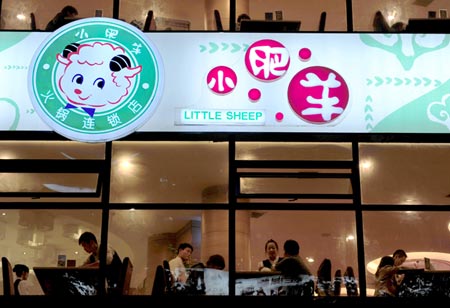
Little Sheep, once the largest hot pot chain in China, saw its sales and revenue fall last year after it was acquired by US fast good giant Yum! Brands, reports our Chinese-language sister paper Commercial Times. The chain is now now feeling the pinch of a shrinking clientele and declining sales, and is dragging down the overall performance of the fast good giant. Last year, the group’s overall sales in China rose annually by 24% to 6.9 billion yuan (US$1.1 billion), while its food-sector profit in China rose by 18.1% year-on-year, according to Yum! Brands figures. It overall profits last year also saw an increase of 18.5%, excluding the poor performance of the Little Sheep chain. Yum! Brands has attempted to change the image of Little Sheep since its acquisition in 2011, hiking up its prices across China late last year in an attempt to reestablish it as a high-end restaurant chain. The average cost of eating at the restaurant rising from 70 yuan (US$11) to over 90 yuan (US$15). Industry insiders said that the move to increase prices is the direct cause of the restaurant’s poor performance, as it has driven many of its old clients away, adding that Yum! Brands may have to reevaluate their business model for the chain.
Yum’s Little Sheep: tasty meal or indigestion?
An interesting new Chinese media report is questioning whether US fast food giant Yum (NYSE: YUM) is spoiling the Little Sheep chain of hot pot restaurants it acquired just a year ago. The numbers released by Yum certainly don’t look very so-so, and comments by an unnamed restaurant official don’t paint a very rosy picture either for Little Sheep under Yum’s management. But it’s probably still too early to say whether this acquisition will be a success, and I would still be willing to bet we’ll see Little Sheep start making some new and exciting moves later this year. Much has happened since Yum, operator of the KFC and Pizza Hut chains, first announced its plan to purchase Little Sheep a year ago. The plan immediately turned controversial, coming just a year after China’s anti-monopoly regulator vetoed a similar purchase of leading Chinese juice maker Huiyuan (1886.HK) by Coca Cola (NYSE: KO). Many suspected the Huiyuan veto was politically motivated since China didn’t want to see one of its major brands purchased by a western rival, and feared a similar fate could be waiting for Yum’s Little Sheep purchase. But the regulator ultimately approved the Little Sheep sale [1], though it took five months to make its decision, allowing the deal to finally close last November.
So if you do the math, it’s been a year since Yum announced its plan but really only seven months since the acquisition closed. I raise this distinction, because I do think the Chinese media report looks a bit biased against Yum. I suspect the main reason for such a bias is that the lone unnamed source quoted several times in the article is probably a Little Sheep executive who is unhappy about some of the changes that have occurred under Yum’s management.
That said, let’s take a quick look at the report, which rightly points out that Little Sheep’s growth has come to a standstill under Yum’s ownership. The report cites Yum’s own records saying that Little Sheep helped to boost Yum’s overall China sales last year [2], though the chain also dragged down overall China margins slightly. Of course it’s probably important to note that Yum didn’t own Little Sheep for most of 2012, so it can’t really be blamed for any problems at the chain that year.
But the unnamed executive goes on to say that Little Sheep’s profits, revenues and overall business have started to drop since the merger, implicitly blaming Yum for the problems. He does also point out that Yum has spent the initial period of its ownership bringing Little Sheep’s operations up to Yum’s own standards, which is probably the reason why the hot pot chain hasn’t opened any new stores during that time.
In my view, it really does seem like Yum is probably doing a thorough review of Little Sheep’s operations, and standardising procedures and supply chains before it decides where it wants to take the chain next. The importance of standardising supply chains came into focus just last month, when Little Sheep saw a big drop in business after rumours emerged that some of its stores may have purchased meat affected by a fake mutton scandal [3].
Yum certainly isn’t perfect and has faced a series of challenges in China recently, first from an antibiotic scandal involving chickens purchased by KFC and then from a plunge in business during China’s recent bird flu outbreak [4]. But despite those setbacks, I’m still relatively confident that Yum is taking important and necessary steps at Little Sheep to position the company for a return to strong growth. Once its current review at Little Sheep is finished, we should expect to see improving operational results, and a resumption in new store openings both inside and outside China starting later this year.
Bottom line: A slowdown at Yum’s Little Sheep restaurants looks like the result of an operational review, and doesn’t indicate bigger problems at the hot pot chain.
 About bambooinnovator
 Bamboo Innovator