Preferred Shares ETF Drops as Yields Rise on Fed Speculation

Preferred Shares ETF Drops as Yields Rise on Fed Speculation

An exchange-traded fund that mimics a basket of preferred shares is suffering the worst four-day stretch in 20 months amid deepening concern the Federal Reserve will pare unprecedented stimulus.

The iShares S&P U.S. Preferred Stock Index Fund has dropped 5.7 percent from an almost five-year peak on May 8, in the worst four-day rout since October 2011.

Perpetual preferred stocks, whose fixed dividends mean they trade like bonds, have lost 5.6 percent as of yesterday since peaking on May 8, compared with the 1.2 percent drop in the Standard & Poor’s 500 Index (SPX), according to data compiled by Bank of America Merrill Lynch and Bloomberg. Read more of this post
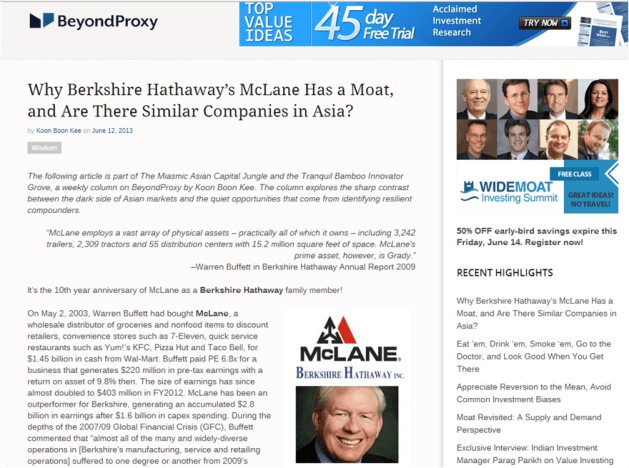

Why Berkshire Hathaway’s McLanee Has a Moat, and Are There Similar Companies In Asia? Bamboo Innovator is featured in BeyondProxy.com, where value investing lives

Bamboo Innovator is featured in BeyondProxy.com, where value investing lives:

Why Berkshire Hathaway’s McLanee Has a Moat, and Are There Similar Companies In Asia? (BeyondProxy)

McLane

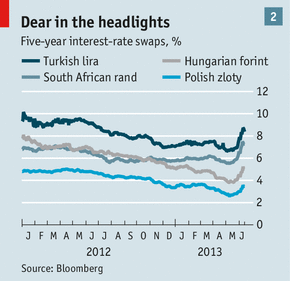
The Fed and emerging markets: The end of the affair; The prospect of less quantitative easing in America has rocked currency and bond markets in the emerging world

The Fed and emerging markets: The end of the affair; The prospect of less quantitative easing in America has rocked currency and bond markets in the emerging world

Jun 15th 2013 | JOHANNESBURG |From the print edition

20130615_FND001_120130615_FNC798_020130615_FNC803_0

THERE are many reasons why a fund manager might want to sell the rand. South Africa’s economy is barely growing. Unemployment, at 25% of the workforce, is on a par with the grimmest parts of the euro zone. The mining industry is beset by labour unrest just as commodity prices are falling. The country’s large trade deficit is a sign that local producers are struggling in vain against foreign competition. The rand has fallen by 16% against the US dollar this year. Only the Syrian pound and Venezuelan bolívar have fared worse. Read more of this post

The high cost of sad workers; Not happy at your job? Your company is paying for it in innovation potential

Not happy at your job? Your company is paying for it in innovation potential.

By Vivek Wadhwa, Updated: June 13, 2013

A Nov. 2011 paper from European Union-backed academic institution evoREG makes the case that happiness is both integral to the innovation process and oddly enough simultaneously misunderstood. The authors find happiness to be both an input factor as well as an output factor of the innovation process. In other words, happiness leads to more innovation, and when directed properly, innovation creates more happiness for societies. Read more of this post

Financial advisers will no longer be able to recommend risky, unusual or complex funds to ordinary investors following a ban by the UK’s new financial regulator

June 7, 2013 6:36 pm

UK regulator bans promotion of ‘risky’ investments

By Elaine Moore

Financial advisers will no longer be able to recommend risky, unusual or complex funds to ordinary investors following a ban by the UK’s new financial regulator.

From January 1 2014, promotion of unregulated collective investment schemes such as traded life policy settlements, overseas property and fine wine, will be limited to sophisticated or wealthy clients, defined as those with an income above £100,000 a year, or more than £250,000 to invest. Read more of this post

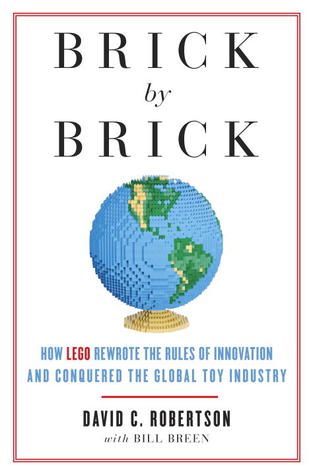
Brick by Brick: How LEGO Rewrote the Rules of Innovation and Conquered the Global Toy Industry

Brick by Brick: How LEGO Rewrote the Rules of Innovation and Conquered the Global Toy Industry

by David Robertson  (Author) , Bill Breen  (Author)

16054798

Brick by Brick takes you inside the LEGO you’ve never seen. By following the teams that are inventing some of the world’s best-loved toys, it spotlights the company’s disciplined approach to harnessing creativity and recounts one of the most remarkable business transformations in recent memory.
Brick by Brick reveals how LEGO failed to keep pace with the revolutionary changes in kids’ lives and began sliding into irrelevance. When the company’s leaders implemented some of the business world’s most widely espoused prescriptions for boosting innovation, they ironically pushed the iconic toymaker to the brink of bankruptcy. The company’s near-collapse shows that what works in theory can fail spectacularly in the brutally competitive global economy.
It took a new LEGO management team – faced with the growing rage for electronic toys, few barriers to entry, and ultra-demanding consumers (ten-year old boys) – to reinvent the innovation rule book and transform LEGO into one of the world’s most profitable, fastest-growing companies.
Along the way, Brick by Brick reveals how LEGO:
– Became truly customer-driven by co-creating with kids as well as its passionate adult fans
– Looked beyond products and learned to leverage a full-spectrum approach to innovation
– Opened its innovation process by using both the “wisdom of crowds” and the expertise of elite cliques
– Discovered uncontested, “blue ocean” markets, even as it thrived in brutally competitive red oceans
– Gave its world-class design teams enough space to create and direction to deliver
built a culture where profitable innovation flourishes
Sometimes radical yet always applicable, Brick by Brick abounds with real-world lessons for unleashing breakthrough innovation in your organization, just like LEGO. Whether you’re a senior executive looking to make your company grow, an entrepreneur building a startup from scratch, or a fan who wants to instill some of that LEGO magic in your career, you’ll learn how to build your own innovation advantage, brick by brick. Read more of this post

Lego faces are getting angrier, study finds; Scientist says classic, smiling face of Lego figures is increasingly being replaced, with more themes based on conflict

Lego faces are getting angrier, study finds

Scientist says classic, smiling face of Lego figures is increasingly being replaced, with more themes based on conflict

Alexandra Topping and agencies

The Guardian, Wednesday 12 June 2013

Lego faces are becoming more angry, a New Zealand researcher has found

Lego faces are becoming more angry, a New Zealand researcher has found. Photograph: Corbis

Life in Legoland used to be so simple – smiling doctors helped cheerful patients, contented petrol pump operators filled the tanks of satisfied drivers and classrooms of ecstatic children were taught by beaming teachers.

But then life became more complicated. Anger, puzzlement and confusion started to set in – the beatific existence of the Lego figurine was over.

The number of happy faces on Lego toy mini-figures has been decreasing since the 1990s, and the number of angry faces has increased, giving rise to concerns that children could be affected by the negativity of the toys. Read more of this post

Steven Spielberg and George Lucas: The Movie Industry Is About To Implode

STEVEN SPIELBERG: The Movie Industry Is About To Implode

HENRY BLODGET JUN. 13, 2013, 10:17 AM 12,274 34

spielberg_lucas

Steven Spielberg and George Lucas made some startling comments at USC yesterday, David Cohen of Variety reports. The two movie moguls said the movie industry is about to implode. What’s happening, Spielberg and Lucas said, is that Hollywood is betting ever more heavily on a handful of massive-budget general-interest blockbusters each year, while losing the regular movie-going audience to the Internet and TV. And soon, Spielberg predicted, some of these humongous bets will blow up, demolishing the industry: “They’re  going for the gold,” said Lucas of the studios. “But that isn’t going to work forever. And as a result they’re getting narrower and narrower in their focus. People are going to get tired of it. They’re not going to know how to do anything else.” Spielberg noted that because so many forms of entertainment are competing for attention, [the studios] would rather spend $250 million on a single film than make several personal, quirky projects. “There’s eventually going to be a big meltdown,” Spielberg said. “There’s going to be an implosion where three or four or maybe even a half-dozen of these mega-budgeted movies go crashing into the ground and that’s going to change the paradigm again.” Lucas predicts that the movie-theater industry will soon evolve into something like Broadway, where huge blockbuster movies are shown for long periods on huge screens and tickets cost fantastic amounts of money: Lucas predicted that after that meltdown, “You’re going to end up with fewer theaters, bigger theaters with a lot of nice things. Going to the movies will cost 50 bucks or 100 or 150 bucks, like what Broadway costs today, or a football game. It’ll be an expensive thing. … (The movies) will sit in the theaters for a year, like a Broadway show does. That will be called the ‘movie’ business.” “There’ll be big movies on a big screen, and it’ll cost them a lot of money. Everything else will be on a small screen. It’s almost that way now. ‘Lincoln’ and ‘Red Tails’ barely got into theaters. You’re talking about Steven Spielberg and George Lucas can’t get their movies into theaters.” Read more of this post

The Astronomical Math Behind UPS’ New Tool to Deliver Packages Faster; The cost to UPS per year if each driver drives just one more mile each day than necessary is $30 million

The Astronomical Math Behind UPS’ New Tool to Deliver Packages Faster

BY MARCUS WOHLSEN

06.13.13

In a sense, all business boils down to math. But some companies have tougher equations to solve than others.

At UPS, the average driver makes about 120 deliveries per day, says Jack Levis, the shipping giant’s director of process management. To figure out how many different possible routes that driver could travel, just start multiplying: 120 * 119 * 118 * . . . * 3 * 2 * 1. The end result, Levis likes to say, far exceeds the age of the Earth in nanoseconds.

If that number sounds big, imagine having to make those calculations for 55,000 drivers every day. Until recently, UPS used a software tool that gave drivers a general route to follow but allowed wide latitude for human judgement along the way. Over the next five years, however, the company will roll out widely a more exacting algorithm designed to steer drivers away from well-worn paths toward often counterintuitive routes calculated to make delivery faster. Read more of this post

Oakmark’s Bill Nygren: Easier Today to Be a Value Investor Than When I Started

June 12, 2013, 7:13 P.M. ET

Nygren: Easier Today to Be a Value Investor Than When I Started

By Brendan Conway

Bill Nygren, manager of Oakmark Fund (OAKMX), isn’t having the line that active fund managers are hampered by the last few years’ market volatility, high-speed trading or other modern boogeymen. Asked by an audience member at the Morningstar Investment Conference whether it’s more difficult to be a fund manager today than in the past — a theme in the conference’s opening panel — Nygren argued it’s actually easier. The junior analysts his company hires are “definitely” smarter than recruits were when he started out. But that’s not the defining factor, he explained. “One of the things that has changed is the time horizon of investors,” Nygren said. “Investors might be smarter than 20 or 30 years ago, but they are focused on such a different time period than what we are looking for. I’ve seen sell-side reports [where they argue,] ‘It might take more than two quarters for the good news to start coming out.’” He chuckles. “[Ours is] 5 to 7 years. [So] there’s actually less competition for cheap stocks today than when I started in the business,” he said. “Indexing, the percentage of momentum investors, very short term events — I think is higher than ever. [It] makes it easier for a long-term value investor to do well.”

The 10 Things Innovative Companies Do To Stay On Top

The 10 Things Innovative Companies Do To Stay On Top

JULIE BORT JAN. 25, 2013, 10:09 AM 50,035 3

Innovation isn’t this abstract thing that some companies have and some don’t. Innovation is actually a business skill that executives and employees can develop and master. So says Booz & Company management consultants Barry Jaruzelski, John Loehr, and Richard Holman. The authors of Booz’s annual “Global Innovation 1,000 report” named the most innovative companies in the world for 2012 and studied what makes them so. In addition to looking at what these 1,000 companies do right, it also surveyed some 700 companies not on the list to find out how they come up with new products and services.

No. 10: Innovative companies systematically create new ideas Read more of this post

Pepsi’s Chief Design Officer On How To Invest In Innovation

Pepsi’s Chief Design Officer On How To Invest In Innovation

KATHLEEN DAVISENTREPRENEUR 10 MINUTES AGO 110

The fast-paced business world is focused on results and returns, but truly innovative companies have a culture focused on long-term gains where innovation can thrive. Mauro Porcini, the chief design officer of PepsiCo, argues that true innovation isn’t about creating the “next big thing” to capture their fleeting attention. He says companies should instead focus on connecting with customers on a more meaningful level.
Porcini spoke at the World Innovation Forum in New York today about the evolution of “design thinking,” a form of creative problem solving. “Design thinking is not a job; it’s a lifestyle,” he says. “There’s no difference for a design thinker between life and work.”
He offers these insights to foster a company culture where innovation can thrive. Read more of this post

Shaolin Temple Pilots: Monks can be astronauts, says abbot

Shaolin Temple Pilots: Monks can be astronauts, says abbot

Tsai Meng-yu and Staff Reporter

2013-06-13

C403X0191H_2013資料照片_N71_copy1

A young Shaolin monk displays his mastery of gravity in Kaifeng, Henan province. (Photo/Xinhua)

Shaolin monks can also practice Buddhist teachings in outer space because Buddhism depicts a boundless universe, and even believes in life outside Earth, the temple’s abbot says.

Shi Yongxin, head of the temple in Henan province known as the home of Chinese kung fu, told the state newswire Xinhua said that those who master the teachings of Buddhism can reach buddhahood and travel to other worlds, which could be the outer space of popular imagination. Read more of this post

Luxury Ecosystems: Controlling Your Brand While Letting It Go

Luxury Ecosystems: Controlling Your Brand While Letting It Go

by Antonio Achille, Jean-Marc Bellaiche, and Vincent Lui

JUNE 12, 2013

Luxury-Ecosystems-ex1_large_tcm80-136287 Luxury-Ecosystems-ex2_large_tcm80-136292 Luxury-Ecosystems-ex3_large_tcm80-136281 Luxury-Ecosystems-ex4_large_tcm80-136284

Overview

Not so long ago, Nokia was a powerhouse in the mobile-phone business—arguably the industry’s dominant brand worldwide, with a market capitalization that had made the company one of the largest blue chips in Europe.

Then along came Apple.

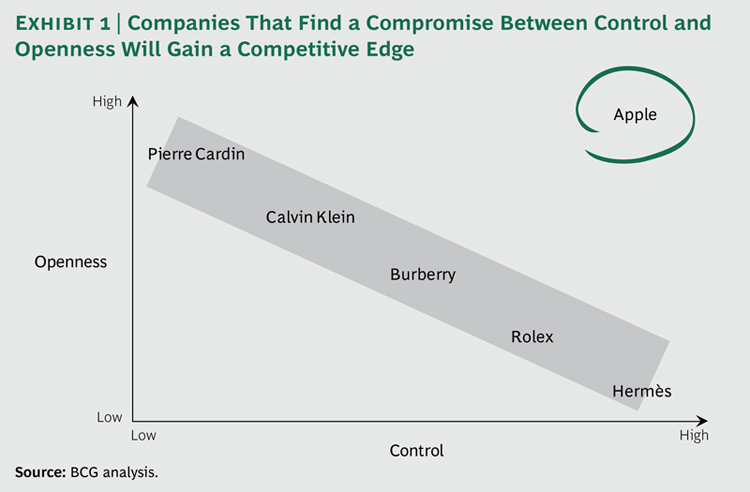
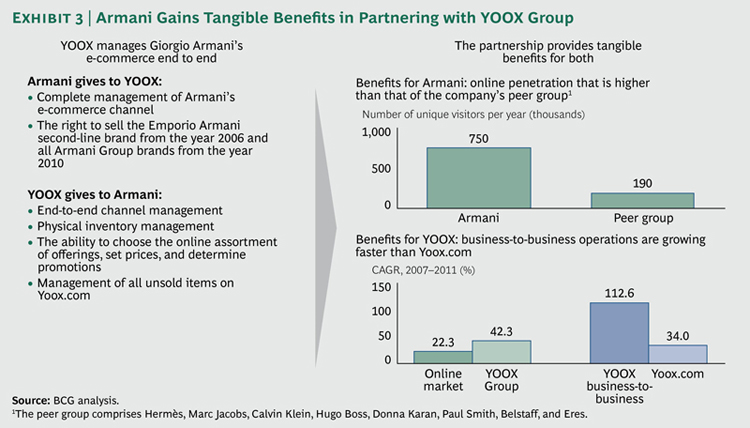
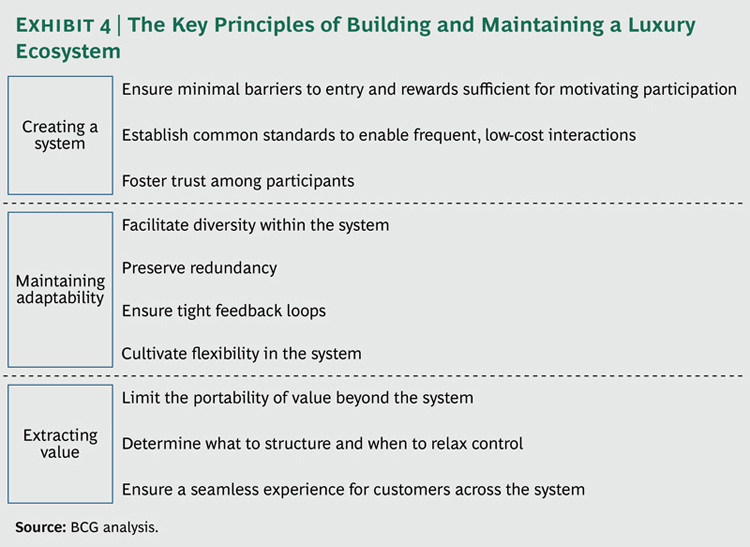
The iPhone shattered the prevailing ideas of value creation in personal mobile communications. Apple was not just making and selling a product, it was bringing together a range of attractive offerings from a whole universe of partners, large and small. Yet despite the size and diversity of this universe, the offerings were tightly integrated: Apple was guaranteeing a homogenous and pleasing experience for the customer—a crucial factor in its success. Read more of this post

Integrating Suppliers: Moving Impact from Lean Programs to the Next Level

Integrating Suppliers: Moving Impact from Lean Programs to the Next Level
by Thomas Frost, Holger Gottstein, Christian Greiser, and Robert Tevelson

JUNE 04, 2013

Overview

Integrating-Suppliers-ex1_large_tcm80-135656 Integrating-Suppliers-ex-sidebar_large_tcm80-135652 Integrating-Suppliers-ex2_large_tcm80-135660 Integrating-Suppliers-ex3_large_tcm80-135663 Integrating-Suppliers-ex4_large_tcm80-135666

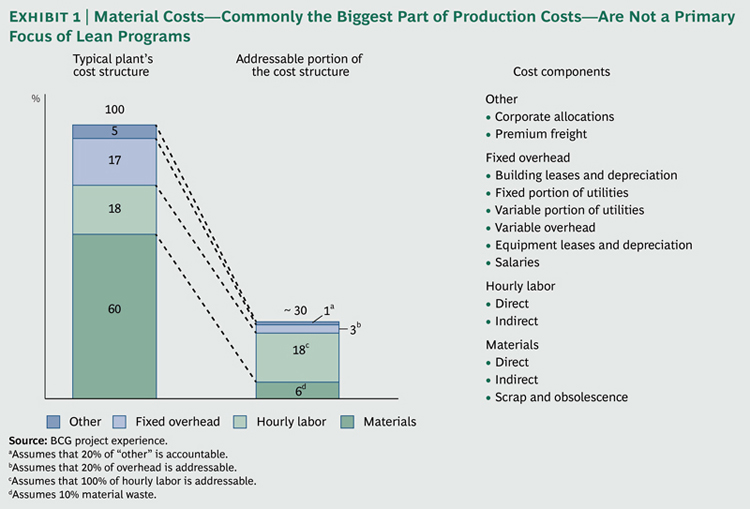
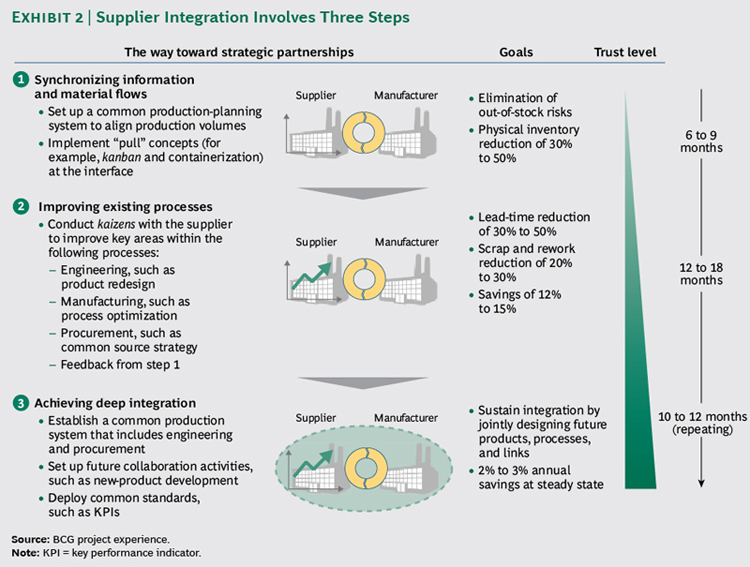
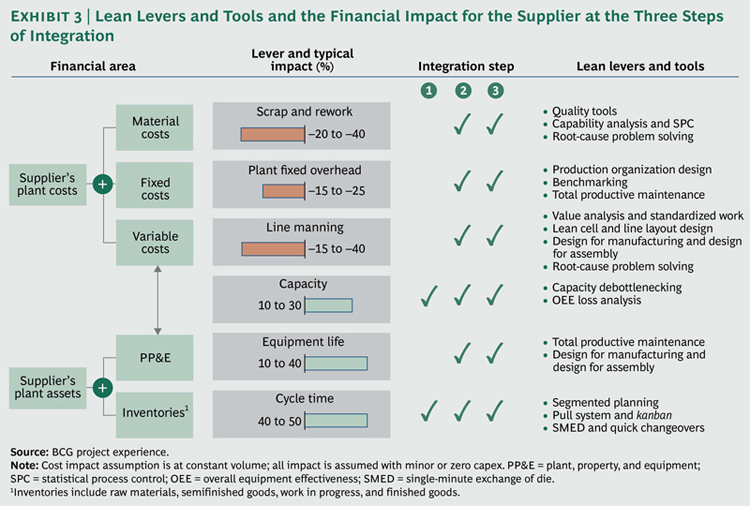
Many manufacturers that have applied lean concepts to their operations find that although they do achieve significant savings, their production costs remain high. This is, in most cases, attributable to material costs, which, depending on industry can range from 60 to 80 percent of total production costs. (See Exhibit 1.)

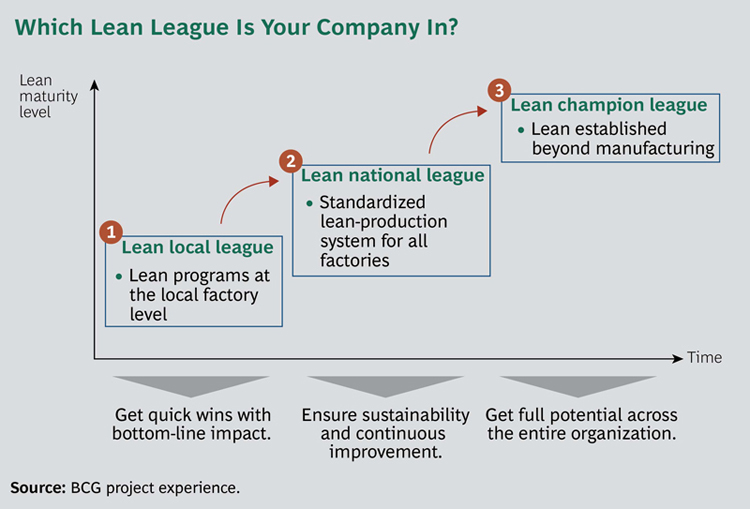
The challenge for these manufacturers is to discover how to extend lean concepts and practices beyond the walls of their own factories. The most effective way is to forge links with key suppliers on the basis of lean principles. In addition to yielding cost savings, this kind of collaboration can form the foundation of a profitable strategic partnership. More than simply an approach to eliminating waste in procurement, creating such relationships means leveraging existing lean techniques to the fullest and using them to transform a manufacturer’s entire supply chain. Read more of this post

Quality Street: The latest fashion in equity investing; Quality stocks now trade at around 3.5 times their book (or asset) value

Quality Street: The latest fashion in equity investing

Jun 15th 2013 |From the print edition

20130615_FNC785

EQUITY investors have had a turbulent time over the past 15 years, including a dotcom boom and bust, the financial crisis in 2008 and the rise and fall of the mining sector. So it is hardly surprising that they have become a little choosy about the stocks they favour.

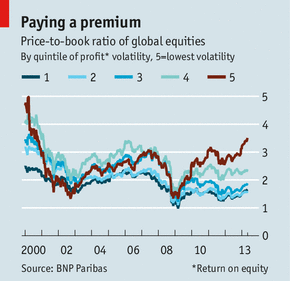
Orrin Sharp Pierson, a strategist at BNP Paribas, points to a huge preference among investors in recent years for “quality” stocks. He defines such stocks as those with the least volatile profits. As the chart shows, when the market was bottoming in late 2008 and early 2009 there was little difference in valuation between high-quality and low-quality companies. But the gap has widened steadily ever since. Quality stocks now trade at around 3.5 times their book (or asset) value. Read more of this post

Guggenheim Partners: Treasurys Are a ‘Ponzi Market’

Jun 13, 2013

Guggenheim Partners: Treasurys Are a ‘Ponzi Market’

By Steven Russolillo

Scott Minerd, global chief investment officer at Guggenheim Partner, minces few words in his characterization of how the Fed’s easy-money policies have distorted the Treasury market over the years.

“The U.S. Treasurys market could now be described as a Ponzi market,” Minerd told clients Wednesday evening. Read more of this post
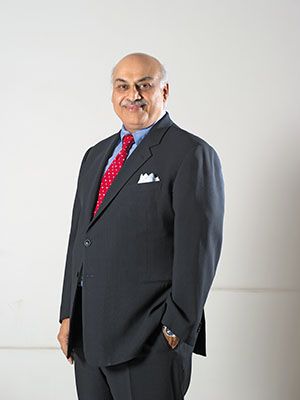
Samvardhana Motherson Group’s VC Sehgal says it is a mistake building a business solely with the idea that your children can inherit it

VC Sehgal: We entrepreneurs are a bit insecure, that’s why we control

by VC Sehgal | Jun 13, 2013

topimg_21837_vc_sehgal_300x400

Samvardhana Motherson Group’s VC Sehgal says it is a mistake building a business solely with the idea that your children can inherit it

VC Sehgal is the chairman of the $5.4 billion Samvardhana Motherson Group, one of India’s largest auto components companies. In his 40-year-long career, Sehgal has dabbled in various businesses—silver trading, selling housing cables and polyester chips. But he finally found his calling in manufacturing wiring harness for automobiles. An Australian citizen, Sehgal travels more than 300 days in a year meeting customers across the globe

The year 1994-95 was very interesting because there was a directive from the Indian government which wanted us to localise fast. We had to travel to Japan a lot because our main collaborates [Sumitomo] were there and I found that travelling was increasing more and more. Then we had Maruti requesting us to localise very intricate parts which were under patents, so there were a lot of conflicts and I had to also travel a lot to Europe and look for second sources. Because I was travelling a lot, I appointed one person who would be responsible for the whole company and every aspect/problem would first be reported to him  Read more of this post

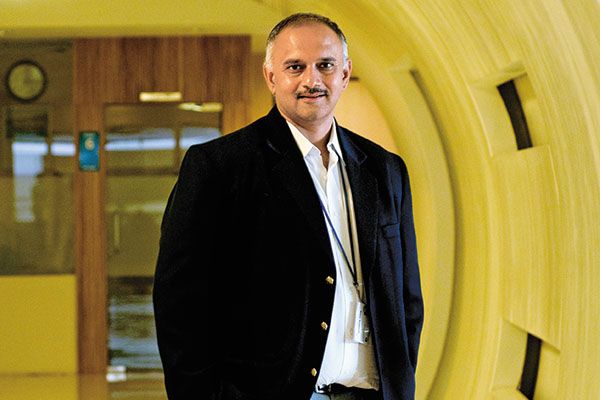
India’s Persistent Systems’ founder Anand Deshpande: My employees asked me, was it my company or our company?

Anand Deshpande: My employees asked me, was it my company or our company?

by Anand Deshpande | Jun 10, 2013

topimg_21823_anand_deshpande_600x400

Anand Deshpande is founder, CEO and managing director of Persistent Systems. Prior to setting up the Pune-based company in 1990, he worked at Hewlett-Packard Laboratories in Palo Alto, California. Every month, he spends about two weeks meeting his customers in the US. Ram Charan, Jim Collins, Clayton Christensen and CK Prahalad are among his favourite management thinkers

Anand Deshpande realised he needed to make a transition from a programmer to a sales manager in order to grow Persistent

Before I started persistent systems, i was doing research work at HP Labs in Palo Alto. When I came back to India, my ambition was to start a high-end, tech-focussed company that wouldn’t compromise my résumé in some sense. I started Persistent in 1990 and we were working on some interesting projects. The idea was to be very niche. For the first three or four years, we were doing that kind of work. I felt I achieved what I had intended to. And I was doing what I liked doing. After three or four years, some employees told me, “Fine. This is what you are doing for yourself but what about us?” In effect, their question was, “Is this your company or is this our company?”   Read more of this post

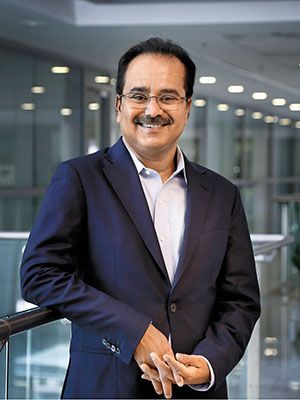
Dr Reddy’s GV Prasad: You can never have a company totally dependent on one person

GV Prasad: You can never have a company totally dependent on one person

by GV Prasad | Jun 12, 2013

topimg_21829_gv_prasad_300x400

Except for a brief period when GV Prasad ran his family’s construction business, he has been in the pharmaceutical industry for over 25 years. Following the merger of Cheminor Drugs, where he was the managing director, with Dr Reddy’s Laboratories (DRL) in 2000, Prasad became the executive vice chairman and chief executive officer of the merged entity. In April 2013, with the passing away of Dr K Anji Reddy, Prasad became the chairman of DRL. He lives in Hyderabad and, when time permits, ind

Dr Reddy’s Laboratories’ GV Prasad says that an organisation must be able to sustain changing ownership, technologies, products and strategies

When I came back to india after graduation in the us, I knew I wanted to start a business but what that would be I didn’t know. I joined the family business for a while and then set up a bulk drugs company, Benzex Labs, with my parents’ money. It was 1985, also the year I got married. I ran the business for over a year. Unfortunately, it didn’t do very well and Dr Reddy’s Laboratories (DRL), which was in the neighbourhood and expanding very aggressively, wanted to acquire it. And acquire it did, after my father decided with Dr [K Anji] Reddy that pharmaceuticals was a business he wanted to exit. I wasn’t part of that decision though.  Read more of this post
Kiran Mazumdar-Shaw talks about Biocon’s fallout with Pfizer which was perhaps the company’s most significant event since its insulin analogues breakthrough

Kiran Mazumdar-Shaw: Instead of having bad blood with a good company,I decided to part amicably

by Kiran Mazumdar-Shaw | Jun 6, 2013

topimg_21813_kiranmazumdar_mk_300x400

Kiran Mazumdar-Shaw is the chairman and managing director of Biocon, a company she founded in 1978. Over the years, she’s transformed the industrial enzyme company into an integrated biopharmaceutical business that focuses on key therpeutic areas of diabetes, oncology and auto-immune diseases. Along the way, she also set up two subsidiaries—Syngene and Clinigene

Kiran Mazumdar-Shaw talks about Biocon’s fallout with Pfizer which was perhaps the company’s most significant event since its insulin analogues breakthrough

Biocon’s journey in the insulin space was itself an inflection point at that time. When we chose to transform ourselves from enzymes to a biopharmaceutical company, we decided to leverage the existing enzyme technologies. Pichia technology was one of them—a platform to which a simple peptide like insulin lent itself easily. We could have done many things with it, developed many proteins but we chose insulin. The rationale was simple: Diabetes is a pandemic, there’s unmet need in India, and the cost of therapy [is high]. Read more of this post

India’s state-run banks’ bad debts are making economic recovery harder

State-run banks’ bad debts are making economic recovery harder

Jun 15th 2013 | MUMBAI |From the print edition

20130615_FNC794

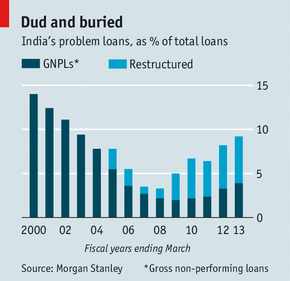
WHEN India loosened its rules on how banks deal with bad debts in 2008, the financial crisis was raging. The aim, sensible enough, was to give breathing room to borrowers in temporary difficulty because of a shock that originated thousands of miles away in America’s housing market. Five years on, however, the policy has come back to haunt the country’s financial industry.

Bank loans are usually classified as either performing or non-performing. If non-performing, lenders must build up reserves against potential losses. In 2008 the Reserve Bank of India (RBI), the supervisor, permitted the widespread use of an intermediate category of “restructured” loans. The terms of these loans had been watered down to help the borrower but banks could assume any difficulties were a blip and avoid building up provisions. Read more of this post
The “third arrow” of reform has fallen well short of its target; time for Shinzo Abe to rethink

The “third arrow” of reform has fallen well short of its target; time for Shinzo Abe to rethink

Jun 15th 2013 |From the print edition

20130615_LDD001_0

EARLIER this year Shinzo Abe, Japan’s prime minister, unveiled the first two “arrows” of his three-point economic plan—monetary easing and fiscal stimulus—and hinted at structural reforms to come. Japan’s stockmarket soared by 80% in six months. Mr Abe’s approval rating soared, too. Then, after months of euphoria, at the end of May, bond-market jitters about the radical easing plans helped to spark a sell-off in shares. Now Mr Abe’s eagerly awaited “third arrow” of structural reforms has fallen well short of the rings, let alone the bull’s eye. Indeed, it is so wide of the mark that one is left wondering if Abenomics has failed before it even properly began. Read more of this post
KKBOX, Taiwan’s biggest cloud-based music service provider, said Tuesday it is looking to expand further into new markets in Asia and hopes to become a leading regional subscription service brand

Music service KKBOX eyes further expansion in Asia

CNA

2013-06-13

KKBOX, Taiwan’s biggest cloud-based music service provider, said Tuesday it is looking to expand further into new markets in Asia and hopes to become a leading regional subscription service brand.

The market share leader in Taiwan and Hong Kong, KKBOX is now eyeing the Thai, Indonesian and Australian markets after successfully gaining a presence in Japan on June 1, Izero Lee, KKBOX’s CEO, was quoted as saying by local media. Read more of this post
“Tmura is the Hebrew word for change or metamorphosis and also means value for money; it is also a play on the word truma”, which means donation”

An unexpected winner in the Waze exit: a not-for-profit Israeli fund

Founded in attempt to entice the high-tech community to get more involved in Israeli non-profits, the Tmura fund is slated to receive $1.5 million from Waze’s sale to Google.

By Inbal Orpaz | Jun.12, 2013 | 4:58 PM |  2

The enormous exit for Waze, the Israeli navigation app start-up sold to Google for $1.03 billion, has created long list of new millionaires – including the company’s management. Founder Ehud Shabtai, who is also the chief technology officer, will receive $63 million. Amir Shinar, founder and head of research and development, will receive $51 million. Uri Levine, founder and president, will receive $30 million.

One of those profiting is a bit unusual in high tech-terms: Tmura – The Israeli Public Service Venture Fund, founded by Yadin Kaufmann. Read more of this post
Waze employees clinch most lucrative exit in Israeli history; Each of the company’s 100 employees will be getting an average of $1.2 million

Waze employees clinch most lucrative exit in Israeli history

Each of the company’s 100 employees will be getting an average of $1.2 million.

By Amir Teig | Jun.13, 2013 | 9:12 AM |  2

The 100 employees of the Israeli navigation app developer Waze stand to receive a total of $120 million, as a result of Google’s acquisition of the company, making this the most lucrative exit ever for employees of an Israeli startup. The global search giant confirmed on Tuesday that it had agreed to purchase Waze for $1.15 billion.

Prime Minister Benjamin Netanyahu called Waze CEO Noam Bardin on Tuesday evening to congratulate him on the sale. “We fought to keep the company in Israel,” Bardin said in response. “We’ll help you close the hole in the budget,” he added, partially in jest but also in pride.

Of the $1.15 billion that Google transferred into the account of Waze’s shareholders’ trustee, $1.03 billion will be going to the company’s owners, which include institutional investors, funds and other investors. Read more of this post

Who will be the next Waze? “Globes” selects some of Israel’s most promising start up candidates for the next big exit

Who will be the next Waze?

“Globes” selects some of Israel’s most promising start up candidates for the next big exit.

12 June 13 19:55, Roy Goldenberg

In the wake of the impressive exit by Waze Ltd., “Globes” presents ten Israeli Internet start ups which could produce the next big exit.

Wix Ltd.

Business: Easy-to-use online platform for building websites

CEO: Avishai Avrahami

Chances of sale/IPO: Last week, the company filed a draft prospectus with the US Securities and Exchange Commission (SEC) for an IPO on Wall Street

Estimated company value: $400 million

Estimated revenue in 2012: $40 million

Capital raised: $66 million

Prominent investors: Bessemer Venture PartnersBenchmark Capital, DAG, Mangrove Capital Partner, Insight Venture Partners, and private investors. Read more of this post
The fall of Israel’s Better Place: When vision isn’t enough; From the very beginning, the electric-car company lacked a solid business model. Its collapse is sad, but no surprise

The fall of Israel’s Better Place: When vision isn’t enough

From the very beginning, the electric-car company lacked a solid business model. Its collapse is sad, but no surprise.

By Ora Coren | May.26, 2013 | 5:41 PM |  5

At a lecture three years ago Shai Agassi, the founder of the Better Place electric car venture, accused the state of Israel of lacking vision.

The state had refused to give him a $150 million grant to build a factory making electric cars in Beit She’an, Agassi griped. It also declined to offer him a gift in the form of a large plot of land in the Negev to generate solar power. Read more of this post

Silicon Valley isn’t waiting around for Startup Nation; Israel is a wonderful source of innovation, creativity and development. But it needs to get over itself

Silicon Valley isn’t waiting around for Startup Nation

Israel is a wonderful source of innovation, creativity and development. But it needs to get over itself.

By Oded Hermoni | Jun.13, 2013 | 12:57 PM

Israelis tend to take Israel’s hi-tech industry for granted. Tell them that investors are daunted by security risks and they shrug, confident that tiny Israel is at the center of the technological universe and has no match in knowledge, innovation and creativity.

The question of government support for Intel goes right to the heart of the problem.

Intel Israel is the largest Israeli high-tech employer. It is responsible for 10% of Israeli industrial export and 20% of high-tech export. And it is being taken for granted, as is the expectation that it will continue to work in Israel and invest in building new plants. Read more of this post

Jiuding Capital: China’s “PE Factory” Breaks Down; Harvard Business School case study praise of Jiuding’s “dazzling results” look more like relics from a bygone era in less than 18 months

Jiuding Capital: China’s “PE Factory” Breaks Down

Peter Fuhrman(中文名傅成)是中国首创(www.chinafirstcapital.com) 的董事长。他作为高级主管,在私募股权投资、风险投资、科技行业和美国、中国及欧洲成功的中小企业有着30年的工作经验。英国剑桥大学经济学硕士。 Peter Fuhrman is chairman, founder and Chief Executive Officer of China First Capital, 中国首创,  (www.chinafirstcapital.com), a leading China-focused specialist investment bank and advisory firm for private capital markets and M&A transactions in China.

June 11th, 2013

Less than 18 months ago, Harvard Business School published one of its famed “cases” on Kunwu Jiuding Capital (昆吾九鼎投资管理有限公), praising the Chinese domestic private equity firm for its ” outstanding performance ” and “dazzling investment results”. (Click here to read abridged copy.) Today, the situation has changed utterly. Jiuding’s “dazzling results”, along with that HBS case, look more like relics from a bygone era. Read more of this post