Low-Key Politician Ding Xuedong to Take Helm of China’s $500 Billion Sovereign Wealth Fund
June 29, 2013 Leave a comment
Updated June 28, 2013, 12:32 p.m. ET
Low-Key Politician to Take Helm of China’s $500 Billion Fund
Ding Xuedong Is Set to Be Named Head of China Investment Corp.
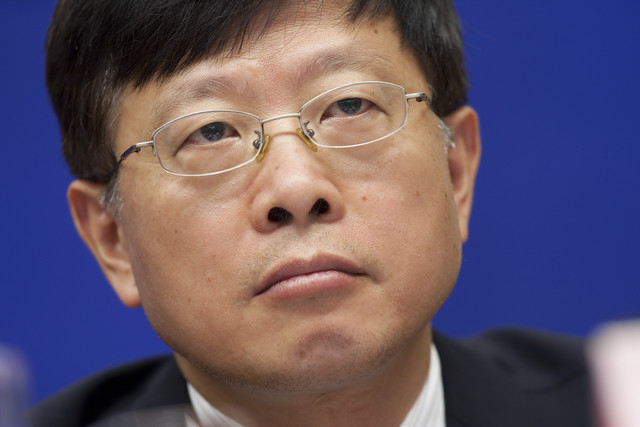
BEIJING—A relatively obscure senior politician with little international experience is taking the reins of China’s $500 billion sovereign-wealth fund, an appointment that comes as it tries to adapt to a quickly changing global landscape. Ding Xuedong, 53 years old, is set to be named chairman of China Investment Corp., according to people with direct knowledge of the matter. His appointment would end months of speculation over the position sparked by China’s once-a-decade leadership change.He will succeed Lou Jiwei, now China’s finance minister and a well-known official long identified as part of the Chinese Communist Party’s reformist wing. Mr. Ding, by contrast, holds a lower profile. He is currently a deputy secretary-general of China’s State Council, its powerful cabinet, and in the past has worked closely with officials commonly perceived as reformers.
But he has spent most of his career in relative anonymity, mostly in China’s Ministry of Finance. Like Mr. Lou before his appointment, Mr. Ding has little foreign experience, according to his biography.
The expected appointment comes as CIC—long one of China’s primary vehicles for investing its massive hoard of foreign-exchange reserves abroad—grapples with both big market shifts and rising competition from within China. In recent years it has put increasing focus on the global resources boom and emerging markets, as well as Europe. But the resources boom appears to have slowed, and some CIC executives say the new chief should figure out whether the fund should reorient its investment focus toward the U.S. market given the rebound there.
“It’s more about dynamically adjusting investment themes as global landscape changes,” one of the executives said. “That’s probably one of the biggest challenges we face now.”
It has also seen growing competition from an even bigger Chinese sovereign investor, the manager of China’s $3.4 trillion foreign-exchange reserves. The manager—called the State Administration of Foreign Exchange, or SAFE—could rival CIC in snatching up choice properties abroad and could complicate its efforts to receive additional funding from the central government.
“Given all the tasks ahead, it’s good that we don’t have to wait any longer for a new chief,” a CIC executive said.
Ranked as the fifth-largest sovereign fund in the world, CIC was formed in 2007 to help diversify China’s foreign-exchange stockpile from low-yielding U.S. Treasury bonds. So far, it has received much of its funding through bond sales by the Ministry of Finance, which it then used to buy foreign exchange from China’s central bank.
Some senior CIC executives have indicated recently that the U.S. market has become an increasingly difficult market for the fund to crack. In a March interview with the Journal, CIC President Gao Xiqing said he was optimistic about the U.S. economy in the long run despite its near-term fiscal problems, but said the country has become less welcoming to investors like CIC than it was during the financial crisis.
Some lawmakers have criticized CIC’s ties to China’s central government and have accused the company of making purchases with Beijing’s longer-term strategies in mind. Top executives at CIC are directly appointed by China’s cabinet, but the firm has stressed that the fund separates its commercial activities from governmental functions and makes its investment decisions independently.
Meanwhile, CIC’s main domestic rival, SAFE, is stepping up its presence in the U.S. The agency recently set up a new operation in New York to invest in private equity, real estate and other U.S. assets, The Wall Street Journal reported in May. The move suggests SAFE is mirroring CIC’s strategy to invest an increasing amount of China’s foreign-exchange reserves in higher-returning alternative investments. By contrast, CIC hasn’t established a formal presence in the U.S. market; its only operation in North America is in Toronto.
In recent years, CIC has also diversified its holdings from financial stocks to longer-term assets such as energy, commodities and infrastructure.
However, energy, one of the sectors CIC has focused on in recent years, has been subject to market swings. Some of CIC’s investments in the sector, including its stakes in Penn West Energy Trust, PWT.T +1.94% of Calgary, Alberta, and in Canadian oil explorer Sunshine Oilsands Ltd., are now worth less than it paid for.
CIC officials have said the energy sector’s cyclical volatility may create pressure on the fund’s short-term performance. But overall, CIC views a rolling 10-year annualized return as a major measure of performance.
After posting a 4.3% loss on its overseas portfolio in 2011, the fund earned a 10.6% return on the portfolio last year, which came in a year when global markets were broadly higher.
 About bambooinnovator
 Bamboo Innovator