Riot after Chinese teachers try to stop pupils cheating; “We want fairness. There is no fairness if you do not let us cheat.”

Riot after Chinese teachers try to stop pupils cheating

What should have been a hushed scene of 800 Chinese students diligently sitting their university entrance exams erupted into siege warfare after invigilators tried to stop them from cheating.

Riot after Chinese teachers try to stop pupils cheating

By Malcolm Moore, Beijing

3:25PM BST 20 Jun 2013

riot_2595770b

The relatively small city of Zhongxiang in Hubei province has always performed suspiciously well in China’s notoriously tough “gaokao” exams, each year winning a disproportionate number of places at the country’s elite universities.

Last year, the city received a slap on the wrist from the province’s Education department after it discovered 99 identical papers in one subject. Forty five examiners were “harshly criticised” for allowing cheats to prosper. Read more of this post

As Beijing air pollution worsens, some American expats clear out; “I want them to leave before they hate this place”

As Beijing air pollution worsens, some American expats clear out

MARK RALSTON, AFP/GETTY IMAGES

“I want them to leave before they hate this place,” one American executive said of his family’s decision to leave pollution-choked Beijing.

BY DON LEE,Los Angeles Times

June 21, 2013, 9:19 a.m.

BEIJING — After nearly two decades in Beijing, David Wolf knew it was time for a change when his 11-year-old son, Aaron, somberly asked him, “Dad, when you were growing up, did you ever have PE outdoors?”

Wolf had grown up in smog-choked Los Angeles in the 1970s, but even that wasn’t nearly as bad as Beijing today. His son, like many young students in the city, has been kept inside for months, with the luckier children getting the chance to exercise under huge air-filtered domes that their international schools have built. Read more of this post

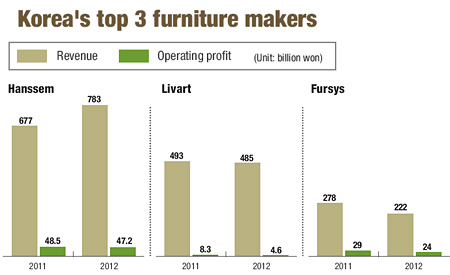
IKEA’s planned entry into Korea in 2014 is feared to deal a decisive blow to already-struggling furniture makers

2013-06-23 14:59

IKEA faces hurdle in opening store in Korea

Lee Hyo-sik

130623_a01_Furniture2130623_a01_Furniture1

IKEA’s planned entry into Korea in 2014 is feared to deal a decisive blow to already-struggling furniture makers here. Since December 2011 when the Swedish home furnishing giant announced its plan to establish a presence in the country, it has drawn protests from concerned local furniture firms. Read more of this post

North Korea anxiety sparks South Korean global property binge

North Korea anxiety sparks South Korean global property binge

LONDON – A jump in tensions with North Korea has fed a tenfold surge in overseas commercial property spending by investors south of one of the world’s most heavily armed borders, making South Korea the largest property investor so far in 2013.

23 MIN 4 SEC AGO

LONDON – A jump in tensions with North Korea has fed a tenfold surge in overseas commercial property spending by investors south of one of the world’s most heavily armed borders, making South Korea the largest property investor so far in 2013.

South Korean investors bought about US$5 billion (S$6.4 billion) in the first five months, a huge increase on the first half of 2012, real estate consultant Jones Lang LaSalle said. Read more of this post

The vacancy rate in office buildings in major business districts in Seoul has reached a five-year high due to a toxic cocktail of an oversupply and a prolonged property market slump

2013-06-24 18:05

Landmark buildings stand empty

Office vacancy rate at highest level since 2008 crisis
By Yi Whan-woo
The vacancy rate in office buildings in major business districts in Seoul has reached a five-year high due to a toxic cocktail of an oversupply and a prolonged property market slump. Read more of this post

Korea’s CJ boss Lee Jae-Hyun face arrest for buying, selling artworks through third persons to evade taxes

2013-06-23 16:45

CJ boss face arrest for buying, selling artworks through third persons to evade taxes Read more of this post

Public companies are taking advantage of record U.S. equity prices to sell the most stock in 17 years, even as initial offerings slow

Stock Sales Climbing to $78 Billion Highest Since 1996

Public companies are taking advantage of record U.S. equity prices to sell the most stock in 17 years, even as initial offerings slow.

Thermo Fisher Scientific Inc., Dollar General Corp. and HCA Holdings Inc. are among U.S. corporations that offered $78 billion in shares during 2013, according to data compiled by Bloomberg. They’ve completed 334 secondary offerings, the most since 1996. IPOs are down 31 percent to $19.9 billion, the lowest since 2010, the data show. Read more of this post

Eurobonds as Refugees From Tax Men Turn 50 in $4 Trillion Market

Eurobonds as Refugees From Tax Men Turn 50 in $4 Trillion Market

Half a century ago, a London bond deal for an Italian highway operator, denominated in U.S. dollars and arranged by a U.K. bank founded by a Jew fleeing Germany spawned a $4 trillion-a-year global market.

Autostrade SpA, the manager of Italy’s freeway network, borrowed $15 million on July 1, 1963, through a new kind of international debt security, dubbed a Eurobond. Financiers led by Siegmund Warburg, founder of S.G. Warburg & Co., created the debenture so its interest payments were untaxed and in so doing gained access to pools of stagnant American dollars in Europe. Read more of this post

BIS: ‘Window-Dressing’ Undermines Bank Risk-Weight Trust; Global banks have improved their capital ratios in part by understating the riskiness of their assets, not by raising their ability to stem losses

‘Window-Dressing’ Undermines Bank Risk-Weight Trust: BIS

Global banks have improved their capital ratios in part by understating the riskiness of their assets, not by raising their ability to stem losses, the Bank for International Settlements said.

Regulators need to monitor the use of internal risk models in determining the capital lenders hold against losses and complement them with gauges that don’t use risk weightings, the BIS said in its annual report released today. The BIS, based in Basel, Switzerland and owned by 60 central banks, hosts the Basel Committee on Banking Supervision, a group of regulators and central bankers that sets global capital standards. Read more of this post

Million Indian Engineers Struggling to Find a Job

Million Engineers Struggling to Find a Job

Posted: 22 Jun 2013 12:43 PM PDT

Mike “Mish” Shedlock

It’s tough to find a job everywhere: in the US, in China, in Europe, and in India. Think education is the answer? I don’t. Economic Times reports a million engineers in India struggling to get placed in an extremely challenging market

Somewhere between a fifth to a third of the million students graduating out of India’s engineering colleges run the risk of being unemployed. Others will take jobs well below their technical qualifications in a market where there are few jobs for India’s overflowing technical talent pool. Beset by a flood of institutes (offering a varying degree of education) and a shrinking market for their skills, India’s engineers are struggling to subsist in an extremely challenging market. According to multiple estimates, India trains around 1.5 million engineers, which is more than the US and China combined. However, two key industries hiring these engineers — information technology and manufacturing — are actually hiring fewer people than before. Read more of this post

Southeast Asia could have to brace for more forest fires and clouds of smoke in the years to come if climate change takes hold, a World Bank expert suggests

June 22, 2013, 4:08 PM

Could Climate Change Worsen Southeast Asia’s Forest Fires?

Top of Form

By Eric Bellman

Southeast Asia could have to brace for more forest fires and clouds of smoke if climate change takes hold, a World Bank expert suggests. As temperatures climb, some parts of Southeast Asia will likely flood with rising sea levels while others face drought and heat waves. Drier jungles and peatlands in Indonesia, Malaysia, Thailand and elsewhere could trigger more fires and spread more choking smoke across the region in the years to come. Read more of this post

Tencent-Naspers JV Ibibo Buys Redbus To Grow Its Online Travel Empire In India

Tencent, Naspers JV Ibibo Buys Redbus To Grow Its Online Travel Empire In India

VICTORIA HO

posted yesterday

redBus-Founders-Phani-and-Charan_1 img_64030_redbus

China’s internet giant Tencent and South Africa’s media powerhouseNaspers are doubling down on tech in India. TechCrunch has just found out that Ibibo, their domestic joint venture, has acquiredredBus.in, a Bangalore-based online bus ticketing company that has become a dominant and disruptive force in how people travel in the country. Read more of this post

Today’s Acqui-Hires Will Become Tomorrow’s Innovators

Today’s Acqui-Hires Will Become Tomorrow’s Innovators

PETER RELAN

posted 2 hours ago

headgears

Editor’s note: Peter Relan is a former programmer and Internet executive, as well as a successful serial entrepreneur, Silicon Valley executive, angel investor, and technology veteran for over 25 years. He founded YouWeb Incubator in 2007, spinning out a string of successful mobile and gaming companies. Follow him on Twitter@prelan.

There is no doubt about the unprecedented wealth of talent in Silicon Valley, both technical and entrepreneurial. The area has become known as a mecca, and for some the Wild West, of digital innovation. So many entrepreneurs migrate to the Valley in hopes of building the next Facebook or Twitter, and technical talent and engineers are the bread and butter making this possible.  Read more of this post

The Science of Storytelling: Why Telling a Story is the Most Powerful Way to Activate Our Brains

The Science of Storytelling: Why Telling a Story is the Most Powerful Way to Activate Our Brains

A good story can make or break a presentation, article, or conversation. But why is that? When Buffer co-founder Leo Widrich started to market his product through stories instead of benefits and bullet points, sign-ups went through the roof. Here he shares the science of why storytelling is so uniquely powerful.

In 1748, the British politician and aristocrat John Montagu, the 4th Earl of Sandwich, spent a lot of his free time playing cards. He greatly enjoyed eating a snack while still keeping one hand free for the cards. So he came up with the idea to eat beef between slices of toast, which would allow him to finally eat and play cards at the same time. Eating his newly invented “sandwich,” the name for two slices of bread with meat in between, became one of the most popular meal inventions in the western world. Read more of this post

Baking biscuits round the clock; Hunger sharpens the wits, a Spanish saying goes: For all the hardship it is inflicting, the crisis is helping many firms sharpen up

Spanish companies: For all the hardship it is inflicting, the crisis is helping many firms sharpen up

Jun 15th 2013 | AGUILAR DE CAMPOO |From the print edition

20130615_WBP003_0

Baking biscuits round the clock

IN A windswept Castilian town 300km (190 miles) north of Madrid, Europe’s largest biscuit plant is churning out digestives, wafers and crackers around the clock. The economic crisis has not really hurt Galletas Gullón, a family-owned firm that dates back to the 19th century: its products are staples in Spanish households and its newer range of “healthy” biscuits created the market sector they dominate. Read more of this post

Working-class 20- and 30-somethings are coming of age in a world of disappearing jobs and shrinking social support networks. Self-sufficiency has a dark side: it leaves little empathy to spare for those who cannot survive on their own

JUNE 22, 2013, 2:30 PM

Young and Isolated

By JENNIFER M. SILVA

In a working-class neighborhood in Lowell, Mass., in early 2009, I sat across the table from Diana, then 24, in the kitchen of her mother’s house. Diana had planned to graduate from college, marry, buy a home in the suburbs and have kids, a dog and a cat by the time she was 30. But she had recently dropped out of a nearby private university after two years of study and with nearly $80,000 in student loans. Now she worked at Dunkin’ Donuts. Read more of this post

Why some high-income earners still go broke

Why some high-income earners still go broke

Melissa Leong | 13/06/22 | Last Updated: 13/06/21 4:50 PM ET
Ten years ago, Jonathan Rivard approached a stone and stucco home with a three-car garage in the north end of Toronto. A Porsche and a Mercedes sat in the driveway and he could hear the mirth of children in a backyard swimming pool. Money is so easily spent. With a tap of your credit card or the shuffle of dollar bills, it’s gone, never to return — well, until payday. Even after you’ve diligently hoarded your funds, here are five things that will quickly deplete your savings. When he stepped inside, however, the rooms were stark, except for a few toys. He walked into the kitchen, pulled back a metal patio chair and took a seat at a glass lawn table. “Have you been robbed?” he asked, jokingly. “They couldn’t afford to furnish the house yet,” the advisor with Edward Jones remembers. “That to me was a wake-up call. There’s perceived wealth and actual wealth.” People may earn a high income. But that doesn’t necessarily make them wealthy. The more money someone makes, he has the same options as you and I: spend it, save it or invest it. Read more of this post

The big rupture: How the Great War transformed a group of artists

The big rupture: How the Great War transformed a group of artists

Jun 22nd 2013 |From the print edition

ARTISTS born in Europe in the last decade of the 19th century found, almost without exception, that their careers were made (or unmade) by the first world war. In Britain six of the best had studied in London at the Slade School of Art, the top school of the day. From 1893 the towering personality there was Henry Tonks, a former medic turned artist, gaunt and severe. Read more of this post

Understanding Alzheimer’s disease: The search for a treatment for dementia continues

Understanding Alzheimer’s disease: The search for a treatment for dementia continues

Jun 22nd 2013 |From the print edition

20130622_STP001_0

ALZHEIMER’S disease wrecks lives. And as people live longer, it will wreck more with every passing year. It also wrecks budgets. In America in 2010, the cost of treating those with dementia was $109 billion. That exceeds the cost of treating those with heart disease or with cancer. The RAND Corporation, a Californian think-tank, reckons this cost will more than double by 2040. A treatment for Alzheimer’s is therefore needed for fiscal as well as humanitarian reasons. Read more of this post

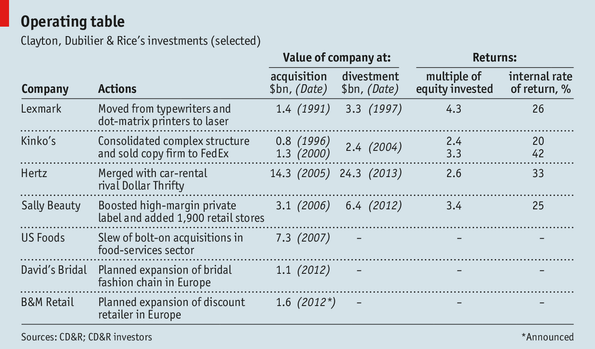
Clayton, Dubilier & Rice: Engineers of a different kind; A buy-out firm that really does focus on operational improvements

Clayton, Dubilier & Rice: Engineers of a different kind; A buy-out firm that really does focus on operational improvements

Jun 22nd 2013 |From the print edition

20130622_FND002_020130622_FNC837

PRIVATE-EQUITY nabobs bristle at being dubbed mere financiers. Piling debt onto companies’ balance-sheets is only a small part of what leveraged buy-outs are about, they insist. Improving the workings of the businesses they take over is just as core to their calling, if not more so. Much of their pleading is public-relations bluster. Clever financial ploys are what have made billionaires of the industry’s veterans. “Operational improvement” in a portfolio company has often meant little more than promising colossal bonuses to sitting chief executives if they meet ambitious growth targets. That model is still prevalent today. Read more of this post

The fate of large firms helps explain economic volatility

The fate of large firms helps explain economic volatility

Jun 22nd 2013 |From the print edition

IN DECEMBER 2004 Microsoft paid a massive $33 billion dividend to its shareholders. The largest payment of its kind, it made up 6% of the increase in Americans’ personal income that year. Examples of how big firms can have a big impact do not come much starker. These kinds of firm-specific shocks are typically excluded from economists’ models, which assume that individual businesses’ ups and downs tend to cancel each other out. Yet to understand how things like trade and GDP evolve, tracking the biggest companies is essential. Read more of this post

The emerging-brand battle: Western brands are coming under siege from developing-country ones

The emerging-brand battle: Western brands are coming under siege from developing-country ones

Jun 22nd 2013 |From the print edition

20130622_WBD000_0

THE past 20 years have seen a massive redistribution of economic power to the emerging world. But so far there has been no comparable redistribution of brand power. Fortune magazine’s 2012 list of the largest 500 companies by sales revenue included 73 Chinese firms, more than from any other country except the United States, with 132. Yet Interbrand’s 2012 list of the 100 “best global brands” included not one Chinese firm. Read more of this post

Zhong Shanshan, a former plasterer and reporter, builds billion-dollar business empire Nongfu Spring from turtle shells

Zhong Shanshan builds a business empire from turtle shells

Staff Reporter

2013-06-23

001ec949ff5c12f298a207

By focusing on a lucrative niche in the market, Zhong Shanshan, a former plasterer and reporter, built a major business group from the ground up. For 20 years, his businesses have been selling bottled water and Chinese herbal medicine, but Zhong continues to maintain a low profile by keeping his firms private.

The flagship firm of Zhong’s business group is YST, which produces Chinese herbal medicine, and owns a number of subsidiaries, notably Nongfu Spring, the second-largest water-bottling firm in China. Read more of this post

Diageo to foray into China’s female alcohol market with Baileys liquor

Diageo to foray into China’s female alcohol market with Baileys liquor

Staff Reporter

2013-06-23

baileys-cream-with-spirit-113631_copy1

Diageo, a alcoholic beverage company headquartered in London, intends to dominate China’s female market by continuing to promote its liquor brand Baileys, the Global Entrepreneur magazine reports.

The creamy sweet liquor is a popular drink among female consumers around the world, with women reportedly consuming 2,365 glasses of the drink every minute. Baileys was first introduced globally in 1974, while its annual sales have touched 8.3 million cartons, making it the best seller among sweet liquor brands. Similar brands, such as Malibu, Dita and Kahlua affiliated with the French drinks conglomerate Pernod Ricard are its strongest competitive rivals in the market. Read more of this post

China cash squeeze exposes risks from short-term funding; more than 1.5 trillion yuan in wealth management products will mature in the last 10 days of June, explaining the scramble by some banks to secure short-term funds

China cash squeeze exposes risks from short-term funding

Fri, Jun 21 2013

By Gabriel Wildau

SHANGHAI (Reuters) – The mirror that China’s central bank is holding up in front of the country’s banks is providing uncomfortable viewing. Too many banks are reliant on short-term funding markets to survive, and a shake up in the sector is needed.

The central bank has engineered the current cash crunch as a warning to overextended banks but a growing concern, analysts say, is of a miscalculation that sets off a full-blown crisis. Read more of this post

Media empires are becoming more focused, and shareholders like it

Media empires are becoming more focused, and shareholders like it

Jun 22nd 2013 | NEW YORK |From the print edition

20130622_WBC832

RUPERT MURDOCH, the billionaire founder of News Corporation, recently filed for divorce from his third wife, Wendi Deng. This is not the only break-up he is going through. On June 28th his company will split in two—shares in both parts began trading this week—with most of its lucrative film and television assets being hived off into a new group, called 21st Century Fox. The rump News Corp will be left with newspapers and other lower-growth businesses (see article). Read more of this post

Streaming music: Apple follows others into the booming bit of the music industry

Streaming music: Apple follows others into the booming bit of the music industry

Jun 15th 2013 |From the print edition

“CAN’T innovate anymore, my ass,” growled Phil Schiller, an Apple executive, as he helped unveil the firm’s new offerings at its annual conference on June 10th. He was addressing the growing ranks of doubters who say Apple has peaked since the death in 2011 of its former boss, Steve Jobs (its share price has fallen by 20% so far this year). The sceptics were not swayed. Among Apple’s modest innovations were a new operating system, iOS 7, and a music-streaming service that resembles what rivals already offer. Read more of this post

Coming Soon: Intel’s Must-See TV; The chip giant readies a TV subscription service powered by a set-top box unlike any other

SATURDAY, JUNE 22, 2013

Coming Soon: Intel’s Must-See TV

By TIERNAN RAY | MORE ARTICLES BY AUTHOR

The chip giant readies a TV subscription service powered by a set-top box unlike any other.

Full disclosure, dear readers—I’m not a TV viewer. I chucked the set years ago and mainly watch things on computers.

But then, television hasn’t changed much in decades, so I feel I’m still qualified to opine on the boob tube’s future. And two weeks ago, I was fortunate enough to glimpse a possible part of that future at the Santa Clara, Calif., headquarters of Intel (ticker: INTC), where I saw a TV service that is novel, elegant, and highly desirable, even to a television Luddite like me. The service faces a number of hurdles, including potential obstruction by the cable and telephone industries, but what I witnessed could take Intel in a thrilling new direction. Read more of this post

Bill Gates: Three Things I’ve Learned From Warren Buffett

Bill Gates: Three Things I’ve Learned From Warren Buffett

bill-gates-19-sized

I’m looking forward to sharing posts from time to time about things I’ve learned in my career atMicrosoft and the Gates Foundation. (I also post frequently on my blog.) Last month, I went to Omaha for the annual Berkshire Hathaway shareholders meeting. It’s always a lot of fun, and not just because of the ping-pong matches and the newspaper-throwing contest I have with Warren Buffett. It’s also fun because I get to learn from Warren and gain insight into how he thinks. Here are three things I’ve learned from Warren over the years:

1. It’s not just about investing.

The first thing people learn from Warren, of course, is how to think about investing. That’s natural, given his amazing track record. Unfortunately, that’s where a lot of people stop, and they miss out on the fact that he has a whole framework for business thinking that is very powerful. For example, he talks about looking for a company’s moat—its competitive advantage—and whether the moat is shrinking or growing. He says a shareholder has to act as if he owns the entire business, looking at the future profit stream and deciding what it’s worth. And you have to be willing to ignore the market rather than follow it, because you want to take advantage of the market’s mistakes—the companies that have been underpriced. I have to admit, when I first met Warren, the fact that he had this framework was a real surprise to me. I met him at a dinner my mother had put together. On my way there, I thought, “Why would I want to meet this guy who picks stocks?” I thought he just used various market-related things—like volume, or how the price had changed over time—to make his decisions. But when we started talking that day, he didn’t ask me about any of those things. Instead he started asking big questions about the fundamentals of our business. “Why can’t IBM do what Microsoft does? Why has Microsoft been so profitable?” That’s when I realized he thought about business in a much more profound way than I’d given him credit for.

2. Use your platform.

A lot of business leaders write letters to their shareholders, but Warren is justly famous for his. Partly that’s because his natural good humor shines through. Partly it’s because people think it will help them invest better (and they’re right). But it’s also because he’s been willing to speak frankly and criticize things like stock options and financial derivatives. He’s not afraid to take positions, like his stand on raising taxes on the rich, that run counter to his self-interest. Warren inspired me to start writing my own annual letter about the foundation’s work. I still have a ways to go before mine is as good as Warren’s, but it’s been helpful to sit down once a year and explain the results we’re seeing, both good and bad.

3. Know how valuable your time is.

No matter how much money you have, you can’t buy more time. There are only 24 hours in everyone’s day. Warren has a keen sense of this. He doesn’t let his calendar get filled up with useless meetings. On the other hand, he’s very generous with his time for the people he trusts. He gives his close advisers at Berkshire his phone number, and they can just call him up and he’ll answer the phone. Although Warren makes a point of meeting with dozens of university classes every year, not many people get to ask him for advice on a regular basis. I feel very lucky in that regard: The dialogue has been invaluable to me, and not only at Microsoft. When Melinda and I started our foundation, I turned to him for advice. We talked a lot about the idea that philanthropy could be just as impactful in its own way as software had been. It turns out that Warren’s brilliant way of looking at the world is just as useful in attacking poverty and disease as it is in building a business. He’s one of a kind.

Want to Learn How to Think? Read Fiction; reading a literary short story increases one’s comfort with ambiguity

Want to Learn How to Think? Read Fiction

New Canadian research finds reading a literary short story increases one’s comfort with ambiguity.

June 12, 2013 • By Tom Jacobs • 10 Comments and 0 Reactions

Are you uncomfortable with ambiguity? It’s a common condition, but a highly problematic one. The compulsion to quell that unease can inspire snap judgments, rigid thinking, and bad decision-making. Fortunately, new research suggests a simple antidote for this affliction: Read more literary fiction. Read more of this post