Could Fee Hurdles Come Down Everywhere? Commissions on popular investments like mutual funds will be banned in Australia, Netherlands, following UK

Jun 21, 2013

The Intelligent Investor: Going Dutch — Could Fee Hurdles Come Down Everywhere?

By Jason Zweig

BF-AF198_INVEST_G_20130621173910

With markets in turmoil, investors need good advice even more than usual. But investing advice remains confusing, costly and opaque—and that needs to change.

New rules in the U.K., the Netherlands and Australia show one drastic way to tackle the problem. Starting this coming week, commissions on popular investments like mutual funds will be banned in Australia. Later this year, the Dutch government will finalize a law that will ban commissions as of Jan. 1, 2014. A similar prohibition already went into force in Britain as of Dec. 31, 2012. Read more of this post

The next time you’re in a meeting and want to get people on your side, just say ‘yeah’; MIT research found that certain words seem to help participants increased the chances that their ideas would win acceptance from the group

June 18, 2013, 10:08 p.m. ET

At Work: Just Say ‘Yeah’

The next time you’re in a meeting and want to get people on your side, just say “yeah.”

New research out of the Massachusetts Institute of Technology found that certain words seem to help participants appear more persuasive in meetings and increased the chances that their ideas would win acceptance from the group. Read more of this post

How iRobot is Invading Your Life

How iRobot is Invading Your Life

by Brian Solomon | Jun 19, 2013

topimg_21867_colin_angel_300x400

CEO Colin Angle jokes that he’s a vacuum cleaner salesman, but his robots are tackling bigger challenges

The end of iRobot’s military boom focussed it on figuring out how to make money off civilians As he mashes the joystick controls, Colin Angle grins like a six-year-old boy playing with his first radio-controlled car, freshly torn wrapping paper thrown aside. But the 45-year-old iRobot co-founder and CEO isn’t testing out a toy—he’s putting a $100,000-plus piece of machinery to work, a remote-controlled 60-pound minitank with four cameras, rubber treads and a six-foot extendable arm.

Read more of this post

The Man Who Escaped Microsoft and Took a Whole Company With Him; That company, Expedia, which Rich Barton founded in 1996, was acquired for $3.6 billion. Barton went on to co-found Zillow, Glassdoor

The Man Who Escaped Microsoft and Took a Whole Company With Him

BY MICHAEL V. COPELAND

06.10.13

Barton3-e1370885042971-660x585

When Rich Barton was at Microsoft, he pulled off something that, despite government and investor pressure over the years, never happens. He spun out a company. That company, Expedia, which Barton founded in 1996, later went public with Barton as CEO. In 2003 Barry Diller’s USA Interactive acquired it for $3.6 billion.

Since then Barton has co-founded real estate data company Zillow and job search startup Glassdoor, and he’s invested in a handful of others. He also sits on the boards of eight companies, including Netflix. In large part, the companies Barton is involved in hew to a simple yet powerful idea: connecting people to information previously unavailable to them. Wired Business sat down with Barton in San Francisco’s South Park to talk power to the people, Google Glass, Microsoft, what the hell happened with the Qwikster debacle, and why picking fights with entrenched industries is a marketer’s dream. Read more of this post

Lessons from Mavericks: Staying Big by Acting Small

Lessons from Mavericks: Staying Big by Acting Small

by Martin Reeves, George Stalk, and Jussi Lehtinen

JUNE 17, 2013

In an era in which scale-based leadership is both less durable and less valuable than it once was, many large corporations find themselves looking over their shoulders for the next disruption—the iPhone equivalent that could reshape their industry. In many cases, these disruptions come from mavericks—small outlier companies that think and act differently from incumbents. Read more of this post

Cadbury: The great tax fudge; The beloved British confectioner ran aggressive tax avoidance schemes at odds with its image

June 20, 2013 6:58 pm

Cadbury: The great tax fudge

By Jonathan Ford, Sally Gainsbury and Vanessa Houlder

The beloved British confectioner ran aggressive tax avoidance schemes at odds with its image

It was a deal that provoked visceral reactions in Britain. Even before Kraftcompleted its contentious £11.5bn purchase of Cadbury three years ago, politicians were warning the US group against trying to make a “fast buck” out of the UK confectioner. Read more of this post

Balance: The Economics of Great Powers from Ancient Rome to Modern America

Balance: The Economics of Great Powers from Ancient Rome to Modern America [Hardcover]

Glenn Hubbard (Author), Tim Kane (Author)

9781476700250_p0_v4_s260x420

Publication Date: May 21, 2013

In thisgroundbreaking book, two economists explain why economic imbalances cause civilcollapse and why the United States could be next.

From theMing Dynasty to Ottoman Turkey to imperial Spain, the Great Powers of the worldemerged as the greatest economic, political, and military forces of theirtimeonly to collapse into rubble and memory. What is at the root of their demiseandhow can the United States stop this pattern from happening again?

Aquarter century after Paul Kennedys The Rise and Fall of the Great Powers,Glenn Hubbard and Tim Kane present a bold, sweeping account of why powerful nationsand civilizations break down under the heavy burden of economic imbalance.Introducing a profound new measure of economic power, Balance traces thetriumphs and mistakes of imperial Britain, the paradox of superstateCalifornia, the long collapse of Rome, and the limits of the Japanese model of growth.Most importantly, Hubbard and Kane compare the twenty-first-century UnitedStates to the empires of old and challenge Americans to address the realproblems of our countrys dysfunctional fiscal imbalance. If there is not a neweconomics and politics of balance, they show that there will be an inevitable demiseahead. Read more of this post

Our great, global cities are turning into vast gated citadels where the elite reproduces itself; The elite talks about its cities in ostensibly innocent language. But the truth is exclusion.

June 14, 2013 6:49 pm

Priced out of Paris

By Simon Kuper

Our great, global cities are turning into vast gated citadels where the elite reproduces itself

Two mournful friends dropped by our flat in Paris last Sunday. They are a well-paid couple from the caste known in Paris as “bobos”: people with bourgeois incomes and bohemian tastes. In the popular narrative, bobos have invaded Paris, driving out pure bohemians and the working class. But my bobo friends had a new story: they themselves were being driven out of Paris. To get enough space for their kids, they were leaving for the suburbs. When they’d told the headmaster at the children’s school, he had looked sad and said: “Everyone is leaving.” Paris is pricing out even the upper middle-class. Read more of this post

Brand Breakout: How Emerging Market Brands Will Go Global

June 19, 2013 4:26 pm

Local brands pursuing global recognition

By Rob Minto

Brand Breakout

Brand Breakout: How Emerging Market Brands Will Go Global
By Nirmalya Kumar and Jan-Benedict Steenkamp 
Palgrave Macmillan, £16.99/$28

Unless you have been living in a world where you reject the notion of product identities, you are a sucker for brands. You may not be aware of it, but branding is why you bought the Financial Times today. It is why you drive the car you drive and it is why you don’t say: “Let me just Bing [rather than Google] that.”

So, given that emerging markets account for more than 40 per cent of global output, why are there no really well-known global emerging market brands?

That is the question put by Nirmalya Kumar of London Business School and UNC Kenan-Flagler’s Jan-Benedict Steenkamp. They think they have the answer. In Brand Breakout, they identify the factors they believe have stopped a big emerging market brand becoming a household name from Rio de Janeiro to Paris to Shanghai. Read more of this post

What Paintbrush Makers Know About How to Beat China; Change your business all the time. Or don’t ever change a thing.

June 18, 2013

What Paintbrush Makers Know About How to Beat China

By ADAM DAVIDSON

mag-23Economy-t_CA0-articleLarge

As I toured Israel Kirschner’s Bronx paintbrush factory earlier this month, I couldn’t stop feeling amazed that it was still in business. Many days, Kirschner feels the same way. The charming, energetic 69-year-old joked about his ancient equipment (“That could be 100 years old,” he said of a bristle-cleaning machine); his two least-committed employees, his son and daughter (“They come late, they leave early”); and how his business has been increasingly undercut by Chinese manufacturers. After introducing me to his star brush maker, Fermin Gil, a Mexican immigrant who “can just see” when a brush isn’t right, Kirschner handed me a one-inch boar-bristle brush with a wooden handle. A Chinese manufacturer sells it for 30 cents. If he made it himself, he told me, it would cost significantly more. Read more of this post

Titans can always be cut down to size; Ingenuity and ambition are all that the pioneer needs to take on established businesses

June 18, 2013 3:09 pm

Titans can always be cut down to size

By Luke Johnson

Ingenuity and ambition are all that the pioneer needs to take on established businesses

Is it harder to succeed as an entrepreneur because big companies control more industries than they did? This was the suggestion of a recent article by Ben Casselman in the Wall Street Journal. He made the case that start-ups are declining because animal spirits are fading in the US. Read more of this post

Dolce and Gabbana Convicted of Tax Evasion and sentenced to one year and eight months in prison

Updated June 19, 2013, 3:27 p.m. ET

Dolce and Gabbana Convicted of Tax Evasion

By MANUELA MESCO and GIADA ZAMPANO

MK-CE134C_DOLCE_G_20130619182901

Katy Perry wears a dress by Domenico Dolce, left, and Stefano Gabbana, right at New York’s Met Museum.

MILAN—An Italian court on Wednesday sentenced Italian fashion designers Domenico Dolce and Stefano Gabbana to one year and eight months in prison for tax evasion.

The pair’s lawyer, Massimo Dinoia, said they planned to appeal, adding that the case is “groundless.” The designers, known for their sexy styles favored by celebrities such as Madonna, Naomi Campbell and Katy Perry, have denied the charges. Read more of this post

Ticket Master Schulenberg Becomes Billionaire in Germany

Ticket Master Schulenberg Becomes Billionaire in Germany

Selling tickets to Depeche Mode concerts and the 2014 Winter Olympics in Sochi, Russia, has made Klaus-Peter Schulenberg a billionaire. The founder and chairman of Munich-based CTS Eventim AG (EVD), Europe’s largest ticketing service, has seen his fortune soar as shares of Eventim have risen almost 40 percent in the past seven months. Schulenberg owns half of Eventim, according to the company’s annual report, a stake that is valued at about $975 million based on yesterday’s closing price. He also has collected more than $150 million in dividends and proceeds from stocks sales since the company’s 2000 initial public offering. That gives the 62-year-old a net worth of about $1.1 billion, according to the Bloomberg Billionaires Index.

Read more of this post

LOGITECH CEO: ‘I Love Hiring English Majors’; “The older I get, the more I realize the power of words and the power of words in making you think … the best CEOs and leaders are extremely good writers”

LOGITECH CEO: ‘I Love Hiring English Majors’

VIVIAN GIANG JUN. 20, 2013, 3:43 PM 5,577 17

Don’t fret, English majors: There are employers out there looking for you. One such empolyer is Bracken Darrell, the CEO of Logitech. He loves hiring English majors. In fact, he thinks graduates of the liberal arts are so rare that he calls them “endangered species.” “If you find one, you need to run over and catch them in a conversation,” he tells Business Insider.  Read more of this post

Forget ethics training: Focus on empathy

Forget ethics training: Focus on empathy

Craig Dowden, Special to Financial Post | 13/06/21 | Last Updated:13/06/21 9:50 AM ET
The sheer volume and diversity of recent scandals in the corporate world, various levels of government, and even the media, has been astounding. Even though initiatives to get tough on corporate malfeasance were introduced and promoted in the early 2000s, it seems the only lesson learned is how to shield bad deeds more effectively while keeping up the appearance of compliance. Read more of this post

Google Admits Its Crazy Interview Questions Were ‘A Complete Waste Of Time’; Google HR Boss Explains Why GPA And Most Interviews Are Useless

Google Admits Its Crazy Interview Questions Were ‘A Complete Waste Of Time’

ALYSON SHONTELL JUN. 20, 2013, 9:38 AM 27,219 26

If you have ever experienced a job interview with Google, you know it can be grueling. Until a few years ago, Google was infamous for asking brainteasers such as, “How much should you charge to wash all the windows in Seattle?” and “Why are manholes round?” It now admits that those questions were useless. “We found that brainteasers are a complete waste of time,” Laszlo Bock, Google’s Senior VP of People Operations, tells The New York Times. “How many golf balls can you fit into an airplane? How many gas stations in Manhattan? A complete waste of time. They don’t predict anything. They serve primarily to make the interviewer feel smart.” In addition to trashing brainteasers, Google is also moving away from GPA requirements. Bock says there is a correlation between good employees and high GPAs and test scores if you’re just a few years out of school. But for every other candidate, Google no longer asks for that information. What’s Google’s hiring tactic now? Bock says his team uses behavioral interviews and asks for examples of how a person acted in a particular situation. It no longer asks hypothetical questions. Google also uses structured behavior interviews with a consistent rubric for assessing each person. “The interesting thing about the behavioral interview is that when you ask somebody to speak to their own experience, and you drill into that, you get two kinds of information,” Bock says. “One is you get to see how they actually interacted in a real-world situation, and the valuable “meta” information you get about the candidate is a sense of what they consider to be difficult.” Google also looks for leadership examples among candidates. 

Google HR Boss Explains Why GPA And Most Interviews Are Useless

MAX NISEN JUN. 19, 2013, 10:44 PM 67,133 31

Google likely sees more data than any company on the planet. And that obsession carries through to hiring and management, where every decision and practice is endlessly studied and analyzed. Read more of this post

MONEYBALL AT WORK: They’ve Discovered What Really Makes A Great Employee

MONEYBALL AT WORK: They’ve Discovered What Really Makes A Great Employee

MAX NISEN MAY 6, 2013, 1:00 PM 58,031 33

Hiring decisions have always been limited to a few imperfect factors, including what appears on a resume and what impression a candidate gives off in an informal interview. That’s all changing. As Dan Shapero, LinkedIn‘s VP of Talent Solutions and Insights puts it, “Recruiting has always been an art, but it’s becoming a science.” Read more of this post

Kayum Dhanani’s Barbeque Nation grew from a single outlet in 2006 to 35 with revenue $60m and 19% profit margin; the chain found a way to scale and replicate stds across 14 cities by offering customers an ‘independent’ dining experience

Rapid Expansion the Way Forward for Barbeque Nation

by Shravan Bhat | Jun 21, 2013

topimg_21877_kayum_dhanani_barbeque_600x400

Kayum Dhanani’s Barbeque Nation has grown from a tier 2 city restaurant to a tier 1 chain. And it is scaling fast

In Indore, it can get quite chilly in November. The temperature by the poolside at Sayaji Hotel was hovering around 7ºC, and restaurant manager Prosenjit Choudhury was getting complaints that kebabs served to the guests were going cold. One evening at home, Choudhury saw a television programme about nomads facing a similar problem while camping on riverbanks. They erected a grill using stacked armour, and roasted meat on it. Choudhury began serving kebabs, which were 90 percent cooked, on mini-grills at the tables. It was a hit. After a successful stint in Sayaji Hotel’s banquets division—he had started with parent company Sayaji Hotels as a management trainee in 1995—Choudhury got the go-ahead from Sajid Dhanani, then MD of Sayaji Hotels, to enter food retail. As CEO of Barbeque Nation, Choudhury brought the idea from Indore to Mumbai in 2006, with the city’s first Barbeque Nation at Pali Hill, in Bandra. Between 2006 and 2008, Barbeque Nation grew from a single outlet to 13. Today, it has 35 outlets, 18 of them opening in the last year alone. With a revenue of Rs 200 crore last year (it is expected to touch Rs 350 crore this fiscal), the chain brings in roughly Rs 9 crore per store, one of the highest for restaurant chains in India. Profit margins are 19 percent, which, for a buffet service serving unlimited meat and seafood, is remarkable.

img_70423_barbeque_nation Read more of this post

How Cree Perfected The 20-Year Lightbulb; How a North Carolina LED maker built a better mousetrap—and doubled its market cap to $7 billion in just one year

How Cree Perfected The 20-Year Lightbulb

by Christopher Helman | Jun 22, 2013

topimg_21889_chuck_swoboda_300x400

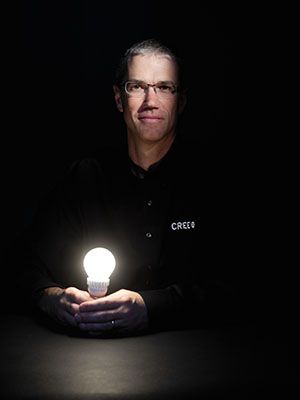
Cree’s CEO Chuck Swoboda wants to change the way America is lit. Investors are basking in the glow

How a North Carolina LED maker built a better mousetrap—and doubled its market cap to $7 billion in just one year

In the ad for Cree lightbulbs, snow whips across a desolate field as a bagpipe creaks out ‘Amazing Grace’. An announcer holds up a lightbulb and speaks into the camera. “Mr Edison, today we lay to rest your creation, the incandescent lightbulb. I know you’re not shocked, sir. You knew that it needed an unreasonable amount of energy to do its job and that it had the life span of a lucky bug.” Read more of this post

Profiting from the Cloud: How to Master Software as a Service

Profiting from the Cloud: How to Master Software as a Service

by John Pineda and Jean-Manuel Izaret

JUNE 18, 2013

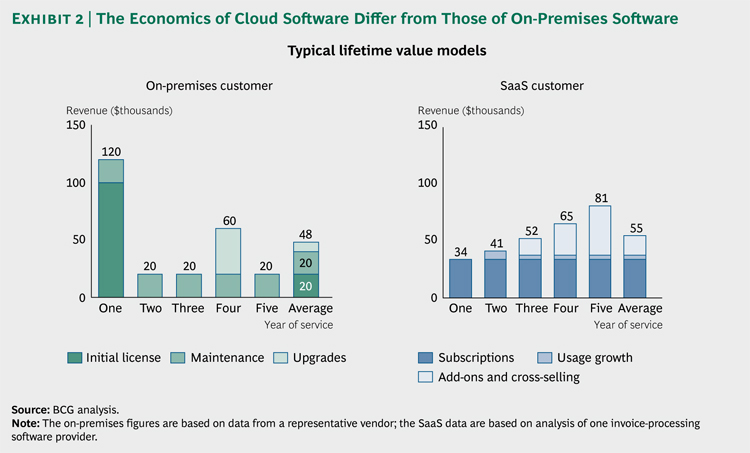
Profiting_Cloud_Ex1_lg_tcm80-138310Profiting_Cloud_Ex2_lg_tcm80-138309

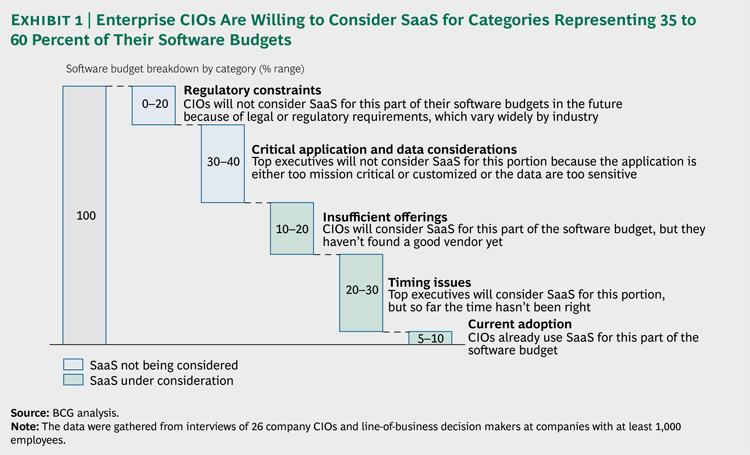
Cloud software is no longer a fringe market. The $15 billion global software as a service (SaaS) business is growing at about three times the rate of traditional, on-premises software. SaaS represents 12 percent of global spending on enterprise applications, and cloud-based applications are already firmly entrenched in a handful of corporate IT categories. For example, customer relationship management (CRM) and collaboration software are expected to achieve 30 and 50 percent penetration rates, respectively, in those categories by 2015. Read more of this post

Why Instagram wants to rule video; Instagram + video = Less than Instagram

Why Instagram wants to rule video

By JP Mangalindan, Writer June 20, 2013: 2:54 PM ET

The popular photo-sharing mobile app now lets users capture video and apply filters.

FORTUNE — Instagram isn’t content with dominating the photo sharing space. At Facebook’s (FB) Menlo Park, Calif. headquarters this week, CEO and co-founder Kevin Systrom announced the ability to capture video in an iOS and Android update available for download. Read more of this post

China’s Economic Policy Factory: The NDRC; With vast powers over the economy, the NDRC is drawing the scrutiny and anger of academics and ordinary Chinese

China’s Economic Policy Factory: The NDRC

By Dexter Roberts on June 20, 2013

http://www.businessweek.com/articles/2013-06-20/chinas-economic-policy-factory-the-ndrc

Who decides the size of Shanghai Disneyland (116 hectares, now under construction), how thin plastic bags should be (no less than 0.025 millimeters), sets gasoline prices and taxi fares, and recently used its sweeping power to fine China’s two best-known liquor companies 449 million yuan ($73.25 million)? It’s the National Development and Reform Commission, the biggest, most powerful Chinese bureaucracy, with responsibility over broad swathes of China’s $8.5 trillion economy, and day-to-day authority that sometimes rivals that of Premier Li Keqiang’s State Council, its putative boss. Read more of this post

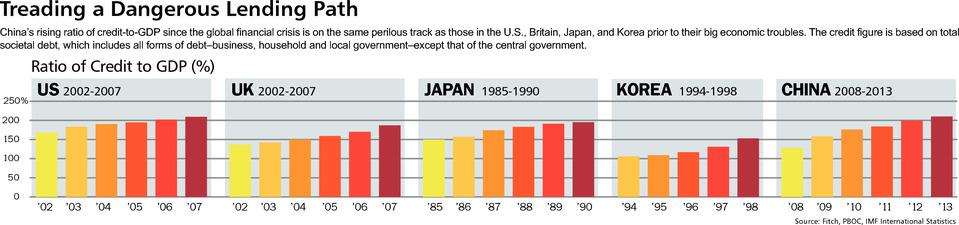
China’s credit growth to back lavish construction and infrastructure projects is similar to that of the U.S. and Japan before they faced financial calamities

SATURDAY, JUNE 22, 2013

Where Will It End?

By JONATHAN R. LAING | MORE ARTICLES BY AUTHOR

BA-BC241F_china_G_20130622021505

China’s credit growth to back lavish construction and infrastructure projects is similar to that of the U.S. and Japan before they faced financial calamities.

Of all the global economic powers, China would seem the most immune to the threat of a financial crisis.

It sailed through the post-2008 global credit implosion largely unscathed, by pumping up housing construction and infrastructure spending to compensate for slackening exports. First-quarter 2013 growth in gross domestic product, although the weakest in more than two years, rose at a rate the rest of the world would envy, 7.7%. Bad debts inside the Chinese banking system stand at a negligible 1%, compared with 3.4% in the U.S. and double-digit figures in much of the euro zone. Read more of this post

Korean banks, builders suffer from soaring lawsuits; Samsung Group’s financial affiliates ― Samsung Life, Samsung Card and Samsung Fire & Marine ― are involved in over 2,000 lawsuits, more than any other financial institutes

2013-06-20 18:56

Banks, builders suffer from soaring lawsuits

By Kim Tae-jong
Eighty percent of big firms surveyed are involved in legal disputes, recent data showed Tuesday.
According to the data compiled by business monitoring firm CEO Score, 182 firms that are under a “disclosure’ requirement by stock-related regulations are mired in 26,640 lawsuits. Read more of this post

In Brazil, Road Bandits Force Switch to Sea Shipping; Trucks transport 60 percent of Brazil’s cargo, about $470 million of which was stolen last year on the country’s roads

In Brazil, Road Bandits Force Switch to Sea Shipping

By Juan Pablo Spinetto and Christiana Sciaudone on June 20, 2013

comp_copper26__01inline__405

Most companies decide how to ship their goods by determining the fastest route between point A and point B. ButParanapanema (PMAM3), Brazil’s biggest refined copper producer, is switching its domestic shipments to slow-moving ocean freighters from swifter trucks. Although the shift almost triples transport times, it cuts costs by 21 percent by eliminating a threat peculiar to Brazilian roads: thieves. Read more of this post

Turkey’s Liquor Market at Risk; The latest ad for Turkey’s Efes beer features an unmarked brown bottle and this cryptic message: “Even if we don’t see each other, we’ll know.”

Turkey’s Liquor Market at Risk

By Kristen Schweizer and Selcan Hacaoglu on June 20, 2013

The latest ad for Turkey’s Efes beer features an unmarked brown bottle and this cryptic message: “Even if we don’t see each other, we’ll know.” The slogan refers to a new law that not only bans alcohol ads but would also stop TV viewers from watching Homer Simpson enjoy a Duff beer in Moe’s Tavern, as depictions of drinking on television programs are to be blurred out. Read more of this post

In Tel Aviv, Nasty Traffic and Navigation Apps Go Hand in Hand

In Tel Aviv, Nasty Traffic and Navigation Apps Go Hand in Hand

By David Wainer on June 20, 2013

http://www.businessweek.com/articles/2013-06-20/in-tel-aviv-nasty-traffic-and-navigation-apps-go-hand-in-hand

Tomer Neuner conceived of the Parko app when he was hunting for a parking space in Tel Aviv, circling his neighborhood on a sweltering summer day. “I thought to myself, there’s got to be a way to make the search more efficient for everyone,” says Neuner, 30, who quit his job as a product manager at financial-technology company SuperDerivatives to develop the app. Parko learns users’ habits by tracking their phones and predicts when they’re about to vacate a spot, alerting other drivers in the area. Neuner launched the app in Israel earlier this year and is planning to expand overseas, including to San Francisco and Paris. Read more of this post

Oracle’s sales miss magnifies fears about cloud missteps; “You can get as many tummy tucks and face lifts as you as want, but it doesn’t make your heart and liver and kidneys any younger.”

Analysis: Oracle’s sales miss magnifies fears about cloud missteps

8:06am EDT

By Jim Finkle

BOSTON (Reuters) – “What the hell is cloud computing?” Oracle Corp (ORCL.O: QuoteProfileResearchStock Buzz) Chief Executive Larry Ellison said during a diatribe against the whole concept at an investor Q&A in 2008.

Asked to describe his strategy for expanding into a then-small but rapidly expanding sphere, the software giant’s head said he had no idea what people were talking about when they referred to cloud computing, describing it as “nonsensical” and those writing about it as “insane”. Read more of this post

Now Chinese Users Can Pay for McDonald’s Purchases within WeChat

Now Chinese Users Can Pay for McDonald’s Purchases within WeChat

By Tracey Xiang on June 18, 2013

Chinese users now can pay for purchases at McDonald’s directly within WeChat. Any user that follows the official WeChat account of McDonald’s China now can find an e-coupon for an afternoon tea deal. You can make payments with Tenpay or other online payments services offered by Chinese banks without leaving WeChat. Then you’ll receive a WeChat message with a QR code for redemption at a McDonald’s store. Clicking on the green button, you’ll be led to a page to pay with Tenpay or other online banks. Meifuhui, an online cosmetic retailer founded by a former Tencent’s exec, was one of the earliest that supported Tenpay within WeChat. It is reported that a few more merchants have had the WeChat payments capability (in Chinese). Tenpay once said they’d support payments within WeChat by the end of last year. We don’t know what took it so much longer. But still, Tenpay isn’t the prevailing online payments method with Chinese — Alipay is. Also it’s not very likely users would like to make payments with banks on mobile as it takes several more steps and security must be a concern with consumers. Yixun, the online retailer Tencent acquired, started supporting Alipay from November 2012. So it’s not impossible WeChat would introduce Alipay later.

MD-WeChat

A price war has flared up again among Chinese e-commerce websites, despite government officials accusing them of “fooling consumers with promotional activities” just nine months ago

Price war between e-commerce firms hotter

Updated: 2013-06-19 02:54

By SHEN JINGTING ( China Daily)

A price war has flared up again among Chinese e-commerce websites, despite governmentofficials accusing them of “fooling consumers with promotional activities” just nine months ago. JD.com, also known as Jingdong, offered heavy discounts on millions of products, includingsome best sellers, to celebrate its 10th anniversary on Tuesday.

Read more of this post