Is Netflix model the future of e-books?

June 6, 2013, 3:17 p.m. EDT

Is Netflix model the future of e-books?

Apple’s battle over e-book prices may be overtaken by digital rentals

By Quentin Fottrell

Federal prosecutors say Apple (NASDAQ:AAPL)  conspired with book publishers to jack up e-book prices. But the court case, which began this week, may soon be a moot point, experts say, as other companies aim to make traditional prices irrelevant by offering e-book rental services akin to Spotify and Netflix.

Is Netflix the future of E-Books?

Five publishing companies have already settled with the federal government and terminated agreements made with Apple in 2010 in the weeks before the launch of the first iPad. Those publishers include HarperCollins, Lagardère’s Hachette, CBS’s (NYSE:CBS)   Simon & Schuster, Pearson’s Penguin Group and the Macmillan unit of Georg von Holtzbrinck. (HarperCollins is owned by News Corp. (NASDAQ:NWSA)  , as is The Wall Street Journal and MarketWatch.) Since then, Amazon.com (NASDAQ:AMZN)   has been steadily cutting the prices of e-books. Read more of this post

Online education platform Coursera aims to reach more Chinese

Online education platform Coursera aims to reach more Chinese

English.news.cn   2013-06-07

VANCOUVER, June 6 (Xinhua) — One of the massive online open courses (MOOCs) provider Coursera’s founders, Daphne Koller, says she is hoping to work with more Chinese universities so that they could bring more courses online and help the platform reach more people.

In a recent written interview with Xinhua, Koller said that reaching the many people in China who don’t speak English and who could benefit from free access to higher education is an important goal for Coursera. She was in Vancouver, a coastal city on the Pacific coast of Canada, recently to discuss about the impact of MOOCs on teaching and learning with teachers and students from the University of British Columbia. Read more of this post

CHART: Mobile Commerce Continues Its Massive Rise

CHART: Mobile Commerce Continues Its Massive Rise

Josh Luger | Jun. 6, 2013, 2:15 PM | 94 | 

bii_mobilecommerce_lasttry-1

As recently as late 2010, mobile commerce was only 3% of e-commerce. But, that number has steadily been on the rise. At the end of last year’s holiday shopping season, that number it had soared to 11%. That’s approximately $18.6 billion in consumer spending – and that doesn’t even include travel-related purchases. Thanks in part to a new ecosystem of retail and shopping apps, mobile-generated retail spend could rise to 15% of retail e-commerce by the end of this year.  In a new report from BI Intelligence, we examine the why mobile commerce is exploding and dig deeper into the numbers underpinning the explosive growth. We also analyze the growth and success of new mobile merchandising trends — merchandising being the art of selling people products they didn’t know they wanted — like mobile catalogs and coupons. Here’s a few reasons why the number should continue to rise dramatically: Read more of this post

East Meets West as Companies Collaborate on ‘Puzzle & Dragons’; Japan’s GungHo, Finland’s Supercell Team Up on Mobile Game

Updated June 6, 2013, 8:20 p.m. ET

Japan’s GungHo, Finland’s Supercell Team Up on Mobile Game

East Meets West as Companies Collaborate on ‘Puzzle & Dragons’

By MAYUMI NEGISHI And IAN SHERR

Two of the hottest game makers from opposite sides of the globe are teaming up.

In the hit mobile game “Puzzle & Dragons” from Japan’s GungHo Online Entertainment Inc., 3765.JA -9.83% players will soon stumble on a dungeon that features characters and themes from “Clash of Clans,” a battle and strategy game created by Finland’s Supercell Oy.

The pact between the companies is part of an effort they hope will win new users by highlighting one another’s games within their respective products. Read more of this post

Google Wallet Is Leaking Money; Google is having a hard time breaking into the $12.8 billion mobile-payment market, even with $300 million in acquisitions

Google Wallet Is Leaking Money

By Mark Milian and Ari Levy on June 06, 2013

http://www.businessweek.com/articles/2013-06-06/google-wallet-is-leaking-money

Google Wallet (GOOG), the mobile software that allows Android users to pay for purchases online and in stores with their phones, has become a money pit. The company has dedicated hundreds of developers to Wallet and spent about $300 million to acquire digital payment startups to help develop the app. But consumers aren’t sold. Wallet has been downloaded fewer than 10 million times in the two years since its launch, according to Play, Google’s app store.

For Google, the goal wasn’t to generate fee revenue from the transactions, as banks, PayPal (EBAY), and other companies do. The idea was to collect data on consumer habits and target ads to them. Google pays such high fees to the credit-card companies it works with, though, that it loses money on every transaction, says Osama Bedier, who stepped down as head of Wallet on May 20 and will shortly leave the company. Read more of this post

Google the world’s largest media owner; now boasts media revenues that are 39 per cent higher than its nearest competitor, DirectTV

Google the world’s largest media owner

By Roziana Hamsawi

Published: 2013/06/07

DESPITE the rise of digital media, the majority of media revenues are generated by traditional media and entertainment companies that create and distribute content.

According to ZenithOptimedia’s top 30 Global Media Owners report, of the 30 companies, 22 are those whose main business is to attract audiences with strong content.
Strong content remains fundamental to generating media revenues, said Jonathan Barnard, ZenithOptimedia head of forecasting. The report showed that six of the top 10 media owners are content producers, including third-placed News Corporation and fourth-placed Disney.  It also showed that Google is now the world’s largest media owner. Read more of this post

Alipay, Alibaba’s online payments service, to Release Online Mutual Funds Investment Service

Alipay to Release Online Mutual Funds Investment Service

By Charlie Sheng on June 6, 2013

Alipay, Alibaba’s online payments service announced yesterday to launch a new product “Balance Keeper” (not official translation) for investing in mutual funds on Alipay’s platform. It also supports other Alipay services including online payments and money transfer. Staff from Alipay introduced that this new service embedded the systems of mutual fund companies’ into Alipay platform. When users put money into the Balance Keeper, Alipay will automatically helps them set up mutual fund accounts. A user also can make payments for online shopping with the balance in the account. Moreover, there is no minimum investment limit. Its first currency mutual fund will be Zenglibao offered by the Tian Hong Asset Management. Alipay concluded that “The aim of the Balance Keeper is to create opportunities for adding values to users’ pocket money.” This new move has been the first attempt after Alipay got the license for third-party payments of funds in May 2012.

Hoarding of grain inventory to receive government subsidies and illegally selling grain reserve to the market to reap a windfall; A recent fire at a storage facility has brought to the fore the problems linked with requiring so much gra

06.06.2013 17:10

Closer Look: Paying High Prices for Food Security Sacrifice

A recent fire at a storage facility has brought to the fore the problems linked with requiring so much grain held in store

By staff reporter Chang Hongxiao

A fire recently engulfed a regional grain reserve in the northeastern province of Heilongjiang has led to many questions, ranging from the cause of the blaze to why the grain was left in the open.

The fact that the fire occurred four days after a Communist Party discipline inspection team started to review the company’s top officials spurred further speculation. Read more of this post

Victor Shih: “This Cultural Revolution shock committed the post-Mao leadership to pursue decentralisation policies throughout much of the 1980s”

Mao’s rampages a driving force of regional growth

June 7, 2013

John Garnaut

The risks are growing that China, which underwrites the Australian economy, will succumb to a financial crisis. This has not sunk in for Australian policy makers, perhaps because the implications are just too large, but it is the view forming among a large number of investors and economists who watch the data and investigate ground-level conditions closely. It looks as though China is in the middle of one of history’s great credit expansions, and all that money is no longer generating growth in gross domestic product. The accelerator is pressed to the floor, the tank is getting low, but the wheels are not getting traction like they used to.

Read more of this post

China losing top-notch talent ‘at highest rate in world’; An average of 87 per cent of students in science and engineering stay overseas

China losing top-notch talent ‘at highest rate in world’

Friday, 07 June, 2013, 12:00am

Bloomberg in Beijing

China losing its best talent at highest rate in the world, says official from working group

China is losing top-notch talent at the highest rate in the world as students who seek degrees abroad opt to remain overseas, the official People’s Daily reported yesterday.

An average of 87 per cent of students in science and engineering stay overseas, the newspaper said, citing an official from a government working group on talent. China needs to compete better for human talent, the report cited the official as saying. Read more of this post

How the Gaokao Make or Break Chinese Lives

How the Gaokao Make or Break Chinese Lives

07JUN2013

On June 7th, around 9 million Chinese high school students will begin the three-day-longGaokao college entrance exam. Despite the massive scale of the test and the seemingly glacial pace of reform in Chinese education, some interesting developments have affected this year’s test takers – and by extension, prospective applicants to schools abroad. Read more of this post

With big U.S. pork buy and diet shift, China now asks: “Where’s the beef?”

With big U.S. pork buy and diet shift, China now asks: “Where’s the beef?”

Wed, Jun 5 2013

By Dominique Patton and Niu Shuping

DACHANG, China (Reuters) – With more money in their pockets, millions of Chinese are seeking a richer diet and switching to beef, driving imports to record levels and sending local meat firms abroad to scout for potential acquisition targets among beef farmers and processors.

The need to feed the world’s most populous nation has seen Chinese firms gobble up foreign dairy, sugar and cereal producers, and Shuanghui International’s $4.7 billion bid last week for top U.S. pork producer Smithfield Foods is just the country’s latest food ‘land grab’. Read more of this post

China Vanke Chairman Says Country Faces Risk of Home Bubble

China Vanke Chairman Says Country Faces Risk of Home Bubble

China Vanke Co. (000002) Chairman Wang Shi said the country’s property market faces the risk of a “bubble,” reiterating concerns the nation’s biggest developer by sales raised three months ago.

The bubble isn’t “light,” Wang said at a conference in Shanghai today. “If the bubble lasted, it will be dangerous.” Read more of this post

Beijing Raises Cab Fares as Taxis Disappear During Rush Hours

Beijing Raises Cab Fares as Taxis Disappear During Rush Hours

Beijing will raise taxi fares for the first time since 2006 to boost driver incomes after customer complaints that it’s becoming increasingly difficult to hail a cab in China’s capital city.

Starting from June 10, the base fare will be increased 30 percent to 13 yuan ($2.12) for the first 3 kilometers (1.86 miles), the Beijing Municipal Commission of Development and Reform said in a statement posted on its website. Each additional kilometer will cost 2.3 yuan, up from 2 yuan currently, according to the statement.

Beijing, which has been voted as having the world’s worst commute, is raising taxi fares to entice cab drivers to brave the morning and evening rush hours, when demand by the city’s 20.7 million residents is highest and traffic jams are at their most severe. Read more of this post

China’s trade threat leaves bitter taste in French wine world

China’s trade threat leaves bitter taste in French wine world

10:26am EDT

By Muriel Boselli and Catherine Bremer

PARIS (Reuters) – Beijing’s salvo at European wine exports has brought into focus simmering French unease about the growing power the Chinese wield over their cherished vines, as consumers, investors and even chateaux owners.

Responding to an EU move to impose duties on Chinese solar panels, China launched an anti-dumping inquiry into European wine sales this week that could lead to exporters in France, along with Spain and Italy, being hit with retaliatory duties.

The French government reacted angrily and indignant producers of Bordeaux – which China’s wealthy have developed a seemingly unquenchable thirst for – snorted that they had nothing to do with solar panels. Read more of this post

$24.6 billion of the global biotech industry’s turnover of $120 billion is based on products that originated in Israeli research

Israeli inventions underpin 20% of global biotech revenue

Pitango general partner Ruth Alon: $24.6 billion of the global biotech industry’s turnover of $120 billion is based on products that originated in Israeli research.

6 June 13 21:10, Gali Weinreb

Israel’s life sciences industry is manic-depressive. One moment, it’s preparing for catastrophe and pending collapse, and the next, it’s celebrating the industry’s hoped-for breakthrough. There is no argument that Israel’s science and medicine are outstanding, and there is the feeling that the growth of a thriving pharmaceutical industry is only a matter of time. But it is not easy to translate the vision into reality.

“If we examine how many products in the world are based on Israeli technology, we discover that the vision has already been partly realized,” saysPitango Venture Capital general partner Ruth Alon, who handles the firm’s life sciences business, and is chairwoman of the IATA BioMed 2013 Conference. Read more of this post

After tech success, Israel seeks life sciences growth

After tech success, Israel seeks life sciences growth

7:00am EDT

By Tova Cohen and Steven Scheer

HERZLIYA, Israel (Reuters) – Inspired by its success in high-tech electronics and software, Israel is hoping to pull off the same trick in life sciences. The Mediterranean country already boasts the world’s biggest generic drug maker and a host of smaller research-oriented companies. Now it aims to build on that foundation, offering incentives to multinationals to invest in a biopharmaceutical incubator fund, set up research centers and collaborate with local firms. High-tech has been one of Israel’s main growth engines and companies such as Intel Inc, IBM and Google Inc have major R&D centers in the country. Such companies make significant contributions to the tech sector’s advancement, says the government’s Office of the Chief Scientist (OCS), which hopes to see the creation of similar R&D hubs in the pharmaceutical industry. Read more of this post

A cancer that erodes morality and wellbeing: most of Thailand’s business leaders acknowledge that corruption has been rampant since 2010

A cancer that erodes morality and wellbeing

According to the IOD poll, most of Thailand’s business leaders acknowledge that corruption has been rampant since 2010. -The Nation/ANN 
Thu, Jun 06, 2013
The Nation/Asia News Network

Corruption infects Thailand at every level, causing harm to the individual citizen, the national economy and our business environment; our very future could lie in the balance. The cost of doing business in Thailand is increasing due to corruption. Between 10 and 30 per cent in extra costs are added to business operations because firms have to pay kickbacks, according to their executives. Sixty-three per cent of corporate executives surveyed recently by the Thai Institute of Directors (IOD) said corruption has an impact on their business operations at “high and very high levels”. Ninety-three per cent agreed that the problem of corruption continues at a seriously critical level.

Read more of this post

Fewest Hedge Funds Invest in Gold Since 2010 as Assets Fall 31%

Fewest Hedge Funds Invest in Gold Since 2010 as Assets Fall 31%

The rout in gold that drove the metal into a bear market cut the number of hedge funds investing in bullion to the lowest level since 2010 as assets slumped 31 percent this year on losses and redemptions.

Performance declines tied to volatility and withdrawals led either to closures or a shift in strategies, Farhan Mumtaz, an analyst at EurekaHedge Pte Ltd., the Singapore-based fund-research company, said in an interview. The number of funds investing in gold fell to 290 globally by May compared with 310 in December, and their assets shrank to $22.2 billion from $32.1 billion in the same period, he said on June 5. EurekaHedge has tracked gold-investing hedge funds for 10 years, he said. Read more of this post

Imported $60 Stout Opens Doors for Japan Craft Beer Revival; Domestic shipments by the nation’s five largest beermakers dropped to a record low for the eight straight year in 2012

$60 Imported Stout Opens Doors for Japan Craft Beer Revival

Naoyuki Ide is betting that a weaker yen will drive more Japanese people to drink his locally made craft beers.

The president of Yo-Ho Brewing Co. is boosting production capacity at the microbrewery in Nagano, central Japan, by 50 percent this year as he anticipates the currency’s decline will force importers to raise prices for foreign brands, giving local craft brewers such as his a competitive edge.

“If the yen weakens more, they’ll have to increase import beer prices in the near future,” Ide, whose company makes Yona Yona Ale and Tokyo Black beer, said in an interview. “Import beers cater to people’s growing taste for beer with character, but if customers are looking for something distinct, they may choose our beer instead, because it’ll be cheaper.” Read more of this post

Value Relevance of Accounting Information for Intangible-Intensive Industries and the Impact of Scale: The US Evidence

Value Relevance of Accounting Information for Intangible-Intensive Industries and the Impact of Scale: The US Evidence

Mustafa Ciftci State University of New York at Binghamton

Masako N. Darrough City University of New York – Baruch College – Stan Ross Department of Accountancy

Raj Mashruwala University of Calgary – Haskayne School of Business

May 28, 2013
European Accounting Review Forthcoming

Abstract: 
The structural shift in the US from a tangible- to an intangible-intensive economy raises a concern that GAAP-based reporting might have lost its usefulness to investors. Amir and Lev (1996) argue that accounting information is not useful for intangible-intensive firms. In contrast, Collins et al. (1997) find that the value relevance (measured by R-squared) of accounting information has increased over time and that value relevance for intangible-intensive industries is as high as that for tangible-intensive industries. In this article we attempt to resolve the above discrepancy by examining the impact of scale on R-squared (Brown et al., 1999). We find that, after controlling for scale, R-squared is lower for intangible-intensive industries than for non-intangible-intensive industries and has declined over time for intangible-intensive industries but remained stable for non-intangible-intensive industries. Interestingly, the declining trend ended with the demise of the “New Economy” period (NEP) (Core et al., 2003), and value relevance for both industry groups appears to be restored in the post-NEP to the pre-NEP level. We also find that R&D capitalization increases value relevance for intangible-intensive industries, but does not completely eliminate the gap between the two groups.

The Use of Escrow Contracts in Acquisition Agreements

The Use of Escrow Contracts in Acquisition Agreements

Sanjai Bhagat University of Colorado at Boulder – Department of Finance

Sandy Klasa University of Arizona – Department of Finance

Lubomir P. Litov University of Arizona – Department of Finance; University of Pennsylvania – Wharton Financial Institutions Center

May 28, 2013

Abstract: 
Many private firm and subsidiary acquisition deals make use of escrow contracts, whereby a fraction of the total sale proceeds are placed in an escrow account. These contracts give the bidder the opportunity to lay claim on these funds subsequent to the acquisition if the seller fails to meet specific terms of the acquisition agreement or it is found that negative information about the target was hidden from the bidder. We hypothesize that escrow contracts are an efficient contracting mechanism that helps bidders and targets to manage acquisition-related transaction risk and mitigate information asymmetry problems. Supporting our hypothesis, we show using hand-collected data that the likelihood an escrow contract is used in a private firm or subsidiary acquisition is higher when bidder transaction risk or information asymmetry about the value of the target is larger. Further, we document that escrow contracts enable the seller to obtain a higher sale price and that the use of these contracts positively impacts the extent to which a private firm or subsidiary acquisition results in value creation for the bidder.

Investing in Korea: Staying Rational Despite Samsung’s Halo Effect. Bamboo Innovator is featured in BeyondProxy.com, where value investing lives

Bamboo Innovator is featured in BeyondProxy.com, where value investing lives:

Investing in Korea: Staying Rational Despite Samsung’s Halo Effect, June 5, 2013 (Weblink: BeyondProxy.com)

Korea

When people take professions according to their personal inclinations, they perform work effortlessly, efficiently and joyously

Translating Ideas into Reality

by Ashu Khanna | Jun 6, 2013

When people take professions according to their personal inclinations, they perform work effortlessly, efficiently and joyously

“Often the difference between a successful person and a failure is not one who has better abilities and ideas but the courage to bet on one’s ideas, take a calculated risk and to act.” Andre Malraux

There is often a gap between intention and action. This incongruence arises due to our thoughts that creep in while taking action. Our interpretations, perceptions, beliefs, fears and attachments impact the quality of action. Our thoughts are so deeply embedded that we keep tumbling from one action to another, completely unaware of the intensity and significance of their influence on our life.   Read more of this post

Harvard’s Kaplan Says to Succeed Know What You Want

Harvard’s Kaplan Says to Succeed Know What You Want

By Zinta Lundborg  May 30, 2013

“You’ve got to take ownership of your own life,” says Robert Steven Kaplan. He’s written “What You’re Really Meant to Do: A Road Map for Reaching Your Unique Potential” to show people how to find satisfaction in their careers and their lives. It’s not a touchy-feely self-help tome, but a step-by-step guide to finding your true path written by a former investment banker: Kaplan moved to the Harvard Business School in 2005 from the Goldman Sachs Group (GS), where he was vice-chairman. We spoke at Bloomberg world headquarters in New York.

Lundborg: We’re living in tough times in terms of the job market, so perhaps people don’t have the luxury to do what they’re really meant to do?

Kaplan: All this is relative to your options. If you’ve got no option but to wash dishes, my advice is wash dishes. I still want you to think about your strengths and weaknesses. I want you to take a little time on the weekend or whatever to step back. Don’t let crisis management become a way of life. Read more of this post

The Rise of Superman: Decoding the Science of Ultimate Human Performance

The Rise of Superman: Decoding the Science of Ultimate Human Performance [Hardcover]

Steven Kotler (Author)

Book Description

Release date: March 4, 2014

In this groundbreaking book, New York Times–bestselling author Steven Kotler decodes the mystery of ultimate human performance. Drawing on over a decade of research and first-hand reporting with dozens of top action and adventure sports athletes like big wave legend Laird Hamilton, big mountain snowboarder Jeremy Jones, and skateboarding pioneer Danny Way, Kotler explores the frontier science of “flow,” an optimal state of consciousness in which we perform and feel our best.

Building a bridge between the extreme and the mainstream, The Rise of Superman explains how these athletes are using flow to do the impossible and how we can use this information to radically accelerate performance in our own lives.

At its core, this is a book about profound possibility; about what is actually possible for our species; about where—if anywhere—our limits lie. Read more of this post

Famed speculator and hedge fund manager Victor Niederhoffer after he lost everything in the 1997 Asian Crisis [video]

Victor Niederhoffer after he lost everything in the 1997 Asian Crisis

June 3, 2013 by Mick Weinstein

071015_r16657_p233

The following remarkable video was edited from a longer Japanese documentary. Famed speculator and hedge fund manager Victor Niederhoffer is interviewed in his emptied-out mansion after he lost everything (“a staggering amount”) in the 1997 Asian Financial Crisis. Don’t miss the George Soros cameo with a bikini-clad woman. As Joshua Wallis notes, the video is “a reminder of the perils of leverage and the consequences of unpredictability.” Niederhoffer managed to dust himself off after this and achieve something of his former glory with his Matador Fund, which did very well until Niederhoffer blew up again in 2007. For more on Niederhoffer, see John Cassidy’s excellent 2007 New Yorker profile.

THE BLOW-UP ARTIST

Can Victor Niederhoffer survive another market crisis?

by John CassidyOCTOBER 15, 2007

Niederhoffer’s approach is eclectic. His funds, a friend says, appeal “to people like him: self-made people who have a maverick streak.” Read more of this post

Smithfield: How Sausage Was Made; Joseph W. Luter III transformed his family’s firm into a global giant

Updated June 5, 2013, 8:14 p.m. ET

Smithfield: How Sausage Was Made

‘Seeds Were Planted’ 7 Years Ago, Luter Says, When He Suggested Joint Venture to Shuanghui Chair

By DAVID KESMODEL

MK-CD789_LUTER_G_20130605195541

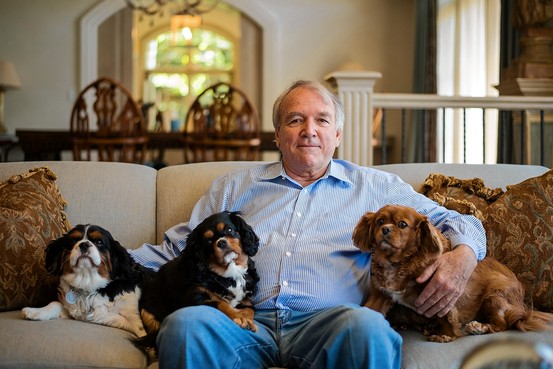
Joseph W. Luter III transformed his family’s firm into a global giant

It was a brief meeting of the two most powerful people in pork. The encounter between Joseph W. Luter III, chairman of Smithfield Foods Inc.,SFD +0.33% the world’s largest pork processor, and Wan Long, chairman of Shuanghui International Holdings Ltd., known as “China’s No. 1 Butcher,” lasted only 90 minutes about seven years ago. Hosting Mr. Wan in his Manhattan apartment, Mr. Luter floated the idea of a joint venture, saying “we ought to do something together.” And that laid the foundation, Mr. Luter said in an interview this week, for a very different tie-up: last week’s $4.7 billion deal for Shuanghui to buy Smithfield in the biggest Chinese takeover of a U.S. company. “Seeds were planted,” the 73-year-old Mr. Luter said, “and sometimes it takes a while for seeds to germinate.” Read more of this post

Moneysupermarket.com founder Simon Nixon lands £200m windfall; Businessman bored by accountancy cashes in after strong demand for shares in price comparison site

Moneysupermarket.com founder Simon Nixon lands £200m windfall

Businessman bored by accountancy cashes in after strong demand for shares in price comparison site

Rupert Neate

The Guardian, Wednesday 5 June 2013 23.45 BST

Simon Nixon

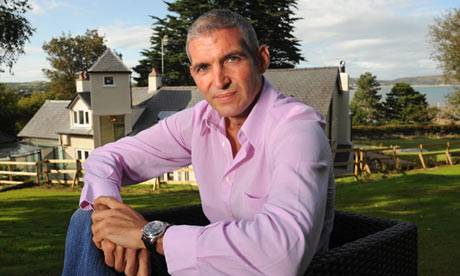
Simon Nixon, who founded the price comparison website Moneysupermarket.com. Photograph: Adrian Sherratt /Rex Features

Simon Nixon, the businessman who founded the price comparison siteMoneysupermarket.com after dropping out of studying accountancy at university because it was “boring”, has landed a £200m windfall.

Nixon – who had already banked a £100m fortune when the website joined the stock market in 2007 – has sold 100m shares, raising another £200m in cash.

Ferrari-loving Nixon, 45, will also collect about £20m from a dividend payout on his remaining 29% stake in the company. Nixon, who is understood to be relocating to Jersey for tax reasons, founded the website after quitting an accountancy course at Nottingham University because, according to an interview at the time of the flotation, “I hated it. It was boring.” Read more of this post

Marico’s Harsh Mariwala: Ours is the story of a small Indian FMCG player globalising

Harsh Mariwala: Ours is the story of a small Indian FMCG player globalising

by Harsh Mariwala | Jun 5, 2013

topimg_21809_harsh_mariwala_300x400

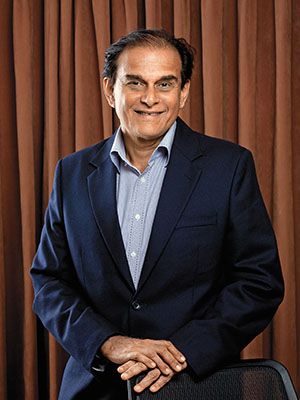
Harsh Mariwala realised if Marico had to get an international thrust, it needed a manager who wasn’t a part of the local business

We stepped out of india as marico needed to grow faster. We obviously needed to increase revenues, but a fast-growing company also attracts the best talent. One of the reasons we formed Marico was that we could closely associate the company with the FMCG industry. But we soon realised that as we were a small company, we couldn’t provide the kind of career-rotation opportunities that many large FMCG companies provided. And most importantly, we couldn’t rotate talent outside of India. Ours is the story of a small Indian FMCG player globalising. Over the years, analysts have often asked me why we are operating outside of India when the opportunity in India is huge.
My answer to that is simple: We are not growing our international business at the cost of our domestic business. Today, at approximately Rs 1,200 crore, our international business brings in a fourth of our revenues and we employ a total of 800 people overseas. When we first wanted to export, we couldn’t do so as export of coconut oil was banned. When the government started opening up the economy in 1991, we were able to persuade them to allow us to export. Read more of this post