Deceit, fraud, and first world problems: How BRICS graduated to the sports big leagues—and now regret it

Deceit, fraud, and first world problems: How BRICS graduated to the sports big leagues—and now regret it

By Sharda Ugra June 27, 2013

Sharda Ugra is senior editor at ESPN Cricinfo. She has been a sports journalist for more than 23 years.

Somewhere between the first protest over transit fare hikes in Sao Paulo and president Dilma Rousseff’s public address three weeks later, football and the Olympic Games found themselves swept into the heart of Brazilian anger.

The outcry had centered around failed social services, corruption, and misplaced expenditure. As the crowds grew from tens of thousand to a million-strong on June 20, Brazil’s two biggest sporting show pieces—the 2014 World Cup football and the 2016 Olympic Games—were turned into symbols of everything wrong with the government and the country’s elite. Read more of this post

Cracking Down on Corrupt Mining Industry Deals

Cracking Down on Corrupt Mining Industry Deals

By Matthew Campbell and Jesse Riseborough on June 27, 2013

http://www.businessweek.com/articles/2013-06-27/cracking-down-on-corrupt-mining-industry-deals

For a business that routinely makes multibillion-dollar deals with governments and controversial leaders in the developing world, the mining industry has been remarkably free of regulatory scrutiny. No longer. World leaders gathering in Northern Ireland for the Group of Eight summit in mid-June called for tighter oversight by requiring companies to disclose all payments made to foreign governments. The new rules, aimed at exposing corruption, come as U.S. and British regulators probe companies including BHP Billiton (BHP) and Eurasian Natural Resources (ENRC). “Mining has been caught in the headlights in the past few months,” says Raj Karia, a partner in London at law firm Norton Rose Fulbright. “The environment has changed. There is more need now to be very sure of what you’re buying and aware of the history of an asset.” Read more of this post

Weber Grills: Mostly Made in America by Private Equity

Weber Grills: Mostly Made in America by Private Equity

By Bryan Gruley on June 27, 2013

feat_4thweber27__01__630x420

Mike Kempster, Weber’s chief marketing officer and self-described gonzo griller

Sixty-one years ago, George Stephen got tired of wind and rain messing up his cooking on an open-air grill, the main barbecue tool of the day. He grabbed a buoy made where he worked, Weber Brothers Metal Works in Illinois. He sliced it in half and fashioned a tight-fitting dome lid. It didn’t work very well until a neighbor suggested he poke holes in the kettle so air could fuel the fire. The Weber grill was born.

Stephen eventually bought the Weber metal shop, creating Weber-Stephen Products of Palatine, Ill., which is now the world’s largest grill manufacturer. The privately held company doesn’t disclose financials, but Euromonitor International says Weber-Stephen claims 35 percent of the $2.5 billion U.S. market, with rival Char-Broil a distant second. Read more of this post

Why Americans Are Eating Fewer Hot Dogs; The slump is surprising in light of the sluggish economy—hot dogs are usually considered the ideal recession foodstuff

Why Americans Are Eating Fewer Hot Dogs

By Paul Lukas on June 27, 2013

http://www.businessweek.com/articles/2013-06-27/why-americans-are-eating-fewer-hot-dogs

Americans spent $1.7 billion on hot dogs last year—and that’s just at supermarkets; it doesn’t count wieners purchased at restaurants and sports facilities or from street vendors. And no day is better for hot dog consumption than the Fourth of July, when Americans are expected to eat about 150 million of them—enough to stretch from Washington, D.C., to Los Angeles more than five times. Read more of this post

Wielding Derivatives As a Tool For Deceit

June 27, 2013

Wielding Derivatives As a Tool For Deceit

By FLOYD NORRIS

Derivatives are not always “financial weapons of mass destruction,” as Warren Buffett famously called them.

But they are often weapons of mass deception.

For some derivatives, a desire for deception is the only reason they exist. That deception can allow those who own derivatives to evade taxes or accounting rules. It can allow activity that might otherwise be illegal, were it not called a derivative, or that would face regulation if it were labeled what it truly is. Read more of this post

It’s Stunning How Aggressively Investors Dumped Emerging Market Bonds This Week

It’s Stunning How Aggressively Investors Dumped Emerging Market Bonds This Week

SAM RO JUN. 27, 2013, 8:31 PM 1,235 2

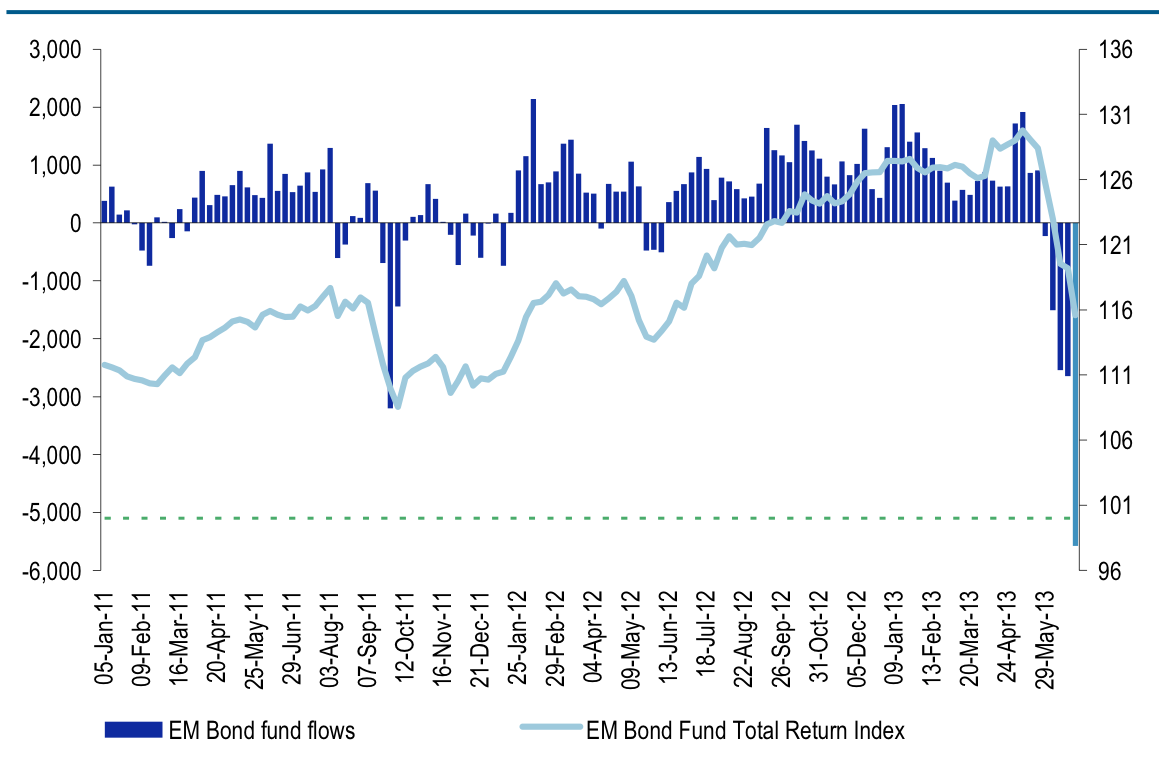
It’s almost unbelievable how rapidly investors are yanking their money out of the Emerging Markets. The sucking sounds particularly loud in the EM debt markets. “Emerging Markets debt-dedicated funds recorded net outflows of $5,578MM (2.19% AUM) for the week ending on June 26, 2013, reports EPFR,” said Morgan Stanley’s Robert Habib. “This is the largest outflows ever recorded by EPFR from EM-dedicated funds, twice as large as last week’s $2.6bn outflow. This is also a third of the net inflows into EM-dedicated funds year-to-date.” The numbers are breath-taking. And this is troubling as these developing economies are at risk of a sudden stop —the nightmare scenario where a country effectively gets shut out of the global credit markets. Earlier today, bond god Jeff Gundlach recommended investing in the emerging markets as a contrarian idea. Here’s a geographic breakdown: This chart offers some historical context to the magnitude of the outflow.

screen shot 2013-06-27 at 6.16.53 pm


ANALYST: The Bond Crash Is Worse Than 1994

ANALYST: The Bond Crash Is Worse Than 1994

MATTHEW BOESLER JUN. 27, 2013, 2:36 PM 11,321 9

Remember in January, when all the buzz was about the possibility of a “1994 moment” – a repeat of the bloodbath in the bond market that year when the Federal Reserve unexpectedly tightened monetary policy? Go figure – in terms of the size of the move in yields, the sell-off the Treasury market has seen since early May is actually already worse than what went down 20 years ago, as ISI’s Ed Hyman points out in a note to clients this week. “Looking ahead in 1994, bond yields surged another +100 [basis points] in the next 3.5 months,” writes Hyman. “Of course, the huge difference is that in 1994 fed funds were hiked +75bp during this period, and another +175bp by the end of the year.” Needless to say, the situation in 2013 is drastically different from that in 1994. “In sharp contrast, this year, there is no chance of a fed funds hike, and even with tapering, the Fed’s balance sheet will increase another +$450b, which could be viewed as equivalent to cutting the fed funds rate by roughly -50bp,” says Hyman. The yield on the 10-year U.S. Treasury note has backed off a little from the high of 2.64% reached on Monday, and is now trading around 2.48%.

screen shot 2013-06-27 at 2.20.31 pm

Textiles: How the World Clothes America

Textiles: How the World Clothes America

By Dorothy Gambrell on June 27, 2013

U.S. demand for clothing has spurred the growth of a huge worldwide industry. Below are apparel exports to the U.S. for the year ended March 2013.

econ_apparelgraphic27_950

China’s Message to Banks: No More Easy Money, Lax Oversight

China’s Message to Banks: No More Easy Money, Lax Oversight

By Dexter Roberts and Peter Coy on June 27, 2013

BW27_econ_chinachart_inline

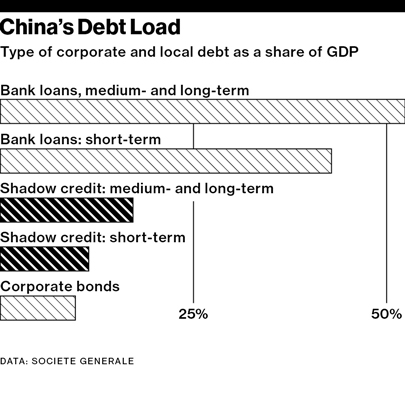
Chinese Premier Li Keqiang has shown China’s bankers that he’s not to be trifled with. Since assuming office in March, Li has urged them to curb speculative lending, with little effect. In mid-June, he abruptly cracked down. The People’s Bank of China (PBOC)—which, unlike the Federal Reserve, takes orders from the government—broke with custom and didn’t supply funds to the banking system to offset a liquidity shortage. Interbank lending rates, the interest that banks charge each other for short-term loans, soared as banks scrambled to fill the hole in their balance sheets. It was the central banking equivalent of whacking a hog across the snout. Read more of this post

China could reform its state businesses by stealth

June 27, 2013 7:08 pm

China could reform its state businesses by stealth

By Nicholas Lardy

Raising rates will force weak enterprises to sell assets, be taken over or give up, says Nicholas Lardy

Short-term interest rates in China’s interbank market jumped to historic highs last week. As well as creating turmoil in markets around the world, the move raised questions about the competence of the country’s management of monetary policy, its growth prospects and the trajectory of economic reform under the new leadership of President Xi Jinping and Li Keqiang, prime minister. Read more of this post

Asia faces test of faith as crisis deepens; The trouble with hidden leverage is that it doesn’t stay hidden forever

June 27, 2013 10:04 am

Markets Insight: Asia faces test of faith as crisis deepens

By Henny Sender

Fed tapering plans and China slowdown are already hurting

Brokerage houses are working full time to print charts showing that the emerging markets of Asia are in much better shape to withstand the end of the US Federal Reserve’s easy money policies than they were in 1997 when the Asian financial crisis was formally inaugurated with the devaluation of the Thai baht on July 2 of that year.

Their favourite shows that all the basket cases of 16 years ago now have foreign exchange reserves that are twice as large as their short-term debt. Read more of this post

Monthly Economic Data Aren’t Reliable; The Fed charts policy based on constantly shifting jobs numbers

June 27, 2013, 7:45 p.m. ET

Monthly Economic Data Aren’t Reliable

The Fed charts policy based on constantly shifting jobs numbers.

SAMUEL RINES

Today, nearly every useful U.S. economic indicator—from GDP growth to employment to housing data—is incorrect when it is initially released. Better data do become available, and revised estimates are made public as time passes. But economic policy and business decisions are made with initial data that are plainly inaccurate—and this can lead to mistakes, including hasty changes in direction.

In October 2008, the annualized change in GDP for the third quarter (July-September) was initially reported by the government at -0.3%. The initial GDP estimate for the fourth quarter was -3.8% and then -6.1% for the first quarter of 2009. Finally, the initial GDP estimate for the second quarter of 2009 provided a sigh of relief at -1%. That sequence of numbers seemed more like a typical downturn. Read more of this post

Minsheng Bank tells the story of Beijing’s credit worries

Minsheng Bank tells the story of Beijing’s credit worries

Thu, Jun 27 2013

By Lawrence White and Michael Flaherty

HONG KONG (Reuters) – The funding crunch prompted by China’s central bank was meant to teach a lesson to the Chinese banks that continue to embrace risky lending tactics. A look at the funding and loan figures at mid-sized lender China Minsheng Banking Corp. (600016.SS: QuoteProfileResearch) helps explain why the People’s Bank of China (PBOC) made its move. The PBOC’s refusal to inject cash into the money market system last week caused a spike in inter-bank lending rates. Suddenly, banks used to borrowing at 3 percent saw the rate at which their peers would lend to them jump as high as 25 percent.

Read more of this post

French auto maker Peugeot Citroën woes reflect a broader problem in Europe, where countries promoted national car champions, and delayed meaningful restructuring

June 27, 2013, 11:56 a.m. ET

Peugeot’s Troubles Are Piling Up

French Car Maker Said to Have Approached GM for Assistance

SAM SCHECHNER, DAVID PEARSON and JEFF BENNETT

MK-CE341_PEUGEO_NS_20130627181811MK-CE342_PEUGEO_NS_20130627173904

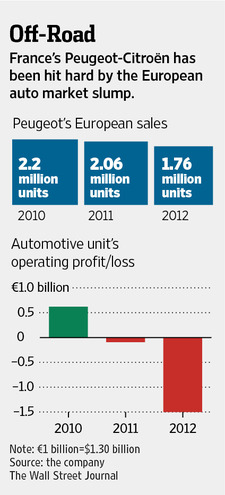
French auto maker PSA Peugeot Citroën UG.FR +5.47% is running out of ways to cope with a steep sales slide and expanding losses.

One potential ally, General Motors Co., GM +1.69% on Thursday said it has no current plan to invest additional funds in the family-controlled auto maker, its latest refusal to get involved in a potential rescue.

People familiar with the matter said Peugeot in recent months had asked its U.S. development partner to inject more cash. GM has considered buying some smaller pieces, such as its powertrain operations, but has made no decisions, some of those people added. Read more of this post

China’s Reform Moment: The Communist Party can’t afford to cling to a broken status quo

June 27, 2013, 12:09 p.m. ET

China’s Reform Moment

The Communist Party can’t afford to cling to a broken status quo.

The recent credit crunch in China has highlighted the need for financial reform. But lurking behind this drama is a bigger story: All of China’s economy is nearing a growth and reform watershed. The question is whether Beijing’s new leaders are willing to give up some political control to maintain the growth they need to retain political legitimacy.

The problem is that China’s old economic model is running out of steam. Growth slowed to 7.7% last year, a 13-year low, and then to 7.3% for the first three months of this year. HSBC‘s HSBA.LN +0.72% latest survey of manufacturing sentiment found the most pessimistic outlook in nine months, with companies expecting more rapid economic deterioration. Indicators such as slack domestic shipping and electricity consumption point to greater weakness than the official GDP data suggest. Read more of this post

Google Inc. is developing a videogame console and wristwatch powered by its Android operating system

Updated June 27, 2013, 6:07 p.m. ET

Google Is Developing Android Game Console

AMIR EFRATI

Google Inc. GOOG +0.39% is developing a videogame console and wristwatch powered by its Android operating system, according to people familiar with the matter, as the Internet company seeks to spread the software beyond smartphones and tablets.

With the game machine and digital watch, Google is hoping to combat similar devices that Apple Inc. AAPL -1.08% may release in the future, according to the people.

Google is also preparing to release a second version of an Android-powered media-streaming device, called Nexus Q, that was unveiled last year but not sold to the public, these people said. Read more of this post

Loans Make A Comeback As Bonds Fade in Asia

June 27, 2013, 2:01 p.m. ET

Loans Make A Comeback As Bonds Fade in Asia

PRUDENCE HO And FIONA LAW

Loans, once the preferred fundraising tool for Asian companies, are back in favor.

Asia’s loan market took a back seat to bonds last year, as investors seeking yield at a time of low interest rates piled into emerging-market bond funds. Now, with interest rates heading up, raising money with bonds is getting expensive and bankers say companies are looking to loans instead.

For their part, Asia’s cash-rich banks are more willing to lend than they were in the wake of the European debt crisis. Many of the European banks that retreated from emerging-market lending two years ago are coming back as lenders in the region. Read more of this post

Cheap money can’t buy a strong economy

Cheap money can’t buy a strong economy

By Robert J. Samuelson, Published: June 24

We are now discovering the limits of cheap money.

For more than four years, central banks around the world — led by the Federal Reserve — have aggressively pumped money into their economies to stimulate faster revival. These infusions are huge. From 2007 to today, the assets of major central banks nearly doubled from $10.4 trillion to $20.5 trillion, reports the Bank for International Settlements (BIS) in its just-released annual report. When these assets (bonds, mortgages and other financial instruments) are purchased, the sellers receive cash. The outpouring of cash aims to lower interest rates, push up stock prices and real estate values, and restore confidence and stronger economic growth. Read more of this post

Time to declutter annual reports, says accounting rule setter

Time to declutter annual reports, says accounting rule setter

7:52am EDT

LONDON, June 27 (Reuters) – A global accounting standard setter has pledged a bonfire of the boilerplates to rid annual company reports of unnecessary disclosures that confuse investors.

Hans Hoogervorst, chairman of the International Accounting Standards Board (IASB), said book-keeping rules will be changed to cut swathes through irrelevant sections of ballooning annual statements. Read more of this post

Hong Kong Stocks Fail to Lure JPMorgan With Worst Developed Drop

Hong Kong Stocks Fail to Lure JPMorgan With Worst Developed Drop

Hong Kong stocks are set for the biggest decline among developed markets this half as concern about China’s economy drives valuations 22 percent below the five-year average.

The Hang Seng Index tumbled 9.8 percent in 2013, trailing the Standard & Poor’s 500 Index by the most in 15 years and wiping more than $145 billion from the value of shares. The losses dragged the gauge’s valuation to 9.7 times estimates earnings, compared with a five-year average of 12.5, according to data compiled by Bloomberg. Read more of this post

Japan Institutions Cut Shares to New Low in Snub to Abe

Japan Institutions Cut Shares to New Low in Snub to Abe

Japan’s biggest quarterly rally in 25 years did little to entice institutional investors, whose stock holdings fell to the lowest proportion of overall holdings ever in March.

The country’s insurers, lenders and trust banks pared their Japanese shares to 28 percent of total market value, the lowest ever, as of March 31, according to Japan Exchange Group Inc. (8697) Holdings have fallen from a peak of 44.1 percent in 1988. Fukoku Mutual Life Insurance Co. and Sompo Japan Nipponkoa Asset Management Co. are betting Prime Minister Shinzo Abe’s policies will fail to defeat deflation or restore sustainable growth. Read more of this post

Junk Bonds Drop Below Par as Asia Suffers China

Junk Bonds Drop Below Par as Asia Suffers China: Credit Markets

For the first time since August, junk bonds are trading below par amid speculation that companies will have a harder time meeting debt payments as the Federal Reserve prepares to reduce its extraordinary stimulus measures and China reins in its shadow-banking system.

Average prices on speculative-grade corporate notes dropped to 99.42 cents on the dollar on June 25, from a record 106.04 cents in May, according to Bank of America Merrill Lynch’s Global High Yield Index. The declines were led by Asia, which saw prices tumble to 97.2 cents, the lowest level in a year. Read more of this post

Four Milestones Made U.S. the World’s Craft Beer Champ

Four Milestones Made U.S. the World’s Craft Beer Champ

The Brewers Association, the main trade group for U.S. beer-makers, announced June 20 that the number of American breweries had surpassed 2,500, more than at any time since at least the 1880s and more than in any other nation.

The vast majority (more than 2,300) are craft breweries, independently owned companies that make beer on a small scale using traditional ingredients. There are also, according to the association, as many as 1,559 breweries in the planning stages, most of them craft.

This growth shouldn’t be surprising, given that craft beer’s share of the $99 billion U.S. beer market increased to $10.2 billion in 2012, from $8.7 billion in 2011. Read more of this post

Apps for Kids Are Data Magnets; FTC Rules to Kick In

June 27, 2013, 8:02 p.m. ET

Apps for Kids Are Data Magnets; FTC Rules to Kick In

JEREMY SINGER-VINE and ANTON TROIANOVSKI

MK-CE345_KIDAPP_G_20130627183305

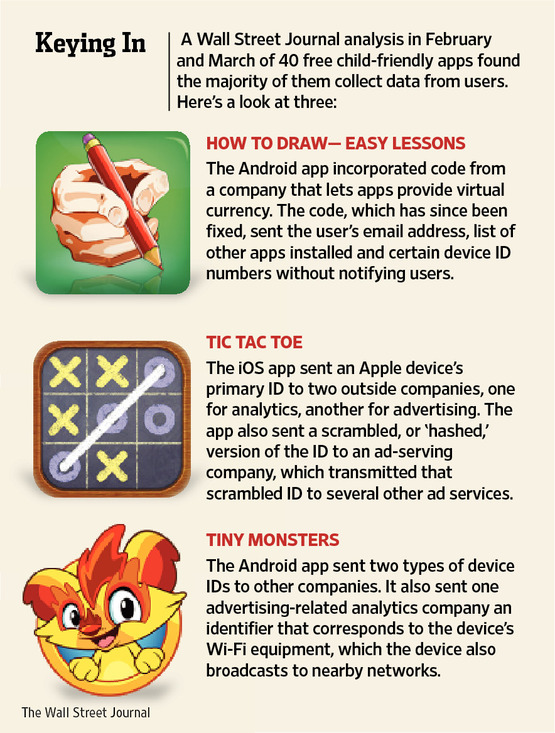
While 7-year-old Eros ViDemantay played with a kid’s app on his father’s phone, tracing an elephant, behind the scenes a startup company backed by Google Inc.GOOG +0.39% was collecting information from the device—including its email address and a list of other apps installed on his phone.

“My jaw dropped,” says Lee ViDemantay, Eros’s father and a fifth-grade teacher at the Los Angeles Unified School District. “Why do they need to know all that?” The app, called “How to Draw—Easy Lessons,” also sent two of the phone’s main ID numbers. Read more of this post

Momo: With 40 Million Users, China’s Top Flirting App Adds Stickers, Virtual Currency, and VIPs

Momo: With 40 Million Users, China’s Top Flirting App Adds Stickers, Virtual Currency, and VIPs

June 28, 2013

by Steven Millward

Momo-App-Adds-Stickers-Virtual-Currency-and-VIPs

Momo, China’s top flirting and hook-up app, has updated to v4.0 on both iPhone and Android and added a bunch of new features – all of which are aimed at monetization.

Ever since we first looked at Momo in late 2011 the app has been fairly minimal (in a good way), but the new raft of features adds a lot more to the dating app. The biggest departure for the app – which has just surpassed 40 million users – is an optional VIP membership that costs $2 for one month, or a cheaper annual package is $17. As a VIP Momo user, you get useful things like telephone support, the ability to follow more than 100 people, extra avatar options, and lots more. Read more of this post

Artist Growth wants its data-analytics software to become a one-size-fits-all financial tool for the music industry

Artist Growth’s Management Software for the Music Business

By Adam Satariano on June 27, 2013

http://www.businessweek.com/articles/2013-06-27/artist-growths-management-software-for-the-music-business

From Napster to Spotify and Rdio, there’s been no shortage of innovation in digital music services. Not so when it comes to business-side tasks such as managing ticket sales, touring expenses, or an artist’s array of social media accounts. Financial management software made by companies such as Oracle (ORCL) and Salesforce.com (CRM) hasn’t really clicked with musicians and record label executives because it isn’t tailored to the music industry, says Scott Booker, the manager of psychedelic rock band the Flaming Lips. “People who are creating software don’t typically understand the intricacies of how the music business works,” says Booker, who’s also the chief executive officer of the Academy of Contemporary Music at the University of Central Oklahoma. “We all do things in a haphazard way.” Read more of this post

Innovation: JPEGmini Shrinks Photo Files Without Sacrificing Quality

Innovation: JPEGmini Shrinks Photo Files Without Sacrificing Quality

By Caroline Winter on June 27, 2013

Innovators: Sharon Carmel and Dror Gill
Ages: 42 and 46
Founder/CEO and CTO of Beamr, a Tel Aviv-based media technology company

Form and function
An image compression technology that radically reduces the file size of photographs (and soon videos) without sacrificing quality perceptible to the human eye. “We take an image, make it five times smaller, but always guarantee that the JPEGmini image looks exactly like the original.” —Dror Gill

tech_innovation27__01__950


Your Guide to China’s Fabs, or Chinese Online Design Goods Retailers

Your Guide to China’s Fabs, or Chinese Online Design Goods Retailers

By Tracey Xiang on June 20, 2013

I hate to write about ‘Chinese copies’ or ‘China’s XXX’. But you’d be urged to write about China’s Fabs when Tencent, the Chinese Internet giant, invested in the US company. There are Chinese services, such as Xipin, that did claim they were ‘China’s Fabs’. However we cannot count all the online design goods retailers as Fab copies.

To be fair, unlike services such as group-buying, you don’t have to copy Fab in order to sell designer goods online or pivot now and then. Some of the sites I’d list in this post started with Etsy model and later added flash sales or other services. What I feel sorry to tell you is that their webpages look alike in layout and the only difference I can tell between them is goods they sell. Read more of this post

Marc Andreessen: Beijing Should Be Another Silicon Valley, But….

Marc Andreessen: Beijing Should Be Another Silicon Valley, But….

KIM-MAI CUTLER

posted 3 hours ago

Marc Andreessen, the Netscape co-founder and namesake behind venture capital firm Andreessen Horowitz, said that he’s skeptical that efforts globally to recreate the Silicon Valley ecosystem will succeed.

Even the most promising city and rival to the U.S.’s Silicon Valley, Beijing, faces lots of potential complications because laws around contracts aren’t as straightforward as they could be, he said. Outside of the U.S., Beijing is one of the cities that is able to consistently produce tech giants like Baidu (although Alibaba’s headquarters are in Hangzhou and Tencent is based in Shenzhen). Read more of this post

Seriously, why is software so hard for non-software companies?

Seriously, why is software so hard for non-software companies?

BY SARAH LACY 
ON JUNE 27, 2013

Becoming a Web business isn’t as easy as it looks. Take the weight loss giant Jenny Craig. I’m on my second day of the program in an effort to lose baby weight. I picked Jenny Craig, because I know people who’ve had success on it, and I love the idea of someone else planning meals for me. Part of the reason I can’t eat more healthy is my busy schedule.

Going into the strip mall weight loss centers was a non-starter — again, given my schedule, the fact that there’s not one near my house, and that it arbitrarily closes early on certain days. Fortunately we live in an era where software is eating the world. Read more of this post