Under David Steiner’s leadership, Waste Management stepped up its game and modernized its image. A focus on pricing, and a tiny violin.

SATURDAY, JUNE 1, 2013

Turning Trash to Cash

By RESHMA KAPADIA  | MORE ARTICLES BY AUTHOR

Under David Steiner’s leadership, Waste Management stepped up its game and modernized its image. A focus on pricing, and a tiny violin.

BA-BC051_CEO_Sp_DV_20130601013737ON-BB117_SPOTLI_G_20130601013112

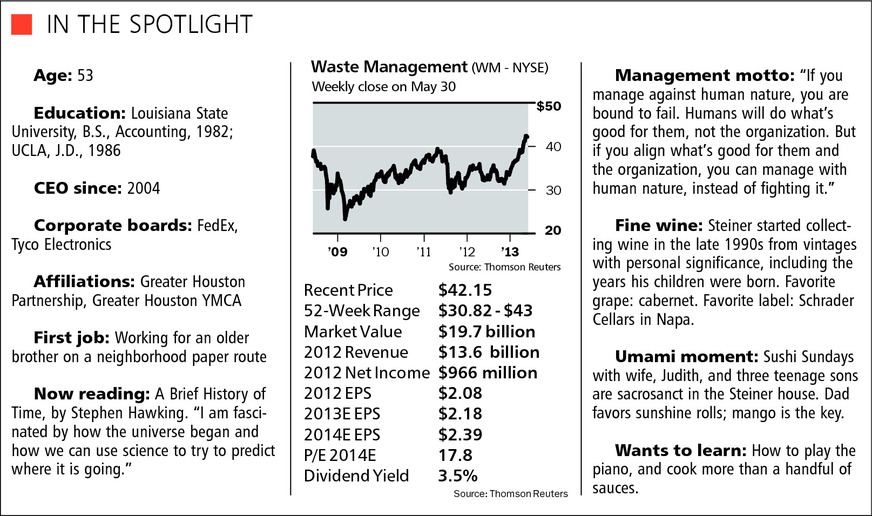
On the surface, at least, David Steiner is as casual as they come. The CEO of Waste Management, the nation’s largest trash hauler, regularly cracks jokes in the halls of its Houston headquarters, and ribs colleagues whenever his beloved Louisiana State University Tigers beat football rivals. He has even been known to rip off his shirt at a company gathering to reveal a fake tattoo pasted on his chest, in honor of a company driver sporting the actual tat. Spend just a few minutes with Steiner, 53, and it’s easy to understand why he was voted the class wit in high school, and president of his college fraternity.

Yet, behind the antics is a deeply serious, analytical chief executive, who is said—only half in jest—to have a mainframe computer for a brain. Steiner is fond of focus groups and data, and has relied on both to change the culture of Waste Management (ticker: WM), which he has led since March 2004. Read more of this post

Investing in spinoffs—and often their parent companies—can be a ticket to market-beating returns

SATURDAY, JUNE 1, 2013

Graduation Day for Spinoffs

By RESHMA KAPADIA | MORE ARTICLES BY AUTHOR

BA-BC050B_Spino_G_20130601013552

Investing in spinoffs—and often their parent companies—can be a ticket to market-beating returns. But not all are created equal: Four ways to play the recent crop.

The best parents know when their offspring are ready to go off on their own. And when corporate parents spin off parts of their business, it’s often the best thing for investors as well.

Graduation is in the air, and more companies are considering divesting businesses through spinoffs. Last month, industrial company Dover Corp. (ticker: DOV) said it planned to spin off a fast-growing consumer electronics unit. Two media conglomerates—Time Warner (TWX) and Barron’s parent News Corp (NWS)—have announced splits that separate their publishing units from other media properties. And a wave of corporate activism is pushing other executives to consider such moves. While PepsiCo (PEP) has fended off calls to split its snack and drink business in the past, Chief Executive Indra Nooyi said in April that the company is exploring “sensible opportunities to unlock incremental value through meaningful structural alternatives,” amusingly dense corporate jargon that kicked off spinoff speculation.

A good parent company knows when it’s time to let a fledgling business fly solo. And savvy investors know those new companies are good buys. Read more of this post

The Many Ways That Cities Cook Their Bond Books; The $3 trillion municipal debt market is rife with creative accounting

Updated May 31, 2013, 7:01 p.m. ET

The Many Ways That Cities Cook Their Bond Books

The $3 trillion municipal debt market is rife with creative accounting.

By STEVE MALANGA

It has been a busy few weeks for the Securities and Exchange Commission. In May, the SEC charged two cities—Harrisburg, Pa., and South Miami, Fla.—with securities fraud for allegedly deceiving investors in their municipal bonds.

This follows similar fraud charges against states, New Jersey in 2010 and Illinois in March, after SEC investigators uncovered what they called “material omissions” and “false statements” in bond documents related to those state’s pension funds. Read more of this post

Trust: Easy to Break, Hard to Repair; renowned short-seller Jim Chanos points out that the average investor is right not to trust the integrity of the financial markets

May 28, 2013, 11:18 AM

Trust: Easy to Break, Hard to Repair

By Jason Zweig

In this interview, the renowned short-seller Jim Chanos points out that the average investor is right not to trust the integrity of the financial markets. (Someone showed a nice touch by posting it on April Fool’s Day.)

In the interview, Chanos makes three important points.

First, in recent years financial fraud has rarely been detected and exposed by the people the public might reasonably expect to do so: accountants, regulators and law-enforcement authorities, whom Chanos calls “the normal guardians of the marketplace.” Instead, frauds more often have been rooted out by whistleblowers, short-sellers and journalists. Read more of this post

China’s Silent Army: The Pioneers, Traders, Fixers and Workers Who Are Remaking the World in Beijing’s Image

China’s Silent Army: The Pioneers, Traders, Fixers and Workers Who Are Remaking the World in Beijing’s Image

silent-army

Release date: February 19, 2013

The first book to examine the unprecedented growth of China’s economic investment in the developing world, its impact at the local level, and a rare hands-on picture of the role of ordinary Chinese in the juggernaut that is China, Inc.

Beijing-based journalists Juan Pablo Cardenal and Heriberto Araújo crisscrossed the globe from 2009-2011 to investigate how the Chinese are literally making the developing world in their own image.  What they discovered is a human story, an economic story, and a political story, one that is changing the course of history and that has never been explored, or reported, in depth and on the ground.  The “silent army” to which the authors refer is made up of the many ordinary Chinese citizens working around the world – in the oil industry in Kazakhstan, mining minerals in the Democratic Republic of Congo, building dams in Ecuador, selling hijabs in Cairo – who are contributing to China’s global dominance while also leaving their mark in less salutary ways.  With original and fresh reporting as well as top-notch writing, China’s Silent Army takes full advantage of the Spanish-speaking authors’ outsider experience to reveal China’s influence abroad in all its most vital implications – for foreign policy, trade, private business, and the environment. Read more of this post

China’s Economic Empire: The biggest threat from Beijing is the aggressive spread of state capitalism.

June 1, 2013

China’s Economic Empire

By HERIBERTO ARAÚJO and JUAN PABLO CARDENAL

world

HONG KONG — THE combination of a strong, rising China and economic stagnation in Europe and America is making the West increasingly uncomfortable. While China is not taking over the world militarily, it seems to be steadily taking it over commercially. In just the past week, Chinese companies and investors have sought to buy two iconic Western companies, Smithfield Foods, the American pork producer, and Club Med, the French resort company. Europeans and Americans tend to fret over Beijing’s assertiveness in the South China Sea, its territorial disputes with Japan, and cyberattacks on Western firms, but all of this is much less important than a phenomenon that is less visible but more disturbing: the aggressive worldwide push of Chinese state capitalism.

By buying companies, exploiting natural resources, building infrastructure and giving loans all over the world, China is pursuing a soft but unstoppable form of economic domination. Beijing’s essentially unlimited financial resources allow the country to be a game-changing force in both the developed and developing world, one that threatens to obliterate the competitive edge of Western firms, kill jobs in Europe and America and blunt criticism of human rights abuses in China. Read more of this post

Richard Thaler: Breadwinning Wives and Nervous Husbands

June 1, 2013

Breadwinning Wives and Nervous Husbands

By RICHARD H. THALER

2-VIEW-popup

GIRLS are generally outperforming boys in high school, and then proceeding in greater numbers to attend and graduate from college. And as women take the helm as chief executives of more major corporations, including Hewlett-Packard, I.B.M. and PepsiCo, there are hints that the glass ceiling may be at least cracking, if not breaking.

Such developments should encourage aspiring young women to believe that social norms are changing, and that barriers to success are dropping. But a new study reveals that women’s gains on the economic front may be contributing to a decline in the formation and stability of marriages.

One reason for this decline may be that women with greater earning power have greater economic security that allows them to leave bad marriages. Yet another possibility is that many men seem to be clinging to a social norm from the “Mad Men” days: that the husband should be the primary earner in a family. Read more of this post

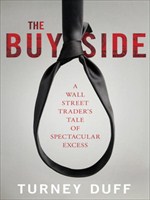
In the Book “Buy Side”, A Wall Street Trader’s Crash Landing

June 1, 2013

A Trader’s Crash Landing

By BRYAN BURROUGH

{986B11AD-B51C-4062-8C5E-B2C92C4A98E9}Img150

REMEMBER Bud Fox, the callow, young go-getter portrayed by Charlie Sheen in the 1987 movie “Wall Street”? Ever wonder how Bud’s career would have gone had he lasted another 10 years or so? Frankly, me neither.

But I suspect that things might have turned out almost as badly as they did for Turney Duff, a callow, young hedge fund trader who writes of his own noteworthy flameout in a bracing new Wall Street memoir called “The Buy Side” (Crown, 320 pages). Read more of this post

Why Canadians may never realize their dream of having U.S. prices

Why Canadians may never realize their dream of having U.S. prices

Dan Ovsey | 13/05/23 | Last Updated: 13/05/23 10:36 AM ET
In 2011, an average of 3.4 million Canadians made a conscious choice to hop in their vehicles each month and make a run for the border — to shop.

That trend is likely to grow in the near future given that the federal government’s 2013 budget announced the introduction of new tariffs to be imposed on goods entering Canada from 70 different countries, costing Canadian consumers an estimated $330-million more each year in retail prices.

Cross-border shopping is far from new, of course. For decades, Canadians have been traversing the 49th parallel for deals on everything from clothing and accessories to household goods, electronics and furniture. Even when the exchange rate was unfavourable and duties had to be paid at the border, the price difference still made a cross-border shopping trip worthwhile. Read more of this post

The Future of the Web is Video

The Future of the Web is Video
by  on May 28, 2013
Video is not only the future of the web—it’s the future of digital communication, and a disruptive force across platforms. This presentation follows video’s journey on the web, then focuses on where it lives today, where it’s going tomorrow, and how different players are to leverage its potential. Emerging technologies are part of this transition, but there’s a human story at the core—how we process information and how we tell stories.

Beware the Hidden Costs in Tech; Stock-based compensation is often overlooked on Wall Street, leading to understated price/earnings ratios for companies like Google, Amazon.com and Facebook

SATURDAY, JUNE 1, 2013

Beware the Hidden Costs in Tech

By ANDREW BARY | MORE ARTICLES BY AUTHOR

Stock-based compensation is often overlooked on Wall Street, leading to understated price/earnings ratios for companies like Google, Amazon.com and Facebook.

When is a profit not a profit? For tech investors, that is the question.

Many highflying tech companies encourage investors to ignore significant stock-based compensation expense when calculating earnings. Investors willingly oblige.

As a result, a range of companies, including Facebook (ticker: FB), Google (GOOG),Amazon.com (AMZN), Salesforce.com (CRM), LinkedIn (LNKD), and VMware(VMW), have higher price/earnings ratios than are apparent based on Wall Street estimates that generally exclude the often very significant cost of stock-based compensation. Read more of this post

Vending machines in Japan have become a stubborn barometer of the country’s struggle against deflation

May 31, 2013

One Obstacle Won’t Budge in Japan’s Fight With Deflation

By HIROKO TABUCHI

TOKYO — Vending machines stocked with sodas are ubiquitous here, tucked away, it seems, in every nook and cranny of the country. They are found along Omotesando, the tree-lined shopping avenue known as the Champs-Élysées of Tokyo, and their glow lights up the back streets of hot spring towns like Hakone. They are even atop Mount Fuji, Japan’s 12,000-foot, snow-capped mountain.

The vending machines are also a symbol of the country’s big economic problem: deflation. The price of a soda in a vending machine has stubbornly remained the same for 15 years. Now, as back then, a can of Georgia Coffee, Pocari Sweat sports drink or Kirin Lemon soda typically sells for 120 yen, roughly $1.20. Some discount machines sell cans for as little as 80 yen, less than the price they fetched in the 1980s. Read more of this post

Infosys Brings Back Founder as Chairman in response to shareholder demands to revive the struggling technology company

June 1, 2013, 5:43 a.m. ET

Infosys Brings Back Founder

By DHANYA ANN THOPPIL

BANGALORE—India’s Infosys Ltd. 500209.BY +3.00% brought back its founder, N.R. Narayana Murthy, in response to shareholder demands to revive the struggling technology company.

Mr. Murthy was named executive chairman and added to the board Saturday. He will hold the post for five years. He served as the chief executive, chairman and chief mentor of Infosys before being appointed chairman emeritus in 2011. Read more of this post

Treasuries Loss Is Biggest in 3 Years as Fed Considers Tapering; Europe Bond Investors Lose in May as End of Cheap Cash Signaled

Treasuries Loss Is Biggest in 3 Years as Fed Considers Tapering

Treasuries recorded the steepest monthly loss since 2009 amid speculation the Federal Reserve could curtail its unprecedented monetary stimulus program if recent improvement in domestic economic data is sustainable.

U.S. government debt tumbled 1.8 percent in the month through May 30, the most since December 2009, according to Bank of America Merrill Lynch index data. Yields extended gains yesterday after a report showed consumer confidence rose in May to the highest level since 2007. A government report on June 7 is forecast to show the U.S. added 165,000 jobs in May and the unemployment rate remained at a four-year low of 7.5 percent. Read more of this post

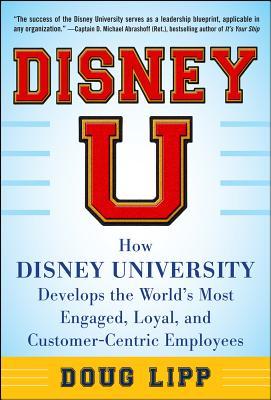
Disney U: How Disney University Develops the World’s Most Engaged, Loyal, and Customer-Centric Employees

Disney U: How Disney University Develops the World’s Most Engaged, Loyal, and Customer-Centric Employees[Hardcover]

Doug Lipp (Author)

16189537

Publication Date: March 5, 2013

With a Foreword by Jim Cora, former Chairman of Disneyland International

“A leadership blueprint, applicable in any organization.” — Captain D. Michael Abrashoff, U.S. Navy (Ret.), and author of It’s Your Ship

“When I first arrived at The Walt Disney Company, I was surprised to find I had to go back to school–at Disney University! There, I learned the fundamentals of guest service that consistently gave Disney a tremendous advantage in the marketplace. Now, anyone can know these secrets of success thanks to Doug Lipp’s informative book. No matter what your business, the lessons taught at Disney University will prove invaluable.” — Michael Eisner, Former CEO and Chairman, The Walt Disney Company

When it comes to world-class employees, few organizations rival Disney. Famous for their friendliness, knowledge, passion, and superior customer service, Disney’s employees have been fueling the iconic brand’s wild success for more than 50 years.

How has Disney succeeded in maintaining such a powerful workforce for so many years? Why are so many corporations and executives drawn to study how Disney continues to exemplify service and leadership standards?

The Disney University, founded by Van France, trains the supporting cast that helps create the world-famous Disney Magic. Now, for the first time, the secrets of this exemplary institution are revealed. In Disney U, Doug Lipp examines how Van perpetuated Walt Disney’s timeless company values and leadership lessons, creating a training and development dynasty. It contains never-before-told stories from numerous Disney legends. These pioneers share behind-the-scenes success stories of how they helped bring Walt Disney’s dream to life.

Disney U reveals the heart of the Disney culture and describes the company’s values and operational philosophies that support the iconic brand. Doug Lipp lays out 13 timeless lessons Disney has used to drive profits and growth worldwide for more than half a century.

To this day, the Disney University continues to turn out some of the most engaged, loyal, and customer-centered employees the business world has ever seen. Using the lessons outlined in Disney U will set your organization on a path of sustained success. Read more of this post

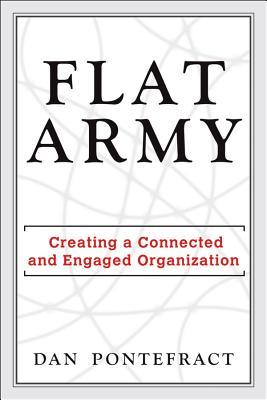
Flat Army: Creating a Connected and Engaged Organization

Flat Army: Creating a Connected and Engaged Organization [Hardcover]

Dan Pontefract (Author)

16287105

Publication Date: April 8, 2013

Arms you with powerful tools for overcoming resistance to change and creating a culture of collaboration, engagement, and employee empowerment

Your people are your most valuable asset, and if you want them to excel (and your profits to soar), you’ll need to abandon your traditional command-and-control management style and adopt a collaborative, open leadership approach—one that engages and empowers your people. While this isn’t a particularly new idea, many leaders, while they may pay lip service to it, don’t really understand what it means. And most of those who do get it lack the skills for putting it into practice. In Flat Army you’ll find powerful leadership models and tools that help you challenge yourself and overcome your personal obstacles to change, while pushing the boundaries of organizational change to create a culture of collaboration.

Develops an integrated framework incorporating collaboration, open leadership, technologies, and connected learning

Shows you how to flatten the organizational pyramid and engage with your peoples in more collaborative and productive ways—without undermining your authority

Explains how to deploy a Connected Leader mindset, a Participative Leader Framework, and a Collaborative Leader Action Model

Arms you with powerful tools for becoming a more visible leader who demonstrates the qualities and capabilities needed to become an agent of positive change Read more of this post

Bread: The Story of Greggs; How a small family business became the high street favourite

Bread: The Story of Greggs [Kindle Edition]

Ian Gregg (Author)

images (11)

Publication Date: May 9, 2013

When Ian Gregg was just a boy he joined his father at work selling pies from his van to miners’ wives around Newcastle. Now retired, he can look back on a business that began as a husband-and-wife team in the 1930s, and survived a world war and two major recessions to become our favourite bakery, beloved by everyone from children to office workers to soldiers overseas.

Ian Gregg led the family firm as it grew, employing generations of families from around Newcastle and then becoming a public company with bakeries in Scotland and across the North, and now with shops on every high street. This is a story of extraordinary success, but it is also a triumphant tale of how doing right by your people makes for great business. Bucking every trend, Greggs have always put their customers, employees and local communities before quick profits for directors and shareholders. Their astounding record of charitable works includes hardship grants, an environment fund, sponsorship of the North East Children’s Cancer run and over £1 million raised annually for Children in Need.

Ian Gregg will donate all of his royalties and Greggs plc will donate all its profits from the sale of this book to the Greggs Foundation to help fund more Breakfast Clubs for children. Read more of this post

Bringing home the bread for 50 years: Ian Gregg helped take the bakery chain from a single shop to a £416m company with 1,600 branches and more than 20,000 staff

May 31, 2013 6:13 pm

Bringing home the bread for 50 years

By Natalie Graham

783376100

Ian Gregg, 74, led the eponymous family business from a single shop in 1964 on Tyneside into a public company in 1984 with several regional bakeries and 300 shops. Today, Greggs is a £416m company with 1,600 branches and more than 20,000 staff. The son of founder John Robson Gregg, he was just a boy when he first joined his father at work, selling pies from a van to miners’ wives in Newcastle. The company is currently the subject of Sky 1 documentary Greggs: More than Meats the Pie. Recently published is Bread, The Story of Greggs, in which Gregg records the company’s 80-year history. Read more of this post

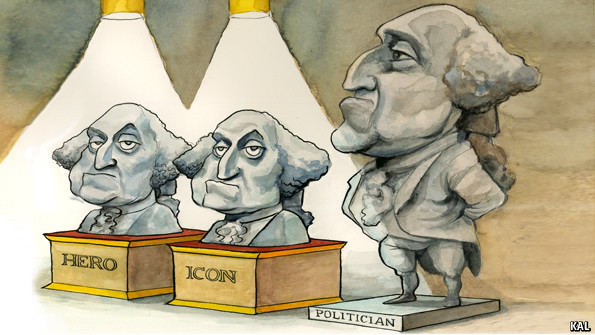
George Washington, politician: The virtues of the pragmatic founding father are much missed nowadays

George Washington, politician: The virtues of the pragmatic founding father are much missed nowadays

Jun 1st 2013 |From the print edition

20130601_USD000_3

A SPECIAL rogues’ gallery at Mount Vernon, George Washington’s Virginia estate, displays portraits of three revolutionary leaders who went astray. Julius Caesar, Oliver Cromwell and Napoleon are portrayed as heroes with clay feet who toppled tyrannies only to grab absolute power for themselves. Washington was different, it is asserted. In guides’ commentaries and schoolboy-friendly action films (featuring artificial snow flurries and seats that throb with cannon fire) Mount Vernon rams home the message that America’s revolutionary commander-in-chief and first president had a genius for well-timed exits. A display depicts him resigning his military commission after biffing the British. The chair in which he decided to retire as president is pointed out as a national treasure. Washington’s supreme virtue, it is suggested—greater even than martial derring-do—was knowing when to leave, ensuring his country’s future as a civilian republic. Read more of this post

Your mega summer reading list: 200 books recommended by TEDsters

Your mega summer reading list: 200 books recommended by TEDsters

Posted by: Kate Torgovnick
May 31, 2013 at 2:00 pm EDT

Books can entertain, sucking you like a tornado into incredible new worlds. Books can teach, giving you a richer understanding of time periods, people and ideas you’ve never been exposed to. But books can do so much more.

In today’s talk, TED’s own Lisa Bu introduces us to the concept of “comparative reading,” the practice of reading books in pairs, to give deeper context and reveal new insights. Comparative reading not only helped Bu adjust to American culture after moving here from China for graduate school — it also helped her re-imagine her life and find new directions after her dream failed to come true. This personal, moving talk about the magic of books and resilience of the human spirit is a must-watch »

Every year at TED, we set up a bookstore filled with books recommended by TEDsters of note. Today, as you prepare for a summer filled with reading, we are releasing this incredible library of recommendations from this spring’s TED2013 bookstore. We’ll begin, of course, with Lisa Bu’s must-reads, followed by book recommendations from Rainn WilsonSarah KayBaratunde ThurstonMaria PopovaGuy RazChip KiddCindy GallopKeith YamashitaBill T. JonesSafwat SaleemRaney AronsonRaghava KKTiffany DufuChris KluweKaren Wickre and Colleen Keegan. Click the name to hop straight to their list. Let’s get started… Read more of this post

Spanish has more native speakers than any language other than Mandarin. Yet its success could not have been foreseen

Spanish has more native speakers than any language other than Mandarin. Yet its success could not have been foreseen

Jun 1st 2013 |From the print edition

The Story of Spanish. By Jean-Benoît Nadeau and Julie Barlow. St Martin’s Press; 496 pages; $27.99. Buy from Amazon.com

THE Iberian peninsula was conquered and settled many times, but only one of those conquests was a long-term linguistic success. The languages of the Celts and the Iberians left little mark on Spain. The Phoenicians were no more successful, although they bequeathed a memorable nickname to posterity: I-shepan-ha, “land of hyraxes” (more familiar as Hispania). The Romans had better luck. Their soldiers’ and settlers’ vulgar Latin (always distinct from the written, classical kind) spread to the masses.

The overrunning of Spain by Germanic-speaking Goths failed to root out that rustic Latin. Nor did the long-term Muslim conquest of “al-Andalus”, beginning in 711 and continuing until the fall of Granada to Christian monarchs in 1492. Arabic gave many words to the local Castilian, but never replaced it. Nor was it ever obvious that Castilian would one day become Spanish. Of the kingdoms that reconquered Spain for Christianity, Castile was one of the least important. Neighbouring Asturias and Navarre were originally much bigger. But Castile’s place astride the pilgrimage route to Santiago de Compostela helped it grow richer and more important, and after its merger with Léon it leapfrogged the others to lead the reconquest. Read more of this post

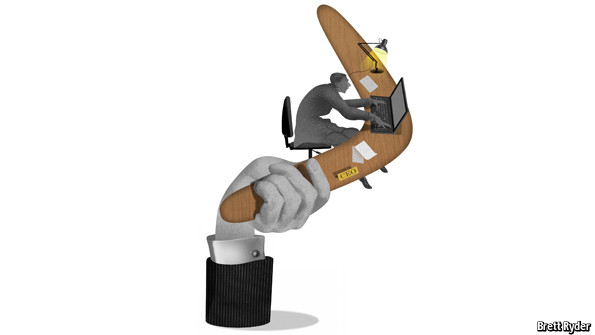
Boomerang bosses: When retired chiefs make a comeback their return is often less than triumphant

Boomerang bosses: When retired chiefs make a comeback their return is often less than triumphant

Jun 1st 2013 |From the print edition

20130601_WBD000_3

IT SOMETIMES seems as if there is nothing but second acts in American lives. Bill Clinton has had more comebacks than Elvis, most recently as a global statesman. Mark Sanford has just got himself elected as a Republican congressman for South Carolina even though his governorship of the same state was consumed in a fireball of adultery and divorce. Donald Rumsfeld is resuming his career as a management guru, with a new edition of “Rumsfeld’s Rules”, having previously put in two innings at the Pentagon. And it is not just in American life. Shinzo Abe is having his second go at being prime minister of Japan, and Nawaz Sharif his third in Pakistan. José Mourinho is set to return to manage Chelsea football club after a six-year absence.

And two prominent second acts began recently in the American corporate boardroom. On April 8th J.C. Penney, a department-store chain, sacked its chief executive, Ron Johnson, after just 17 months and brought back his predecessor, Myron “Mike” Ullman. Then on May 23rd Procter & Gamble, the world’s biggest maker of household products, sacked its boss, Bob McDonald, replacing him with his predecessor, A.G. Lafley. This sort of thing is surprisingly common: in “The Market for Comeback CEOs”, Rüdiger Fahlenbrach, then at Ohio State University, studied 275 publicly traded American firms whose CEOs had stayed on the board after retirement and were still around when the company again needed a new CEO. About a quarter rehired the old one instead. Read more of this post

Muslim consumers are looking beyond the traditional religious stipulations on meat and finance. Time to have fun

Halal business

Consuming passions

Muslim consumers are looking beyond the traditional religious stipulations on meat and finance. Time to have fun

May 25th 2013 | BEIRUT |From the print edition

“EVEN in Mecca and Medina people have intercourse,” says Abdelaziz Aouragh, a Dutch Muslim who runs a “sensuality shop” (not a “sex shop”, he insists) for his co-religionists, under the slogan “Feel admired. Feel loved. Feel sensual”. El-Asira, which means “society” in Arabic, sells online and at Amsterdam airport. Bestselling items include massage oils and lingerie. Turnover this year is predicted to be €1m ($1.29m).

That is only the tiniest sliver of the sales to the world’s 1.8 billion Muslim shoppers, a market likely to grow by 35% by 2030. But stereotypes of joyless zealotry are as misleading as the idea that the Muslim market involves only interest-free finance and hand-slaughtered meat. Sharia law forbids meat such as pork and birds of prey, plus blood and carrion. But views on what else is prohibited differ. Inglot, for example, is a nail varnish made in Poland which markets itself as Muslim-friendly because the lacquer is permeable, so it does not need to be removed before Islamic washing rituals. The Koran is silent on such issues; sceptics doubt they matter. Read more of this post

Beware of your inner self; Investors’ decision making is distorted by all sorts of in-built biases and prejudices

May 31, 2013 7:37 pm

Beware of your inner self

By Norma Cohen, Demography Correspondent

On a visit to the London School of Economics in 2008, the Queen asked the assembled professors why nobody had seen the financial crisis coming.

Her Majesty’s question was a pertinent one. Part of the answer is that there’s a big problem with conventional economic and financial theory. Many of the big ideas that underpin it – from Eugene Fama’s efficient market hypothesis to Harry Markowitz’s modern portfolio theory – are based on the assumption that, when it comes to investing, the human mind is rational.

The financial crisis, and the fact that it came as a complete surprise to the vast majority of investors, has blown a hole in the whole notion of rationality. No longer is it assumed that froth and bubbles will be smoothed out by “smart money” that knows enough to sell an overvalued asset. Read more of this post

The 100% Stock Solution

May 31, 2013, 5:43 p.m. ET

The 100% Stock Solution

By LIAM PLEVEN

BF-AF044_01WIcv_G_20130531222703BF-AF069_ALLSTO_G_20130531152422

Most investors hold a mix of stocks and bonds, hoping for both growth and safety. Then there are people like Daniel White.

The 36-year-old Chicago lawyer keeps all his investments in the stock market. His 401(k) plan is invested in equities, and so is his wife’s. The college-savings accounts for their four young children also are in stocks. His separate brokerage accounts are, too. The total sum at risk is in the high six figures, he says.

“I’m not an adrenaline junkie,” says Mr. White, who sees the stock-market wagers as part of a broader personal portfolio that includes his job, enough cash to cover the family’s living expenses for an extended period and a house that is fully paid for. Read more of this post

China’s Fifth-Richest Man Wei Jianjun of Great Wall Motor Targets to Sell More SUVs Than GM’s Jeep

China’s Fifth-Richest Man Targets to Sell More SUVs Than Jeep

Chinese billionaire Wei Jianjun has set a target for Great Wall Motor Co. (2333)’s Haval marque to surpass Chrysler Group LLC’s Jeep and become the world’s best selling SUV brand in three to four years. As part of the plan, Great Wall’s chairman has started construction of a new research center the size of 35 soccer fields in the city of Baoding, about 160 kilometers (100 miles) from Beijing. He plans to increase the number of engineers by at least 40 percent to more than 10,000.“We want Haval to have the highest value for money,” Wei, who is China’s fifth-richest man with an estimated net worth of $6.6 billion according to the Bloomberg Billionaires Index, told reporters today at the company’s factory in northern Hebei province. “We want to surprise our customers by that instead of just satisfying them.” Read more of this post

What China Can Learn From America’s Hot Dogs

May 31, 2013, 7:02 p.m. ET

What China Can Learn From America’s Hot Dogs

By DAVID KESMODELJULIE JARGON and LAURIE BURKITT

BF-AF085_BIGPOR_G_20130531182111

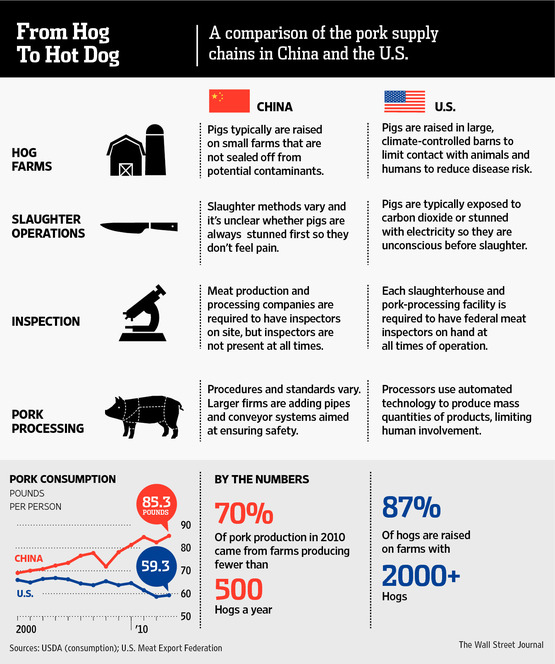
Behind the planned takeover of Smithfield Foods Inc. SFD +0.61% by China’s biggest meat processor is an intensifying push by the Asian nation to industrialize its archaic food-production system to address rampant health problems and feed an increasingly wealthy population.

In addition to Smithfield’s enormous distribution network and market share in the U.S., owning the American company would enable Shuanghui International Holdings Ltd. to borrow from Smithfield’s playbook to speed the development of hog farms and processing plants in China that mirror the U.S. system. Read more of this post

Korea’s financial watchdog will launch an audit into Woori Bank because it is suspected of holding hundreds of “borrowed name” accounts for CJ Group, the subject of ongoing investigations into tax evasion and slush fund creation

2013-05-31 16:57

Regulator to look into Woori for CJ accounts

By Kim Tae-jong

The nation’s financial watchdog will launch an audit into Woori Bank because it is suspected of holding hundreds of “borrowed name” accounts for CJ Group, the subject of ongoing investigations into tax evasion and slush fund creation.

The bank is suspected of abetting the group’s wrongdoings, if proven to be true, this will be another setback, coming right after the Board of Audit and Inspection (BAI) blamed it for having poor management practices. Read more of this post

Chinatrust’s fomer vice chairman Jeffrey Koo Jr given lengthy prison sentence for financial scam

Chinatrust’s Koo Jr given lengthy prison sentence for scam

CNA 2013-06-01

E418TB12H_2013資料照片_copy1

The former vice chairman of Chinatrust Financial Holding Co was sentenced Friday to nine years and eight months in prison and fined NT$150 million (US$5 million) for his role in a financial scandal.

The Taiwan High Court found Jeffrey Koo Jr guilty of violating the Securities and Exchange Act and the Banking Act with regard to irregularities in transactions of structured notes linked to Mega Financial Holdings during the period 2005-2006. Read more of this post

Huge debts of US$434 billion could see China Railway Corp hit the buffers

Huge debts could see China Railway Corp hit the buffers

Staff Reporter

2013-05-31

With debts of 2.66 trillion yuan (US$434 billion) and its staff yet to be finalized, uncertainties remain at the newly established China Railway Corp, which is now the country’s largest state-owned company, Guangzhou’s Time Weekly reports.

The company, which was set up in March after the dissolution of the Ministry of Railways, is struggling with massive debts, which has led to delays in making arrangements for the 903 staff members of the now defunct ministry, a source close to the company told the newspaper. Read more of this post