Bond rout threatens to hit bank funding

June 26, 2013 6:00 pm

Bond rout threatens to hit bank funding

By Christopher Thompson in London and Jason Abbruzzese in New York

Will banks be among the biggest casualties of the global bond market sell off through rising funding costs?

Like Odysseus’s boat passing between Scylla and Charybdis, banks must navigate an increase in their funding costs from higher market interest rates on one side and regulators’ demands on the other. Read more of this post

Economists Tackle Puzzle of Libor Losses for Investors

Economists Tackle Puzzle of Libor Losses for Investors

Paula Ramada, who has a doctorate in economics from the Massachusetts Institute of Technology, says she can calculate how much investors lost from banks’ alleged rigging of benchmark interest rates. Now all she needs is funding, a team of analysts and weeks to run the numbers.

Ramada is among a growing number of mathematicians, analysts and researchers trying to tackle one of the toughest questions to emerge from the Libor scandal: If banks manipulated rates tied to $300 trillion in instruments such as mortgages and student loans, how much did it cost investors? Read more of this post

Cost of Public Projects Is Rising, and Pain Will Be Felt for Years; The recent sell-off in bonds has hit hard in the municipal market, forcing governments to pay higher interest rates for crucial infrastructure projects

JUNE 26, 2013, 8:28 PM

Cost of Public Projects Is Rising, and Pain Will Be Felt for Years

By MARY WILLIAMS WALSH

States and cities across the nation are starting to learn what Wall Street already knows: the days of easy money are coming to an end.

Interest rates have been inching up everywhere, sending America’s vast market for municipal bonds, a crucial source of financing for roads, bridges, schools and more, into its steepest decline since the dark days of the financial crisis in 2008.

For one state, Illinois, the higher interest rates will add up to $130 million over the next 25 years — and that is for just one new borrowing. All told, the interest burden of states and localities is likely to grow by many billions, sapping tax dollars that otherwise might have been spent on public services. Read more of this post

Norway’s economic star begins to lose its shine

Norway’s economic star begins to lose its shine

1:00am EDT

* Number of unemployed at an 8-year high

* Bankruptcies rise rapidly

* Oil sector at risk from crude prices

* Growth rate still the envy of Europe

By Balazs Koranyi and Terje Solsvik

TOFTE, Norway, June 27 (Reuters) – A boiler towers over a fjord on Norway’s south coast from a 116-year-old pulp mill, the largest employer in the town of Tofte.

The 300 jobs may be gone by September, the deadline set by the loss-making plant’s Swedish owner to find a buyer or close, victim of high wage costs, the strong Norwegian currency and the debt crisis that has hurt its local European markets. Read more of this post

Counterfeit Food More Widespread Than Suspected; “Around the world, food fraud is an epidemic”

June 26, 2013

Counterfeit Food More Widespread Than Suspected

By STEPHEN CASTLE and DOREEN CARVAJAL

GREAT DALBY, England — Invisible from the roadway, hidden deep in the lush English countryside, Moscow Farm is an unlikely base for an international organized crime gang churning out a dangerous brew of fake vodka.

But a quarter of a mile off a one-lane road here, tens of thousands of liters of counterfeit spirits were distilled, pumped into genuine vodka bottles, with near-perfect counterfeit labels and duty stamps, and sold in corner shops across Britain. The fake Glen’s vodka looked real. But analysis revealed that it was spiked with bleach to lighten its color, and contained high levels of methanol, which in large doses can cause blindness. Read more of this post

Commodities traders call end of ‘supercycle’

June 26, 2013 5:29 pm

Commodities traders call end of ‘supercycle’

By Jack Farchy and Javier Blas

The commodities “supercycle” is dead. If anyone was still in doubt about whether the era of ever-rising prices driven by rapid Chinese growth was over, events of the past week have surely dispelled it.

The dollar rally after the Federal Reserve’s hints about tapering its “quantitative easing” programme, together with fears about a liquidity crunch in China, have sent a ripple of fear through the commodities industry. Read more of this post

Mr. Abe’s Missing Arrow; The absence of immigration reform from Abenomics bespeaks a deeper problem.

June 26, 2013, 12:54 p.m. ET

Mr. Abe’s Missing Arrow

The absence of immigration reform from Abenomics bespeaks a deeper problem.

JOSEPH STERNBERG

If there’s one reform that’s symbolic of Prime Minister Shinzo Abe’s eponymous program to rejuvenate the Japanese economy, it’s immigration.

By importing new consumers and workers, immigration is crucial to stimulating domestic capital investment by companies. By expanding the taxpaying population base, it improves the government’s fiscal position. Immigration will facilitate foreign direct investment, boosting productivity. Read more of this post

Nike Earnings May Be Tripped Up by China

Updated June 26, 2013, 7:57 p.m. ET

Nike Earnings May Be Tripped Up by China

SPENCER JAKAB

MI-BW798_AOT_NS_20130626174803

With LeBron, Tiger and Federer on the payroll, clutch performances should be business as usual for Nike Inc.

Looking back at a decade of quarterly earnings reports, that has been the case with 36 “beats” of the analyst consensus out of 40 opportunities. The company’s performance against the point spread was less impressive, with the stock rising on just 27 occasions.

Read more of this post

Fad-Loving Japan May Derail a Sony Smartphone

June 26, 2013

Fad-Loving Japan May Derail a Sony Smartphone

By HIROKO TABUCHI

TOKYO — Sony’s Xperia Z smartphone, which went on sale in February, has already sold almost a million units by some estimates. But NTT DoCoMo, Japan’s largest mobile carrier, will soon stop selling it.

The Xperia Z has not even hit the United States market yet: T-Mobile says the model will make its debut on its network in the coming weeks.

But it is already a has-been in Japan. DoCoMo has turned its attention to a new phone, the Sony Xperia A — a model with fewer features that has not won the stellar praise showered on the Z. Read more of this post

Foreign firms will struggle to hand out credit cards in China

Foreign firms will struggle to hand out credit cards in China

Thursday, June 27, 2013

MasterCard didn’t make a peep earlier this month when word leaked that Beijing had halted the company’s transactions in renminbi.

Leaked documents didn’t show when the payments were terminated, but the central bank effectively stopped the Chinese online payment platform EpayLinks from issuing yuan-denominated credit cards in partnership with the US firm. MasterCard declined to comment on the issue.

It’s quite the issue to keep mum on. After all, the WTO has already ruled that by blocking payment services and giving free range to its homegrown payment service UnionPay, China had not lived up to the commitments it made more than 12 years ago when it joined the organization. MasterCard would have found solid support in raising a loud complaint. Read more of this post

Int’l firms to shake out China’s software market

Int’l firms to shake out China’s software market

Staff Reporter

2013-06-27

Along with major changes happening in the global software market, leading international software firms, such as SAP and Infor, announced plans for more concerted efforts in the Chinese market. Domestic Chinese firms are bracing themselves for the onslaught.

TimMoylan, president of Infor’s Asia Pacific division, said that China, Japan, and Australia/New Zealand have become the three largest sources of the company’s revenue, with China leading the list. To facilitate further inroads into the Chinese market, Infor recently poached Lin Xinhua, former vice president of the Autodesk’s Greater China region, in order to tap his abundant knowledge of the Chinese market. With 26 years of experience in the field and having worked a vice president for Oracle’s Greater China marketing division, Lin is just as qualified as any to approach the ambitious task. Read more of this post

Wearable Devices Nudge You to Health; Tracker devices like Fitbit and Up keep you aware of your inactivity and lack of sleep, and motivate you to put your life onto a healthier track

June 26, 2013

Wearable Devices Nudge You to Health

By DAVID POGUE

You’ve heard of the Quantified Self movement? It’s the rise of watches, clips and bracelets that monitor your physical activity, sleep and other biological functions. The idea is that continual numerical awareness of your lifestyle works to motivate you: to park farther away, to get off the subway one stop sooner, to take more stairs. You study the graphs, you crunch the numbers, you live a longer, healthier life. (And you try to avoid being a crashing bore at parties.)

The most popular such gizmo — or at least the most heavily marketed — has been Jawbone’s stylish, rubberized, shower-proof Up band ($130). For about a week on a battery charge, it quietly measures your movement, whether you are awake or asleep, and displays the results on your iPhone or Android phone. Read more of this post

Location-based Social App Momo Starts Monetization with Emoticons and Subscription

Location-based Social App Momo Starts Monetization with Emoticons and Subscription

By Tracey Xiang on June 27, 2013

Momoemoitcon

Location-based social app Momo, launched 4.0 version with an emoticon market and subscription offerings, an obvious move for monetization.

The emoticon part must remind you of LINE, the Japan-based messaging app that made about $17 million from emoticons alone in Q1 2013, and the subscription model is a proven one in China, adopted by almost all kinds of Internet service for monetization, and still believed to be a good business model here.

The subscription package offers twelve privileges; for instance, subscribers can follow more users and have more people in a chatting group. It is sold for 12 yuan (about $1.9) per month or 30 yuan per quarter. It’d be cheaper if you subscribe to it for a year. Read more of this post

Allen Lau wants Wattpad to be to Internet publishing what YouTube is to video; The Wattpad site, which allows contributors to upload and share their writing, now has 15 million unique monthly users, double the number from 2012

How Toronto’s Wattpad is handling the challenges that come with fast growth

Quentin Casey | 13/06/24 10:24 AM ET

0624lau 0624wattpad

Tyler Anderson/National PostWattpad CEO Allen Lau at the company’s offices in Toronto.

Allen Lau doesn’t hide his ambition. He wants Wattpad to be to Internet publishing what YouTube is to video – a global giant with a billion users. The Toronto-based startup, founded in 2006, is backed by several top-tier investors, including New York-based Union Square Ventures, which has invested in Twitter, Foursquare and Tumblr. Last year, Wattpad received $17.3-million from OMERS Ventures, Khosla Ventures and Yahoo co-founder Jerry Yang, bringing its funding haul to $20-million. With 50 employees, the company is growing at an impressive clip. The Wattpad site, which allows contributors to upload and share their writing, now has 15 million unique monthly users, double the number from 2012. Those users spend a total of 3.5 billion minutes on the site each month, up from 1.4 billion a year ago. But heady growth brings challenges, including deciding on when to monetize the site. Mr. Lau, Wattpad’s chief executive, recently discussed the company’s outlook and plans with Quentin Casey. The following is an edited transcript of their conversation. Read more of this post

Digital security giant Symantec is getting rid of 30-40% of its managers — here’s why

Symantec is getting rid of 30-40% of its managers — here’s why

Dan Ovsey | 13/06/26 | Last Updated: 13/06/26 11:10 AM ET
Over the past few months, digital-security giant Symantec has been relieving approximately 30-40% of its management staff of their duties in a restructuring process the software company’s leadership team believes will allow it to realize greater long-term profitability and performance.Brett Shirk, Symatec’s senior vice-president of North America, recently spoke with FP’s Dan Ovsey about the decision to downsize, the process of reorganizing and the impact these decisions will have on staff and clients. Following is an edited transcript of their conversation. Read more of this post

Baidu Cloud Breaks 70 Million Users, Growing at 200k Users a Day

Baidu Cloud Breaks 70 Million Users, Growing at 200k Users a Day

June 27, 2013

by C. Custer

At an open media event yesterday, Chinese search giant Baidu shared some pretty impressive numbers about Baidu Cloud. The cloud platform, which includes everything from word processing to music streaming and photo storage, now has more than 70 million users, and is currently growing at a rate of 200,000 new users per day. No, I didn’t mean month, and yes, that’s crazy. Baidu also said that the service now has an average of 2 million daily active users. Of course, these are self-reported numbers, so the degree to which you trust them depends on how much you trust Baidu. (So, if you’re Zhou Hongyi, you’re probably shaking your head right now). Baidu is currently competing with Qihoo 360 both in the search and security markets, but Qihoo doesn’t currently have a comprehensive cloud offering, so this is one area where Baidu may be able to grow without too much competition — at least for now. But as we wrote earlier this morning, Qihoo is reportedly planning to expand its search options, and it seems like just a matter of time before the battle between the two spreads into the cloud. Of course, there are also a number of other domestic cloud services, but none of them are quite as broad as Baidu’s slate of offerings, so there may not be a true competitor until a big company like Qihoo or Tencent throws its weight behind building a broader, multi-faceted cloud platform.

This Is The Year That China Becomes The World’s Top E-Commerce Market; China’s Luxury E-Commerce Market to Be Worth $27 Billion in 2013

This Is The Year That China Becomes The World’s Top E-Commerce Market (CHARTS)

June 27, 2013

by Steven Millward

With China’s e-commerce market set to be worth nearly $300 billion this year, 2013 will mark the watershed moment when China surpasses the US to become the world’s top e-shopping market. Looking at data from Forrester Research and iResearch for the two nations, Chinese netizens will collectively spend an estimated $296 billion in the whole of 2013, while US e-shoppers will spend $252 billion. Here’s the pattern of growth: The chart is from a new report on luxury e-commerce in China by Washington-based Observer Solutions. Of course, China’s succession is an inevitable progression as China’s realistic, addressable e-commerce market grows to the point of nearly exceeding the entire population of the US. Indeed, the same report states that the penetration of online shopping in China hit 42.9 percent in 2012 so that the country had 242 million e-shoppers last year. America’s whole population is 314 million. Check out the number China will have by 2015:

China’s-Luxury-E-Commerce-Market-to-Be-Worth-27-Billion-in-2013 2013-China-surpasses-America-as-top-ecommerce-market-01 2013-China-surpasses-America-as-top-ecommerce-market-02 2013-China-surpasses-America-as-top-ecommerce-market-03 Read more of this post

In the world of smartphones, a slimy mushroom—often found in miso soups and soba noodles—is an unlikely videogame star in Japan

June 26, 2013, 10:38 p.m. ET

Popularity of Mushroom Videogame Grows Like a Fungus in Japan

An Understudy in the Kitchen, the Nameko Becomes a Star; Lunch Boxes, Music Videos

DAISUKE WAKABAYASHI and MAYUMI NEGISHI

P1-BM077_JMUSHR_G_20130626193536

There’s a breakout hit in the Japanese gaming world. The star? A little brown mushroom called a nameko. It’s featured in a trilogy of smartphone games called ’Nameko Saibai kit.’ WSJ’s Daisuke Wakabayashi reports.

TOKYO—In the culinary pecking order for Japanese mushrooms, the nameko, a gelatinous, light-brown, tack-size variety for the ordinary Joe, doesn’t carry the meaty versatility of a shiitake or the high-price allure of the seasonal and fragrant matsutake.

But in the world of smartphones, this slimy mushroom—often found in miso soups and soba noodles—is an unlikely videogame star. The trilogy of games entitled “Nameko Saibai Kit,” or “the kit for cultivating nameko,” is one of the most popular smartphone games since its June 2011 debut with 32 million downloads. That falls well short of Angry Birds levels of more than one billion downloads, but it is about twice the level of its nearest Japanese competitor. Read more of this post

IPads Help Airlines Cast Off Costly Load of Paper; In the Cockpit, Navigation Charts Go Digital; American Sees $1.2 Million in Fuel Savings

June 26, 2013, 7:36 p.m. ET

IPads Help Airlines Cast Off Costly Load of Paper

In the Cockpit, Navigation Charts Go Digital; American Sees $1.2 Million in Fuel Savings

SUSAN CAREY

MK-CE310_PAPERL_G_20130626185143

United Airlines Capt. Jim Barnes, left, and First Officer Greg Battaglia use iPads in the cockpit. United hopes for rules allowing pilots Internet access.

Airline pilots, who fly some of the world’s most technologically advanced machines, have long relied on paper navigation charts and manuals, which clutter the cockpit and have to be lugged around in cases that can weigh as much as a small child.

Now, however, airlines are catching up with the tablet era. Read more of this post

U.S. federal regulators are expected to issue new rules in the next few months that could jump-start the market for cars that communicate with other cars and road infrastructure

June 26, 2013, 5:13 p.m. ET

Driverless Cars Are Likely to Get Boost From DOT Ruling

STEVE ROSENBUSH

Federal regulators are expected to issue new rules in the next few months that could jump-start the market for cars that communicate with other cars and road infrastructure.

The technology—on demonstration this week a U.S. Department of Transportation event in Washington—uses a combination of positioning technology, such as GPS or other kinds of sensors, and high-speed wireless networks. Read more of this post

Mobile life can be short; Messaging apps a threat to Facebook’s mobile revenues

June 26, 2013 8:28 pm

Mobile life can be short

By Richard Waters

Messaging apps a threat to Facebook’s mobile revenues

As the battleground in social media shifts to mobile, is Facebook about to lose out to younger challengers?

That may sound unlikely given the impressive mobile statistics it has notched up, with a fifth of all time spent on smartphones estimated to be on its social network. By the first quarter of this year, Facebook was generating 30 per cent of its advertising revenue from mobile, barely a year after starting to make money there. Read more of this post

Mobile malware explodes, hits corporate networks

Mobile malware explodes, hits corporate networks

June 27, 2013 – 9:28AM

Rob Lever

stats-300x0 attack_Makeup-300x0

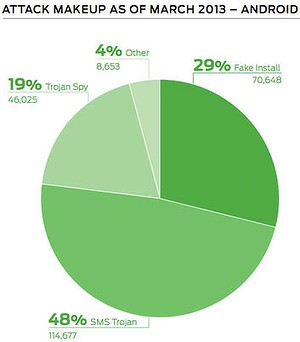
Smartphone users have seen an explosion of malware in the past year, dominated by schemes targeting Google’s Android operating system, a survey has shown.

The attacks are also starting to hit corporate networks, possibly as part of broader espionage efforts, according to the Juniper Networks Mobile survey.

The report showed a 614 per cent jump in mobile malware in the 12 months to March 2013, with Android attacks accounting for 92 per cent. Read more of this post

How apps are revolutionising music; Music apps are revolutionising the way music is made and challenging the very definition of music itself

How apps are revolutionising music

June 27, 2013

Iain Gillespie

Music apps are revolutionising the way music is made and challenging the very definition of music itself.

music-studio-300x0

“Strange days indeed, most peculiar, mama.” Apply those words to the way millions of people are now creating music, and they are more relevant today than when John Lennon wrote them shortly before he was murdered 33 years ago.

For example, imagine the Beatles’ surprise, as they grappled with antiquated tube mixers and a four-track tape recorder at Abbey Road, if someone had whipped out an iPhone and offered a modern recording studio with 167 tracks and full digital quality. Read more of this post

Teaching business poets and quants to make nice

Teaching business poets and quants to make nice

By Anne Fisher, contributor June 26, 2013: 12:23 PM ET

Has the explosive growth of big data got you struggling to keep up with the math nerds at your company? A new book aims to help.

130626122011-science-humanities-614xa

FORTUNE — Let’s say you’ve got a crucial strategic decision to make, and a team of analysts has painstakingly built a complex mathematical model that’s supposed to show you which way to go. The trouble is, even after the data scientists have laid out the details of their statistical algorithm in what they think are simple terms, it’s Greek to you. Don’t panic. In a new book called Keeping Up with the Quants: Your Guide to Understanding + Using Analytics, Thomas H. Davenport and co-author Jinho Kim set out to advise executives on how to make sensible use of big data, including which questions to ask and how to tell whether the quant jocks really understand the business problem they’re purporting to solve.

Read more of this post

Snapchat’s liquidity trap; Some founder liquidity for startups can be helpful. Too much, however, misaligns interests

Snapchat’s liquidity trap

By Dan Primack June 26, 2013: 11:46 AM ET

Some founder liquidity for startups can be helpful. Too much, however, misaligns interests.

FORTUNE — One of the most notable changes in VC financings over the past five years has been the widespread adoption of founder liquidity.

For the uninitiated, these are deals in which some of the new capital is used to buy shares from company founders, rather than to help grow the company. Oftentimes these transactions make pragmatic sense – particularly for older companies where founders have taken below-market salaries for years and literally are having trouble paying the mortgage. A bit of reward for past hard work/company success, and the idea that a founder can be more focused if not having to fret over personal finances. Read more of this post

How to Compete When IT Is Abundant

How to Compete When IT Is Abundant

by Aaron Levie  |  11:00 AM June 26, 2013

“You only gain an edge over rivals by having or doing something that they can’t have or do,” wrote Nicholas Carr ten years ago in his controversial HBR article, “IT Doesn’t Matter.”
Carr predicted that an organization’s ability to compete through investing in information technology was about to change dramatically. When “the core functions of IT — data storage, data processing, and data transport — have become available and affordable to all,” he wrote, IT would cease to be a source of competitive advantage.
This was not yet reality at the time of Carr’s article. The IT boom of the 1980s and early ’90s had brought information technology to the corporate masses, unleashing the first full-scale technology revolution in the enterprise. To stay competitive, businesses rapidly embraced PCs, and the subsequent transition to the client/server era.
The original IT department was formed to centralize a unique expertise that could purchase, implement, and manage technology in the enterprise. And given the complexities involved in building up competitive IT weaponry, businesses won by out-spending and out-resourcing their opponents. Only the largest of enterprises could afford the best technologies, and even for those with the largest bank accounts, IT strategies were limited to basics like CRMERP, or email.
Today, though, Carr’s prediction is coming true. We’re in the early days of yet another seismic shift in IT, this time driven by mobile devices, the cloud, and a demand for technology experiences that match the simplicity of the consumer world. We are moving abruptly from an era of IT scarcity to one of abundance.
This end of IT scarcity begs an interesting and important question. How do companies differentiate in a world where access to technology is no longer a competitive advantage? Read more of this post

Bamboo Innovator Workshop Series (#3 of 4): Tipping Point Analysis in Value Investing

Tipping Point Analysis in Value Investing
Saturday, 31 August 2013 from 09:00 to 17:00 (SGT)

jph7p5

Waiting is the main drawback in value investing. Investors often lose patience with their stocks when they don’t perform in the short-term to produce a feel-good comfort that we are right in our stock calls. That’s why fund managers under pressure to deliver short-term results always ask, “Any upcoming catalysts?” This cannot be more misleading when there is an insufficient understanding in the scalability and resilience of the underlying business model.

When iPod was introduced on November 10, 2001, Apple’s share price was US$9.40 per share and had jumped to US$12 by year end. Those who had loaded up on the “iPod effect” or “new product” catalyst suffered for the next year-and-a-half as the shares plunged to US$6.70 in April 2003. Disappointed, momentum traders cloaked under the label of fund managers sell the stock. Then a “tipping point” moment happened in April 2003 to bring about the extraordinary 60-fold returns in the next decade to US$428 per share, or US$400 billion in market cap. What was this “tipping point” event? One such “tipping point” event is the launch of the iTunes Store on April 28, 2003.

Serious institutional investors spend most of their time not in looking at stock price screens or gaining “insider” knowledge of “catalysts” to generate alpha or excess returns, but in analyzing the interaction of business model dynamics with “tipping point” events so that they literally hear and see the “clicking” sound when they occur to produce a resilient compounder. It is our task to have a systematic framework to understand and identify “tipping point” events when they occur to stay ahead of the momentum traders and colluding insiders (庄家) on the investing curve.

Course Highlights:

– Mr Kee, one of the few Asian fund manager being invited to speak at a number of top banking & finance conferences around the world alongside with renowned speakers such as Praveen Kadle, Chief Executive Officer of Tata Capital & Lauren Templeton, President of Lauren Templeton Capital Management

– Learn from an experienced & qualified instructor who has taught in local Universities

Program Outline and Key Learning Points:

  • UNDERSTAND the stock market reactions to a wide-range of “catalysts”:

–          “Post-earnings announcement drift (PEAD)”,

–          “Capital management programs” (e.g. dividends, capital reduction, share buybacks, bonus issue, rights, splits, share/debt placement) and “Financial structure changes”,

–          “Analyst coverage and recommendations”,

–          and many more.

  • GAIN the surprising insight to why certain positive catalyst signals can be      misleading noise, for instance, insider purchase can be negative. And also      why overreaction to certain negative catalyst signals can be an opportunity.
  • DEVELOP the ability to distinguish between “catalysts” with unsustainable short-term      effects and “tipping point” with long-term value relevance.
  • LEARN where M&A pays and where it strays and the pitfalls.
  • DISSECT a wide range of real-world cases of Asian and global Bamboo Innovators in various industries and understand the tipping point in their business models.
  • UNIFY at the end of the day all the previously disparate loose-hanging concepts,      descriptive facts and “checklists” you have learnt from various sources into the practical Bamboo Innovator mental model when it comes to real investment decision-making.

Understand more about the Instructor’s investment approach with the following published articles:

About the Instructor:

Koon Boon is the founder and managing director of the Singapore-based Bamboo Innovator Institute to establish the thought leadership of resilient value creators around the world. KB has been rooted in the principles of value investing for over a decade as a fund manager and analyst in the Asian capital markets. He was a fund manager and head of research/analyst at a Singapore-based investment management organization dedicated to the craft of value investing in Asia. He had been with the firm since 2002 and was also part of the core investment committee in significantly outperforming the index in the 10-year-plus flagship Asian fund. He was previously the portfolio manager for Asia-Pacific equities at Korea’s largest mutual fund company. He received his Masters in Finance (magna cum laude) and double degree in Accountancy and Business Management (both summa cum laude) from the Singapore Management University (SMU). He had taught accounting at his alma mater in SMU and at SIM University. He had published research in the Special Issue of Istanbul Stock Exchange 25th Year Anniversary of the Boğaziçi Journal, Review of Social and Economic Studies, as well as wrote articles about value investing and corporate governance in the media. He had also presented in top banking and finance conferences in Sydney, Cape Town, HK, Beijing and in the recent Emerging Value Summit 2013. He had trained CEOs, entrepreneurs, CFOs, management executives in business strategy, macroeconomic and industry trends in Singapore, HK and China.

Institutional Imperative and Differentiating Between the Tech Innovators, the Imitators and the Swarming Incompetents in Asia. Bamboo Innovator is featured in BeyondProxy.com, where value investing lives

Bamboo Innovator is featured in BeyondProxy.com, where value investing lives:

  • Institutional Imperative and Differentiating Between the Tech Innovators, the Imitators and the Swarming Incompetents in Asia, June 27, 2013 (BeyondProxy)

Institutional Imperative

Humor of the day: Bonds

20130626_humor

Barron’s Midyear Roundtable 2013: Shifting Winds

MONDAY, JUNE 17, 2013

Shifting Winds

By LAUREN R. RUBLIN | MORE ARTICLES BY AUTHOR

A change appears to be under way in the markets. Our experts explain the risks, and highlight the opportunities.

Back in the day, a taper was only a candle. Just ask Lady Macbeth. Now, suddenly, it is cause for convulsions across the financial system. Just whisper the word — as in, the Federal Reserve might taper its monthly purchase of fixed-income assets — and voilà! billions of dollars of wealth vaporize in stock and bond markets around the world. After months of investment Nirvana, all bets are off for the rest of this roiled year. How best to navigate the new and more dangerous landscape? Luckily, we have just the guides: the intrepid members of the Barron’s Roundtable. In our midyear telephone check-ins with these illustrious investment experts, who last met as a group on Jan. 14 in Manhattan, we sought both insights into the current market turmoil and specific ways to profit as the second half unfolds. Our go-to pros didn’t disappoint. They also didn’t agree. As a result, you’ll find a wealth of contradictory opinion in the pages ahead, just as you will in the market, ranging from harsh assessments of the Fed’s experiment with too-easy money to applause for the central bank’s steps to end the financial crisis and prevent a successor. You’ll also find a broadly diverse selection of investment picks and pans, ranging from undervalued equities to overvalued currencies. The general consensus of the Roundtable crowd is that overseas markets can’t hold a candle — er, taper — to the U.S. these days. Why, then, are our experts recommending so many European shares? That’s just another of the contradictions that will keep you thinking and hopefully make you money in the back half of 2013. Read more of this post